




How do polymer flexible anodes improve cathodic protection systems?
Polymer flexible anodes improve cathodic protection systems by delivering a continuous, uniform protective current along the entire length of a buried or submerged structure. Unlike point-source anodes, a polymer flexible anode for cathodic protection distributes current evenly—eliminating hotspots, reducing soil resistivity interference, and achieving consistent cathodic polarization across tank bottoms and pipeline networks. Their cable-like form factor allows close proximity installation, which lowers the driving voltage required and reduces transformer-rectifier capacity. The result is a more efficient impressed current cathodic protection (ICCP) system with a longer service life and lower operational cost.
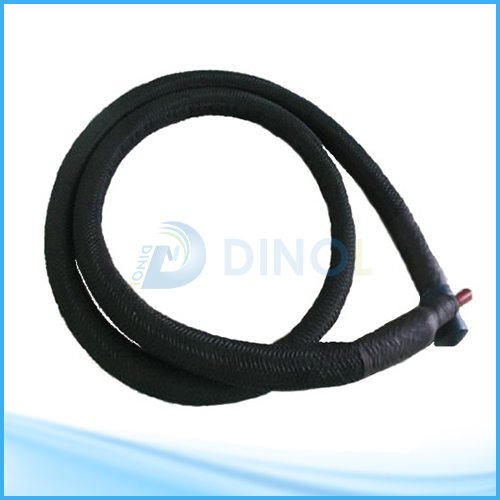
Understanding Polymer Flexible Anodes in Cathodic Protection
What They Are and How They Work
A polymer flexible anode is an extra anode that is made up of an electrical polymer matrix wrapped around a stranded copper core. It is shaped like a wire. The copper core moves current along a lengthwise direction with little resistance, and the polymer layer lets that current flow outward into the soil or coke backfill, acting like a network of drip irrigation for protective electrochemical current.
The positive end of the rectifier is connected to the anode in an ICCP groundbed, and the negative end is connected to the protective structure. The anode oxidizes on purpose, sending a cathodic polarization current to the bottom of the pipeline or tank. This stops the electrochemical corrosion. Since the current comes from the whole length of the anode instead of just one point, the potential spread across the structure is truly even.
Titanium makes up 99.6% of Tianyi's cathodic protection cable, and the anodes are made of conductive polymer and have an outer diameter of 38–40 mm. They meet ISO 9001 and ASTM standards, and come in MMO/Ti wire sizes of 1 mm, 1.5 mm, and 3 mm. For technical purposes, you can get free trials. This specification profile is typical of a polymer flexible anode for cathodic protection, which is often chosen for buried pipelines and tank bottoms where a continuous, conformable anode string is preferred over discrete canister or tubular anodes.
Advantages of Polymer Flexible Anodes Over Traditional Anode Solutions
Longer Service Life and Lower Lifecycle Cost
Graphite and high-silicon cast iron anodes wear out at measurable rates, and under tough conditions, they often need to be replaced every 10 to 15 years. Polymer bendable anodes, especially those made of MMO/Ti, are made to last at least 40 years. The DN-15 and DN-30 lines from Tianyi have output currents of 328 mA/m and 656 mA/m, respectively. They have contact resistances of ≤0.0009 Ω and carbon contents of ≥99.5%, which are specs that stay the same during the whole service cycle.
When comparing anode technologies, these are the main things that make them perform differently:
- Uniform current distribution: The conductive polymer layer maintains high transverse resistance to ground, causing current to drip gradually into the soil and form a homogeneous protective field rather than concentrating near the anode termination.
- Minimal stray current interference: Because driving voltage requirements are low, interference with adjacent buried structures is substantially reduced—a critical consideration on dense pipeline corridors and refinery tank farms.
- Chemical stability: Weight loss in ASTM D-543 chemical immersion testing remains below 1%, confirming that the polymer matrix resists degradation in aggressive soil chemistries and mildly acidic groundwater.
- Cut-to-length flexibility: Rolls are supplied at 500 m or 1000 m and are fully cuttable on site without special tools, eliminating off-cut waste and allowing installation crews to match the exact design length.
These features deal with the main ways that regular systems break down: uneven security, early consumption, and high rectifier energy demand. Over the life of an asset, they lower the total cost of ownership by a large amount over 40 years. That long-horizon cost advantage is one of the strongest arguments for choosing a polymer flexible anode for cathodic protection over conventional discrete anode systems, especially on pipelines and tank bottoms where uniform current distribution and low maintenance demand dominate lifecycle economics.
Application Scenarios and Performance Outcomes
Where Polymer Flexible Anodes Deliver Measurable Results?
Because of the way it is shaped, a flexible linear anode is perfect for situations where point-source anodes can't keep the structure's protection potential high enough. Some useful field uses are for old pipelines with worn-out coatings, complicated underground pipe networks, the outside bottoms of above-ground storage tanks, high-resistance soils, and long-distance parallel pipelines that are close together.
When using ICCP for storage tank projects, which are some of the toughest jobs, the anode is laid out in a pattern under the floor of the tank and then filled with coke breeze. The coke backfill lowers the resistance to ground and makes the flow of current better. Tianyi's polymer bendable anode gives off 82 mA/m in soil when coke is added, but only 52 mA/m when coke is not added. At a constant pressure of -7 MPa, the output can reach 10 mA/m when it is in water.
There is a simple order to installing cables: dig a hole parallel to the protected building, put the coke breeze bed, lay the anodes, cover them with coke, and pack down the native soil. The minimum bending radius of 500 mm allows for changes in direction without putting mechanical stress on the MMO/Ti wire or joint seals. This is an important feature for tank bottom retrofits where the route shape isn't straight.
Project engineers who work to NACE/AMPP standards like that Tianyi provides complete documentation packages that include Technical Data Sheets (TDS) in English, a Certificate of Conformity (COC), and plant inspection reports. This helps the owner-engineer clearance process go more quickly.
Making the Right Procurement Decision: Polymer Flexible Anode Selection Guide
Technical Parameters and Supplier Evaluation Criteria
Before placing a purchase order for a linear MMO anode for a live project, it is important to compare the specifications to the design drawings. The most important factors in field success are the same across the industry: It depends on the MMO/Ti wire thickness (typically 1.5 mm or 3.0 mm), the output current density, the contact resistance, the amount of carbon backfill, and the type of insulation used in the cable.
There are both standard and custom configurations in Tianyi's product line. By default, the internal cable has a 1×10 mm² XLPE/PVC conductor. For harsh environments, you can choose between PVDF/HMWPE and EPR/CSPE. Project plans can be used to specify reel lengths, connector setups, and current output shapes that are unique to the project. Before the product is shipped, ultrasonic flaw detection checks the manufacturing process, which includes sandblasting, pickling, and precise finishing application. This level of configurability and in-process inspection is what allows a polymer flexible anode for cathodic protection to be tailored to site-specific soil conditions, burial geometry, and rectifier output requirements without compromising manufacturing consistency.
For buried assets that can't be viewed after installation, batch consistency is the most important thing to think about from a purchase risk point of view. This is taken care of by Tianyi, which has production controls that are ISO 9001-certified and supports both first-article inspection and third-party sampling verification for new clients. We can accept 30% down payment and 70% upon receipt of a copy of the bill of lading. For stocked setups, the standard wait time is 15–20 days. For special orders of up to 10,000 m, the lead time is 30 days.
Future Trends and Innovations in Polymer Flexible Anode Technology
Smart Monitoring Integration and Expanding Market Adoption
In 2023, the global cathodic protection market was worth about USD 4.5 billion. It is expected to keep growing because of the need to fix up old infrastructure and stricter rules for managing corrosion in the oil and gas, petrochemical, and maritime industries. More and more of that market is going to polymer-based linear anode systems because they meet both performance and compliance needs.
A new method combines linear anode placements with reference electrode arrays that are spread out and remote monitoring units. This lets the whole protected length be monitored in real time and potentials recorded. This combination lets workers find areas where the coating is breaking down before they get worse and cause metal loss. This changes the focus of maintenance from being reactive to being predictive. Tianyi's modular design lets it connect to tracking gear from other companies without changing the anode unit itself.
Asset owners are being pushed by regulations like ISO 15589-1 (pipeline CP) and AMPP SP0169 to set up security systems that are written down and can be checked. This compliance system works well with polymer flexible anodes that have output data that can be checked and factory records that can be found.
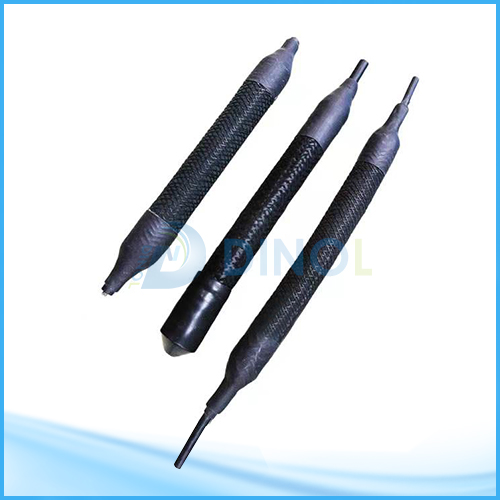
Conclusion
The problem of distribution that stops point-source ICCP systems from working is fixed by polymer flexible anodes. They protect tank bottoms, old pipes, and complicated networks in a way that regular anodes can't: they release current steadily along their whole length. With a service life of 40 years, low driving power needs, and the ability to be fully cut to length, they are the best choice for current corrosion engineering projects, both technically and financially. A well-designed linear MMO anode system will last longer than most of the things it protects if it is installed correctly and with the right amount of coke backfill. This is the core case for specifying a polymer flexible anode for cathodic protection whenever point-source anodes cannot deliver uniform current distribution across a large or geometrically complex structure.
FAQ
What is the standard output current range for a polymer flexible anode?
The output current can be anywhere from 300 to 1000 mA/m, based on the thickness of the wire and the amount of backfill. For the conductive polymer type, coke breeze soil output can reach 82 mA/m. For MMO/Ti types with a 3.0 mm wire, output can reach 656 mA/m.
Can I cut the anode on site to match my design length?
Yes. Rolls come in lengths of 500 m or 1000 m and can be cut in any way without any special tools. The minimum bent radius of 500 mm can handle most route shapes that are found on tank floors and in pipeline trenches.
What cable insulation types are available?
XLPE/PVC insulation that is 1×10 mm² is standard. For environments with high temperatures or harsh chemicals, PVDF/HMWPE and EPR/CSPE are both options. You can also set your own copper wire sizes.
How do I verify batch quality before shipment?
Tianyi allows both first-article review and sample by a third party. An English TDS, a Certificate of Conformance, and a factory test report that checks for contact resistance, carbon content, and size checks are sent with every order.
What is the minimum service life I should specify?
ICCP anodes that are buried should last at least 40 years. This level is reached by both the DN-15 and DN-30 types from Tianyi when they are placed correctly with the right amount of coke backfill and the rated current density.
Partner with Tianyi for Your Next Polymer Flexible Anode for Cathodic Protection Project
Contractors in North America, the Middle East, Southeast Asia, and other places have bought MMO linear anodes and conductive polymer flexible anode systems from Tianyi. We are a reliable company that makes polymer flexible anodes for cathodic protection. Our production is ISO 9001–certified, and we offer full English paperwork, custom specs, and quick expert support. You can get free samples. You can email our engineering team at info@di-nol.comto get a detailed data sheet and a quote that is tailored to your project.
References
1.Peabody, A. W. Peabody's Control of Pipeline Corrosion. NACE International, 2001.
2.Baeckmann, W. von, Schwenk, W., & Prinz, W. Handbook of Cathodic Corrosion Protection. Gulf Professional Publishing, 1997.
3.NACE International. SP0169: Control of External Corrosion on Underground or Submerged Metallic Piping Systems. NACE International, 2013.
4.ISO. ISO 15589-1: Petroleum, Petrochemical and Natural Gas Industries — Cathodic Protection of Pipeline Systems — Part 1: On-Land Pipelines. International Organization for Standardization, 2015.
5.Lazzari, L., & Pedeferri, P. Cathodic Protection. Polipress, 2006.
6.Gummow, R. A. "Cathodic Protection of Storage Tank Bottoms." Materials Performance, Vol. 38, No. 3, NACE International, 1999.