




ICCP MMO Ribbon Anode Supplier Guide for Global Industrial CP Projects
If you're sourcing components for an impressed current cathodic protection system, this guide is built for you. ICCP MMO ribbon anodes for cathodic protection have become the preferred choice for engineers rehabilitating bridges, parking structures, marine piers, and buried pipelines across the United States and beyond. This guide walks through how these anodes work, how they compare to alternatives, what to look for in a supplier, and how Tianyi delivers the documentation and customization your government-funded projects demand.
Understanding ICCP MMO Ribbon Anodes and Their Role in Cathodic Protection
What Makes MMO Ribbon Anodes Different?
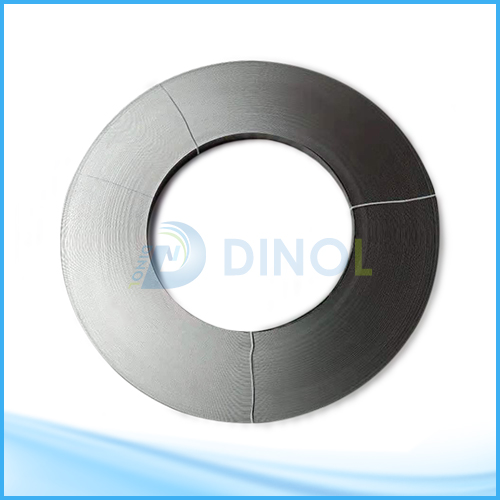
The anode of a Mixed Metal Oxide ribbon is made up of a high-purity Grade 1 or Grade 2 titanium base covered with a layer of valuable metal oxides, either Ruthenium-Iridium (Ru/Ir) or Iridium-Tantalum (Ir/Ta). The titanium substrate meets ASTM B265 standards. It has the mechanical flexibility needed for installing at the level of the rebar in reinforced concrete and stays stable in size even when electrochemical load is applied over time.
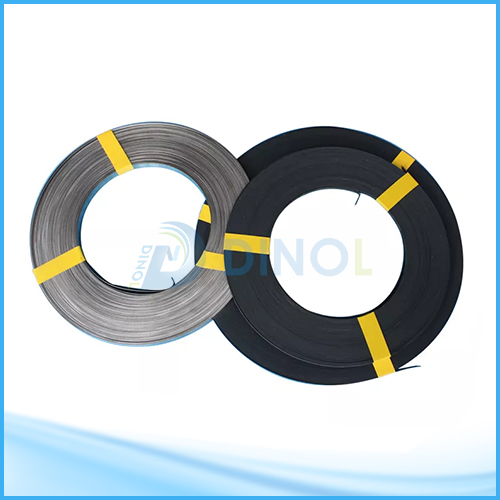
What makes the covering work is its chemistry. Ir/Ta formulations work best in places where oxygen is changing, like concrete and dirt. Ru/Ir coatings, on the other hand, make chlorine changing more efficient in saltwater and marine splash zones. Most ribbons are between 6.35 mm and 12.7 mm wide and 0.5 mm to 0.635 mm thick, which is just thin enough to fit between layers of rebar without changing the cover depth or the structure's strength.
Operational Parameters Worth Knowing
When used in concrete, these anodes can give up to 100 mA/m³ of current. When used in dirt or coke breeze, they can handle up to 600 mA/m³ of current. Electrical resistance is about 0.05 ohms per meter, which keeps voltage drop to a reasonable level over long grid spans. When titanium conductor bars are used at grid crossings, the potential distribution stays the same, even on bridge decks that are several hundred square meters or more in size.
The designed service life is between 20 and 75 years, depending on the coating's load and the current density that is applied. This meets the standard 20-year-plus warranty requirements in state and municipal infrastructure contracts. Those performance figures are typical of ICCP MMO ribbon anodes for cathodic protection, which are widely specified for concrete bridge decks, parking structures, and other reinforced concrete assets where uniform current distribution over large areas is essential.
Comparing MMO Ribbon Anodes with Alternative Anode Technologies
Why MMO Outperforms Zinc and Conventional Titanium
During operation, zinc and magnesium sacrificial anodes burn up, so they need to be replaced every so often and produce a certain amount of metalite waste. Also, their driving power is set, so you can't raise the output when chloride pollution speeds up rusting. Platinum-clad anodes are stable electrochemically, but they are so expensive that they are rarely a good choice for large-scale grid installations on bridge decks or parking lot slabs.
These problems can be fixed with MMO ribbon anodes. The titanium base doesn't break down when the current is cut off, and the oxide covering keeps its shape over decades of use. Engineers can finetune the amount of current going through the rectifier, which lets the system change as the structure ages or the level of contamination changes. This feature of not being able to be consumed is not a nice-to-have for infrastructure repair projects where the anode is covered in concrete and can't be reached after installation; it's a must.
ICCP System Design and Installation with MMO Ribbon Anodes
Design Logic for Bridge Deck and Parking Structure Applications
A good system design starts with figuring out the current demand based on the chloride profile, rebar density, and target polarization criteria of the structure. The standard for reinforced concrete applications is NACE SP0290, which says that the protection must have a 100 mV polarization decay or an instant-off potential more negative than −350 mV vs. Cu/CuSO₄. Meeting those criteria is what drives the specification of ICCP MMO ribbon anodes for cathodic protection in bridge decks and parking structures, since the ribbon geometry and titanium conductor bars are what make uniform polarization achievable across large reinforced concrete surfaces.
Ribbon anodes are usually laid out in a grid, with the distance between them based on how much current is needed and how resistive the concrete is. Titanium conductor bars are spaced out so that they run perpendicular to the ribbon. This keeps the polarization field even and lowers the voltage drop caused by resistance. Ribbon and wire are joined together using resistance spot welding or mechanical crimping. The connections are then sealed in high-quality resin or heat-shrink tubes to keep dampness out. Reference electrodes—silver/silver chloride for marine areas and copper/copper sulfate for underground concrete—are inserted into the top during installation so that the performance can be tracked over time.
Here are the construction methods that most often decide how well a project turns out:
- Coating protection during handling: MMO coatings are durable under electrochemical conditions but can be scratched by rebar or formwork during placement. Protective packaging and written installation instructions reduce the risk of pre-embedment damage that would only appear as a localized failure years later.
- Conductor bar termination: Each ribbon-to-conductor junction must achieve a contact resistance below the project specification. Skipping verification at this stage produces voltage hot spots that shorten localized anode life.
- Submittal documentation: Government-funded projects require a complete technical submittal — material certifications, equivalent life calculations, third-party test reports — before the engineer of record approves the anode system. Preparing this package early avoids the 3-to-6-week approval delay that can push delivery past the construction window.
Protection for the coating while it's being handled: MMO coatings last a long time in electrochemical conditions, but they can be scratched by rebar or formwork while they're being put down. Pre-embedding damage that would only show up as a localized failure years later is less likely to happen when there is protective packaging and written installation instructions.
Procurement and Supplier Selection Guide for MMO Ribbon Anodes
Criteria That Separate Reliable Suppliers from Commodity Vendors
Rehabilitating infrastructure projects have paperwork needs that sellers of goods can't meet. An ASTM B265 material certificate for the titanium substrate, an EN 10204 3.1 mill test report, and an accelerated life test done according to NACE TM0108 are the bare minimum of proof that is acceptable. A trustworthy quality report includes an X-ray fluorescence (XRF) test to check the coating's load and an adhesion bend test to make sure the MMO layer won't separate when mechanical stress is applied. These documentation requirements apply directly to ICCP MMO ribbon anodes for cathodic protection used in concrete rehabilitation, where state and municipal contracts typically require the full traceability package before any material is accepted on site.
In addition to paperwork, these things should be taken into account when choosing an ICCP MMO ribbon anode supplier:
- Customization depth: Maintenance projects typically require quantities from a few hundred to a few thousand meters, not full production runs. A supplier that cannot cut, spool, and certify small batches to your grid layout without a six-month lead time adds procurement risk.
- System completeness: Sourcing ribbon, conductor bars, connection hardware, and rectifiers from a single vendor eliminates the compatibility disputes that arise when components from different manufacturers interact unexpectedly.
- Third-party validation: Intertek or SGS test reports produced on your specific lot — not a generic sample — give consulting engineers the independent evidence they need to approve the submittal without requesting additional testing.
- NDA capability: Project drawings belong to the owner. A supplier with a standard non-disclosure protocol in place demonstrates the institutional maturity that government project teams require.
Project drawings belong to the person who owns the business. A supplier with a standard non-disclosure protocol shows that the organization is mature enough to work with government project teams.
Typical Applications and Environmental Impact of MMO Ribbon Anodes
MMO ribbon anodes are used in many different types of structures where steel that is embedded or submerged is exposed to chloride for a long time. In northern states, deicing salts build up on bridge decks. Other places where they have been used before are coastal parking spaces, marine jetties that get wet during high tides, offshore platform splash zones, and the floors of aboveground storage tanks. The thin ribbon shape can be put in saw-cut holes, between existing rebar mats, or in new overlay concrete without having to change the structure.
The non-consumable titanium-MMO system doesn't make any metallic waste, which is good for the environment. In contrast to zinc sparing systems, the anode mass does not enter the environment during the 20-year service life. The long build life also lowers the number of times the structure needs to be fixed, which lowers the amount of carbon that is stored in the structure.
Conclusion
When it comes to government building projects, MMO ribbon anodes made on an ASTM B265 titanium substrate are the only technically sound and long-lasting option to old proprietary systems. What makes a project finish on time and pass owner review are the coating choice, the amount of documentation that is complete, and how responsive the supplier is to small-batch customization. When those things happen at the same time, the system protects the structure for decades with little help from people. That combination of certified materials, complete documentation, and flexible manufacturing is what separates a reliable ICCP MMO ribbon anodes for cathodic protection supplier from a commodity vendor in government and infrastructure procurement.
FAQ
What is the expected service life of an MMO ribbon anode in concrete?
Life span is planned to be between 20 and 75 years. The exact number depends on how much noble metal oxide is coated and how much current is applied over the service life of the structure. The design goals for most city bridges and parking garages are 25 to 30 years.
Why are titanium conductor bars required alongside the ribbon?
Over long grid lengths, the ribbon's thin cross-section causes a voltage drop that can be measured. Putting conductor bars at intersections lowers that resistance, making sure that the anode field as a whole has the same level of protection.
Which coating type should I specify for a marine pier application?
Ruthenium-Iridium (Ru/Ir) coatings work best in saltwater and tidal areas because they help chlorine escape from the anode surface. Iridium-tantalum (Ir/Ta) works better in concrete and dirt where air is changing.
Can Tianyi provide third-party test documentation for project submittals?
Yes, Tianyi arranges for Intertek or SGS testing of output lots and gives EN 10204 3.1 mill certificates, NACE TM0108 accelerated life data, and equivalent life estimates that can be looked over by a consulting engineer.
What minimum order quantity applies to repair projects?
Tianyi can handle orders from a few hundred meters up, and they can spool and name the yarns to fit your grid plan exactly.
Partner with Tianyi for Your Next CP Project
Tianyi sells certified ICCP MMO ribbon anodes for cathodic protection directly from the manufacturer. Every order comes with full submittal documentation, system-level accessories, and small-batch customization. From checking the raw titanium to checking the final coating, our Baoji production facility keeps a close eye on quality. You can get a detailed quote by sending your project details to info@di-nol.com. Let Tianyi's engineering team help you fix up your next bridge, pier, or parking structure from the time you submit the bid to the time it is delivered.
References
1.NACE International. SP0290: Impressed Current Cathodic Protection of Reinforcing Steel in Atmospherically Exposed Concrete Structures. NACE International, 2007.
2.NACE International. TM0108: Evaluation of Coatings and Lining Systems Used with Cathodic Protection for Underground Oil and Gas Pipelines. NACE International, 2008.
3.ASTM International. B265: Standard Specification for Titanium and Titanium Alloy Strip, Sheet, and Plate. ASTM International, 2020.
4.Bertolini, L., Elsener, B., Pedeferri, P., and Polder, R. Corrosion of Steel in Concrete: Prevention, Diagnosis, Repair. Wiley-VCH, 2013.
5.Broomfield, J. P. Corrosion of Steel in Concrete: Understanding, Investigation and Repair. 2nd ed., Taylor & Francis, 2007.
6.Chess, P., and Gronvold, F. Cathodic Protection of Steel in Concrete. E & FN Spon, 1996.