




How do ICCP MMO ribbon anodes compare with linear anodes today?
When evaluating anode systems for impressed current cathodic protection, the choice between MMO ribbon and linear configurations carries real consequences for long-term asset performance. ICCP MMO ribbon anodes for cathodic protection have become the preferred specification on bridge deck overlays, parking structures, and marine pier rehabilitation projects across the United States. Their thin titanium substrate, catalytic MMO coating, and grid-compatible geometry deliver measurable advantages over conventional linear anode formats — advantages that translate directly into lower lifecycle costs and cleaner submittal packages for state and municipal owners.
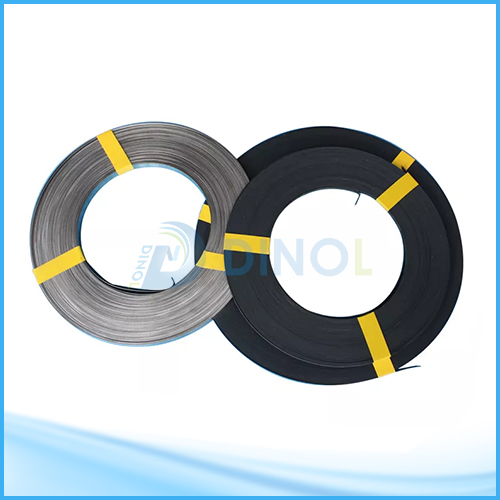
Overview of ICCP MMO Ribbon Anodes and Linear Anodes
What Each Anode Type Actually Is?
The MMO ribbon anodes are made up of a Grade 1 or Grade 2 titanium strip that is commercially pure and meets ASTM B265. They are then covered with a catalytic Mixed Metal Oxide layer, which is usually Iridium-Tantalum (Ir/Ta) for environments with oxygen evolution in concrete and soil or Ruthenium-Iridium (Ru/Ir) for environments with chloride-rich seawater. Ribbons are usually between 6.35 mm and 12.7 mm wide and 0.5 mm to 0.635 mm thick. This makes it possible for them to lie flat in a concrete layer or rebar mat without changing the shape of the structure.
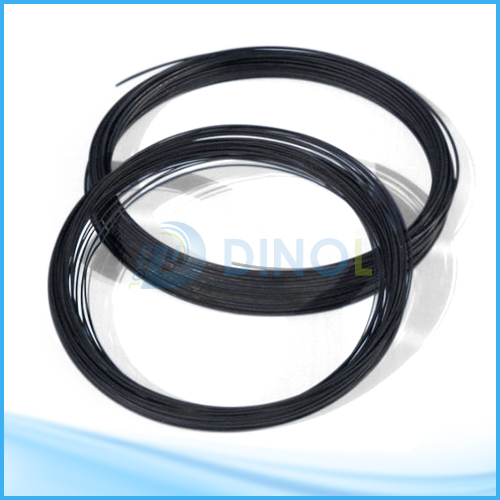
On the other hand, linear anodes include a wider range of materials, such as platinized niobium wire, conductive polymer strings, carbon-fiber composite wires, and graphite bars. Each has a different conductivity property and rate of use. Carbon-fiber and conductive polymer types are commonly used for slot placement on old bridge decks. In marine immersion zones, platinized wire is still commonly used. But none of these forms has the same level of dimensional stability and electrical efficiency as an MMO titanium ribbon that is inserted in new concrete.
Understanding these differences in building is the first step in making any choice about specifications that follow.
Performance & Durability Comparison: ICCP MMO Ribbon vs Linear Anodes
Service Life, Current Output, and Coating Stability
It's all about the numbers here. The design life of an MMO ribbon anode at regular concrete current densities—usually 2 to 20 mA/m² of protected steel surface—is 20 to 50 years. For important infrastructure designs, the life span can reach 75 years if the coating loading is set correctly. Consulting engineers and owner representatives need proof that NACE TM0108 accelerated life testing is valid before they will approve a submittal. That is why any ICCP MMO ribbon anodes for cathodic protection package submitted for infrastructure work should include the accelerated life test data, coating loading records, and design calculations that connect current density to the specified service life.
The electrical resistance of MMO ribbon anodes is very low, at about 0.05 ohms per meter. They can also output up to 100 mA/m² of current in concrete, and up to 600 mA/m² in dirt or coke breeze. With that range of output and the ability to stay the same size under continuous current discharge, they are the best technical choice for government-funded infrastructure projects where a 20-year promise is the minimum requirement and not an ideal.
- Conductive polymer anodes offer competitive installation flexibility but show measurable resistance increase over time as the polymer matrix oxidizes, narrowing their effective service window to 15–25 years under equivalent current demands.
- Platinized niobium wire performs well in seawater immersion but carries a higher unit cost and a narrower operational current density range compared to MMO ribbon in coke breeze or concrete backfill.
- Carbon fiber composite anodes provide low resistivity initially but are sensitive to localized acidification at the anode surface — the same environment where MMO oxide chemistry actively thrives due to its inherent acid resistance.
These differences in efficiency also lower the amount of energy used by the machine. Voltage drop along long anode runs is kept to a minimum by stable current distribution across a titanium conductor bar grid. This directly cuts rectifier running costs over a multi-decade service period.
These performance differentials also reduce system energy consumption. Stable current distribution across a titanium conductor bar grid minimizes voltage drop along long anode runs, which directly lowers rectifier operating costs across a multi-decade service period.
Technical & Practical Considerations for Selecting Anodes
Installation Profile, Documentation Requirements, and Vendor Capability
Aside from the raw electrochemical performance, the purchase choice also includes how easy it will be to install and make sure that all the necessary documents are kept. Before the overlay concrete or shotcrete is put down, MMO ribbon anodes are usually connected to titanium conductor bars at grid intersections. These connections are usually spaced 300 mm to 600 mm apart, depending on the design current density. The 0.5 mm shape doesn't change the cover depth in any way that can be measured, and it meets the standard rebar clearance requirements for ACI-compliant patches.
When linear anodes are put in routed slots, they need more work to be done to get ready for installation and are more likely to get damaged during installation. Cutting slots in a bridge deck that is still being used adds to the cost of the job because of the need to control dust and handle traffic. These are practical drawbacks that engineers weigh when comparing ICCP MMO ribbon anodes for cathodic protection against alternative installation methods, since slot routing on an active bridge deck drives up labor, traffic control, and schedule risk even though the ribbon anode itself delivers excellent long-term performance.
MMO ribbon anode submittals are well-structured when it comes to documentation. The most important things that consulting engineers and company agents need are:
- ASTM B265 mill certification confirming Grade 1 or Grade 2 titanium substrate chemistry and mechanical properties.
- EN 10204 3.1 material test report for projects with European-aligned specifications or federal bridge programs that cross-reference EN standards.
- XRF coating loading verification confirming noble metal oxide mass per unit area.
- NACE TM0108 accelerated life test data projecting real-world service life at the specified operating current density.
- Equivalent current distribution calculations demonstrating that grid spacing, conductor bar cross-section, and anode output satisfy the design mA/m² requirement across the protected area.
These papers go with the submission package and help the owner review cycle that lasts for three to six weeks on most state DOT and local bridge projects. Your project timeline is at risk if your supplier can't make this package when you ask them to.
Why Modern B2B Clients Prefer ICCP MMO Ribbon Anodes?
Certification, Customization, and Long-Term Procurement Confidence
Manufacturers of reliable MMO ribbon anodes pay for third-party verification. Intertek and SGS test reports on coating composition and adhesion have become the standard way to get owners to approve new products. A bend-test-verified, XRF-confirmed anode with recorded NACE TM0108 life data is in a very different risk category than a substitute that isn't approved, no matter how much it costs. That risk distinction is exactly why procurement specifications for ICCP MMO ribbon anodes for cathodic protection should name the required third-party reports upfront, rather than accepting vendor self-declarations after award.
Technical directors who are in charge of multiple projects at once also value the ability to customize. For each use, ribbon sizes, coating types (Ru/Ir vs. Ir/Ta), coating configurations (single-sided or double-sided), and thread lengths are different. For a marine dock that works in flowing seawater, the Ru/Ir chemistry needs to be optimized for chlorine evolution. For a bridge deck overlay, the Ir/Ta chemistry needs to be optimized for oxygen evolution in the alkaline concrete pore solution. When building from spring to fall, suppliers who keep both coating chemicals in stock and can make a custom spool order in four to eight weeks really protect your schedule.
Making the Right Choice: How to Decide Between ICCP MMO Ribbon and Linear Anodes
Matching Anode Format to Project Context
The most important decision factors are summed up in the table below:
The MMO Ribbon Anode and the Linear Anode (Polymer/Wire) are two parameters that can be changed. The substrate is Ti Gr1/Gr2, and the type of fiber used varies. The design life is 20–75 years, with 15–25 years being the norm. The current output in concrete is up to 100 mA/m², with 10–50 mA/m² being the norm. The installation method is grid tie + concrete overlay, slot routing, or direct embedment. The key certifications are NACE TM0108 and ASTM B2665, and the supplier determines which one to use. The ideal application is on a bridge deck, parking lot, or pier overlay.
| Parameter | MMO Ribbon Anode | Linear Anode (Polymer/Wire) |
|---|---|---|
| Substrate | Ti Gr1/Gr2, ASTM B265 | Varies (polymer, Nb, C fiber) |
| Design life | 20–75 years | 15–25 years typical |
| Current output (concrete) | Up to 100 mA/m² | 10–50 mA/m² typical |
| Installation method | Grid tie + concrete overlay | Slot routing or direct embedment |
| Key certification | NACE TM0108, ASTM B265 | Supplier-specific |
| Ideal application | Bridge deck, parking, pier overlay | Existing deck slot repair |
MMO ribbon anodes always have the best lifecycle value for new overlay projects and full-depth rehabilitation contracts where the owner wants a system warranty that lasts at least 20 years. Some linear formats can still be used for small repair slots in existing decks where little concrete needs to be removed. Choosing the right anode based on your maintenance schedule, overlay thickness, and approval needs will protect both your project balance and your long-term client relationships.

Conclusion
MMO ribbon anodes are the best in concrete-embedded ICCP systems because they have been shown to be electrochemically efficient, have service life data that can be checked, and have a certification description that is ready to be sent in and meets ASTM, NACE, and EN standards. Linear anode forms still have some uses, but MMO ribbon systems are better at providing a wide range of currents, stable dimensions, and long-term guarantee support for projects like bridge decks, parking structures, and marine piers. If you pick the right anode style early on in the design process, you can keep project funds and owner relationships safe for the whole structure's life. That is the practical case for specifying ICCP MMO ribbon anodes for cathodic protection at the design stage, rather than treating anode selection as a late procurement decision.
FAQ
What is the realistic service life of an MMO ribbon anode in a bridge deck overlay?
At normal concrete current densities of 2 to 20 mA/m², an MMO ribbon anode that is properly defined and has the right amount of covering loading lasts for 20 to 50 years. Critical infrastructure designs that call for a higher coating mass can last up to 75 years. Accelerated testing according to NACE TM0108 gives owner engineers the written projection they need.
Why are titanium conductor bars necessary in a ribbon anode grid?
The cross-section of ribbon anodes is very thin, and their lengthwise conductivity is not very high. Titanium conductor bars at grid intersections move current horizontally, stop too much voltage drop along long anode runs, and keep the protection potential the same all over the protected surface.
How do I confirm the coating chemistry is correct for my application?
Ask for an XRF study to confirm the loading mass per unit area and the Ir/Ta or Ru/Ir mix. The Ir/Ta coatings work well in oxygen-evolving environments like concrete and soil, while the Ru/Ir coatings work well in chlorine-evolving environments like seawater. Both should have EN 10204 3.1 material certification to back them up.
Can MMO ribbon anodes replace a linear anode specification mid-project?
Yes, as long as the supplier shows that the proposed grid spacing and output meet the original design mA/m² requirement with an equivalent current distribution calculation. In the normal review cycle, most consulting engineers will accept this equivalency submittal.
Partner With Tianyi — Your Trusted ICCP MMO Ribbon Anodes for Cathodic Protection Supplier
Tianyi makes precise MMO-coated titanium anodes that are made from Grade 1 and Grade 2 titanium that meets ASTM B265 standards. They offer Ir/Ta and Ru/Ir coating choices that have been tested by XRF and NACE TM0108 to make sure they are reliable. As a maker of ICCP MMO ribbon anodes for cathodic protection, we offer custom spool sizes, full 3.1 material certification packages, and current distribution estimates that are tailored to each project. Orders for small amounts are sent out in four to eight weeks. To get a detailed submission package, email our engineering team at info@di-nol.com.
References
1. NACE International. TM0108: Test Method for Evaluation of Internal Plastic Coatings for Corrosion Control of Tubular Goods by Autoclave Test Procedures — referenced for accelerated anode life testing methodology. NACE International, 2008.
2. ASTM International. ASTM B265: Standard Specification for Titanium and Titanium Alloy Strip, Sheet, and Plate. ASTM International, 2020.
3. Broomfield, J. P. Corrosion of Steel in Concrete: Understanding, Investigation and Repair. Taylor & Francis, 2007.
4. Pedeferri, P. "Cathodic Protection and Cathodic Prevention." Construction and Building Materials, Elsevier, 1996.
5. Chess, P., & Gronvold, F. Cathodic Protection of Steel in Concrete. E & FN Spon, 1996.
6. NACE International. SP0290: Impressed Current Cathodic Protection of Reinforcing Steel in Atmospherically Exposed Concrete Structures. NACE International, 2007.