




Can a Chlorine Electrolyzer Replace Chlorine Gas Systems Safely?
Yes — a chlorine electrolyzer can safely replace traditional chlorine gas systems in most industrial applications. Instead of storing and transporting hazardous pressurized gas cylinders, an on-site sodium hypochlorite generator electrolyzes brine solution to produce active chlorine exactly where it is needed. The TY-WL series from Tianyi, for example, covers outputs from 50 g/h to 2,000 g/h, making it practical for municipal water plants, aquaculture vessels, food processing CIP lines, and swimming pool recirculation systems alike.
Understanding Chlorine Electrolyzers and Traditional Chlorine Gas Systems
How Conventional Chlorine Gas Systems Work
Most of the time, chemical companies make a lot of chlorine gas, move it in compressed gas cylinders, and store it under pressure on-site. There is a risk with every move. If a cylinder at a water treatment plant breaks, for example, it can send out a dangerous plume that affects people in the area and the people who work there. It is called an Extremely Hazardous Substance by the U.S. EPA under EPCRA Section 302. This means that places that store more than a certain amount must file emergency action plans.
The Electrochemical Principle Behind On-Site Generation
For example, an electrolytic cell has electrochemical reactions that split a saline solution from 2% to 5% into two parts:
- Anode reaction: 2Cl⁻ − 2e⁻ → Cl₂↑
- Cathode reaction: 2H⁺ + 2e⁻ → H₂↑
- Net cell reaction: NaCl + H₂O → NaClO + H₂↑
It goes like this: 2Cl⁻ → 2e⁻ → Cl₂↑To make H₂, 2H⁺ and 2e⁻ are added. In a net cell process, NaCl and H₂O are changed into NaClO and H₂.
Key Structural Differences Worth Noting
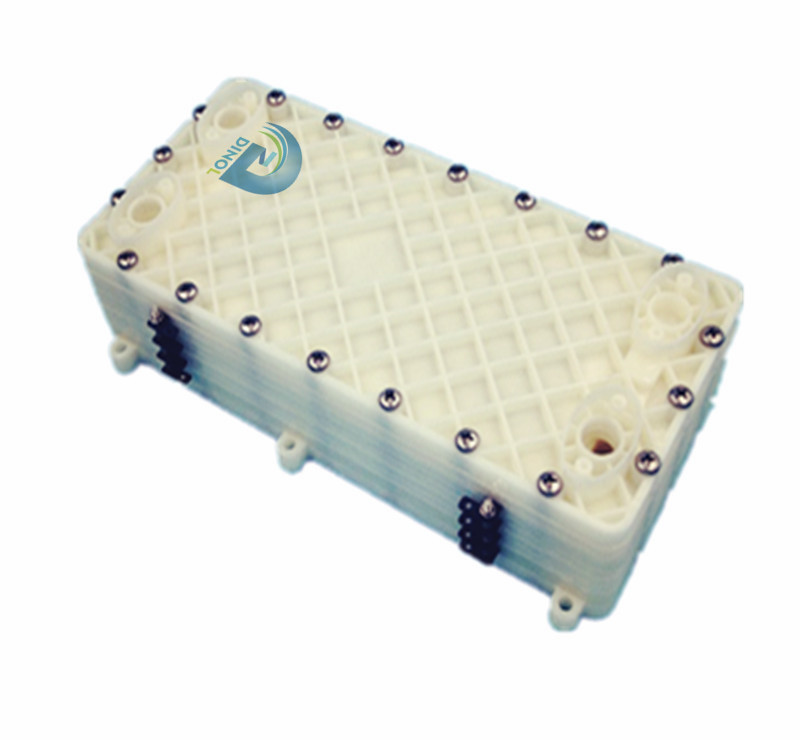
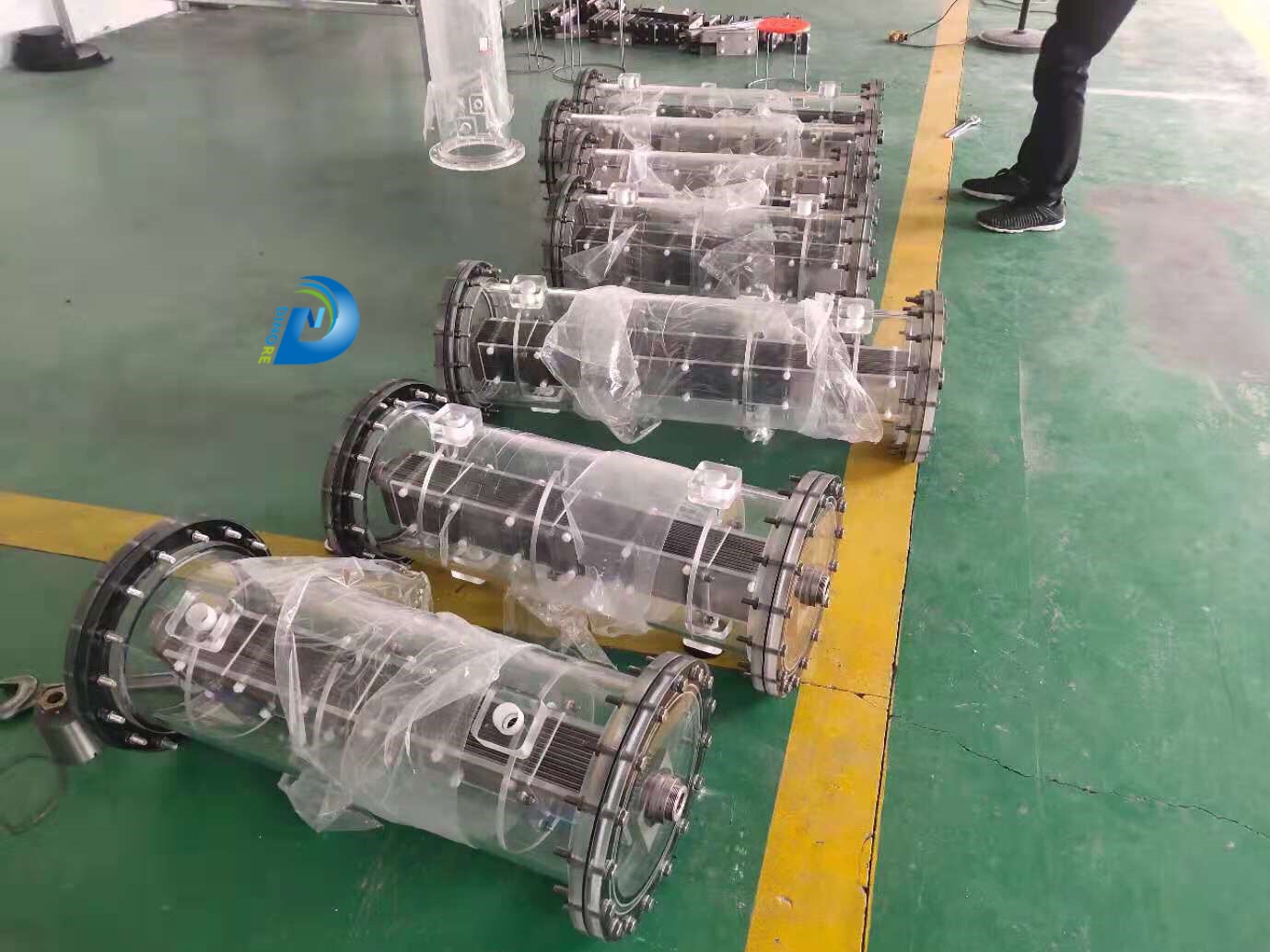
Some types of MMO are used in the TY-WL line. PMMA/PVC cells that can handle 0.2 MPa hold aluminum anodes that have a tiny coat of Ru-Ir on them. When electrolysis is happening, the new structure of the electrode connections cuts down on stray current. In other words, the efficiency stays high even if the electrode plates are quickly set in air. On the other hand, traditional gas systems need special rooms for chemicals, pressure release valves, and gas scrubbers, which raises the costs of capital and regulations.
Safety Features and Environmental Impact Comparison
Eliminating Transportation and Storage Hazards
Moving large amounts of chlorine from one place to another is the most dangerous part of dealing chlorine. A chlorine electrolyzer can make chlorine on-site and eliminates this risk. It was found by the U.S. Chemical Safety and Hazard Investigation Board that several people have died in accidents involving train cars and chlorine tank leaks. Pressurized gas is almost never stored on site because the process only makes what it needs at any given time.
Automated Controls and Fault Protection
Nowadays, sodium hypochlorite generators have custom-built control boxes that have features like shutting down automatically if the current or flow isn't normal, tracking the effective chlorine concentration in real time, and remote SCADA integration so they can be used when no one is there. Purchasing teams don't have to worry about problem stops that happen when no one is around. These controls make it less likely that the system will fail quietly, which could make cleaning less effective.
Lower Carbon Footprint Through Local Production
Emissions from cars and trains are taken out of the supply chain when disinfectant is made on-site. Electrolytic cells use less power per gram of active chlorine when the flow of current is optimized. If you feed brine that is 2–5% salty and water that is 5–15 °C, the TY-WL series will work. Most places of business can keep their temperatures in this range without adding extra heat, which saves energy.
Performance and Operational Advantages
TY-WL Series: Scalable Output for Every Application
The chlorine rates for the nine types of TY-WL range from 50 g/h to 2,000 g/h. Here are the range's most important technical details:
This page has information about the Model, Effective Cl₂ (g/h), Current, Max Voltage, Cell Length, and Cell Length. WL300B: 300 mm, 84 A ±20%, 20 V; WL1000B: 1,000 mm, 156 A ±20%, 40 V; WL2000B: 2,000 mm, 460 A ±20%, 40 V;
| Model | Effective Cl₂ (g/h) | Current | Max Voltage | Cell Length |
|---|---|---|---|---|
| WL50B | 50 | 60 A ±20% | ≤5 V | 310 mm |
| WL300B | 300 | 84 A ±20% | ≤20 V | 550 mm |
| WL1000B | 1,000 | 156 A ±20% | ≤40 V | 1,020 mm |
| WL2000B | 2,000 | 460 A ±20% | ≤40 V | 1,200 mm |
With this step-by-step range, procurement engineers can perfectly match the chlorine electrolyzer and the right equipment to the right flow needs, whether it's for a small fishing boat or a city water treatment plant for tens of thousands of people.
Long Electrode Life and Corrosion Resistance
Titanium anodes are said to have a Ru-Ir nano-coating that will last at least 5 years with normal loads. Hypochlorite can damage metal, but the covering protects it much better than bare metal. Chlorinated brine doesn't combine chemically with PMMA and PVC, which are the building blocks of cells. Because of this, repair rounds can be planned ahead of time, and downtime that wasn't planned for is less likely to happen.
Compatibility With Seawater and Low-Temperature Environments
A lot of the other systems don't work in cold places or seawater that doesn't have enough salt. The TY-WL electrodes are made to work in seawater with little salt, and they continue to work normally even when the water temperature drops. So, the series can be used to clean the bilge water on ships that go out to sea and the CIP lines in cold rooms of food processing plants.
When people buy things, they often wonder if the tools will still work well after two or three winters. With these traits, you can answer that question. Tests that measure how long the electrode layer lasts show that the answer is yes.
Comparing Total Cost of Ownership and Procurement Considerations
Capital vs. Operating Expense Trade-Off
To make sodium hypochlorite on-site costs more money up front than to connect a simple cylinder, but the running costs change the balance over time. The main sources that keep coming in are food-grade salt and energy. These are simple to get and don't change costs as often as bulk chlorine contracts do. Between 15% and 18% hydrochloric acid is used to remove scale regularly and cheaply in pickling maintenance.
Certification and Vendor Qualification
You need marine classification from the China Classification Society (CCS) or a similar group to use it on ships. NSF/ANSI 61 or a similar material approval is needed to handle food. The people who buy things should make sure that the company can do more than just change cells. They should also be able to fix original electrodes and renew coatings. This is because fixing the covering is a lot less expensive than replacing the whole cell.
After-Sales Support as a Long-Term Asset
Tianyi helps set up everything and trains operators right where they work for the chlorine electrolyzer. If something goes wrong while it's being used, the tech team can change how it's set up and re-coat the original electrode plate. This lowers the cost of long-term upkeep and saves the initial investment for the whole time the equipment is in use. This is a very important thing to think about when the buying process takes three to nine months. This is when post-delivery help deals come in handy.
Transitioning to Electrolytic Chlorination: Challenges and Best Practices
Integration With Existing Dosing Infrastructure
Dosing pumps, flow meters, and control loops that are already set up to use liquid hypochlorite or gas chlorination are already in most places that clean up factories or treat water. Engineers need to look at the size of the lines, the room in the tanks, and the mapping of the control signals before they can be put in place. This infrastructure can fit an on-site generator. Work with a supplier that gives you detailed P&ID drawings. They will make this step go a lot faster.
Personnel Training and Operational Readiness
People who know how to work with cylinders need to learn how to safely make salt, check electrolysis cells, and release hydrogen. After the cathode process, hydrogen is made, and it needs to be safely spread out. When cities buy things, they generally have a 30-day trial run time. In this way, the operations staff has time to get used to the new method before it is made official.
Compliance Documentation and Record-Keeping
Oversight groups in the water treatment business need pesticide dose records that can be kept track of. With tools that automatically log data, this is easy to do on-site. People who are buying control cabinet software should make sure that it sends data in a file format that works with the SCADA or history platform they already have. This will help them stay in compliance after the software is installed.
Conclusion
It is a well-known and technically sound choice to switch from pressurized chlorine gas to on-site electrolytic generation with the chlorine electrolyzer in city water plants, marine applications, food processing plants, and pool systems. The safety case is strong as long as there is no bulk gas storage, no travel risk, and no automatic fault defense. If you check how long the electrode layer lasts over 5 years, the economic case is still strong. TY-WL outputs cover all the types of outputs that most procurement teams need to deal with. You can also get help from engineers from the time you specify it until it is put into use.
FAQ
Is on-site sodium hypochlorite generation as effective as chlorine gas for disinfection?
Yes. Hypochlorite ions produced by electrolysis carry the same oxidizing potential as those derived from chlorine gas dissolution. Independent water treatment studies confirm equivalent microbial reduction at equivalent chlorine residuals.
How long do the electrodes in a TY-WL cell last?
The Ru-Ir nano-coated titanium anodes are rated for a minimum 5-year service life under standard operating conditions. Electrode plate re-coating services extend the usable life further without full cell replacement.
Can the TY-WL series operate unattended?
Yes. The paired control cabinet supports automated shutdown on fault conditions and remote monitoring integration, making 24/7 unattended operation practical for most sites.
What maintenance does an electrolytic cell require?
Routine maintenance involves periodic pickling with 15–18% hydrochloric acid to remove mineral scale from electrode surfaces. No daily manual intervention is required under normal operating conditions.
Are these units suitable for marine applications?
Yes. The electrode materials and coatings are selected for low-salt seawater compatibility and low-temperature performance, meeting the requirements for ballast water treatment and vessel sanitation systems.
Ready to Evaluate a Chlorine Electrolyzer for Your Facility?
Tianyi is very good at making high-performance MMO-coated titanium anodes and sodium hypochlorite on-site. Tianyi, a well-known company that makes chlorine electrolyzers, sells the TY-WL line. This line can produce between 50 and 2,000 g/h of chlorine and comes with full customer service after the sale. Talk to our tech team to get an idea of how much it will cost and more information about the product that is special to your site. Send us an email at info@di-nol.com or visit dsa-anodes.com right away to get a price.
References
1. U.S. Environmental Protection Agency. Risk Management Program Guidance for Wastewater Treatment Facilities. EPA, 2019.
2. U.S. Chemical Safety and Hazard Investigation Board. Chlorine Release Incidents: Investigation Reports. CSB, 2021.
3. White, G. C. Handbook of Chlorination and Alternative Disinfectants, 5th ed. John Wiley & Sons, 2010.
4. Kraft, A. "Electrochemical water disinfection: A short review." Platinum Metals Review, 2008.
5. Bergmann, M. E. H., et al. "On-site generation of disinfectants: A review of electrochemical sodium hypochlorite production." Journal of Advanced Oxidation Technologies, 2014.
6. World Health Organization. Guidelines for Drinking-Water Quality, 4th ed. WHO Press, 2017.
