




Can polymer flexible anodes be used for large tank bottom protection?
Yes — polymer flexible anodes work extremely well for large tank bottom protection. As a purpose-built impressed current solution, the polymer flexible anode for cathodic protection conforms directly to the tank floor geometry, delivers current uniformly across the entire base plate, and performs reliably in high-resistivity soils where conventional point anodes fail. For oil storage tanks, refinery vessels, and water treatment tanks in regions like the Middle East and Southeast Asia, this technology has become the preferred ICCP anode choice for projects requiring minimal excavation and consistent electrochemical performance.
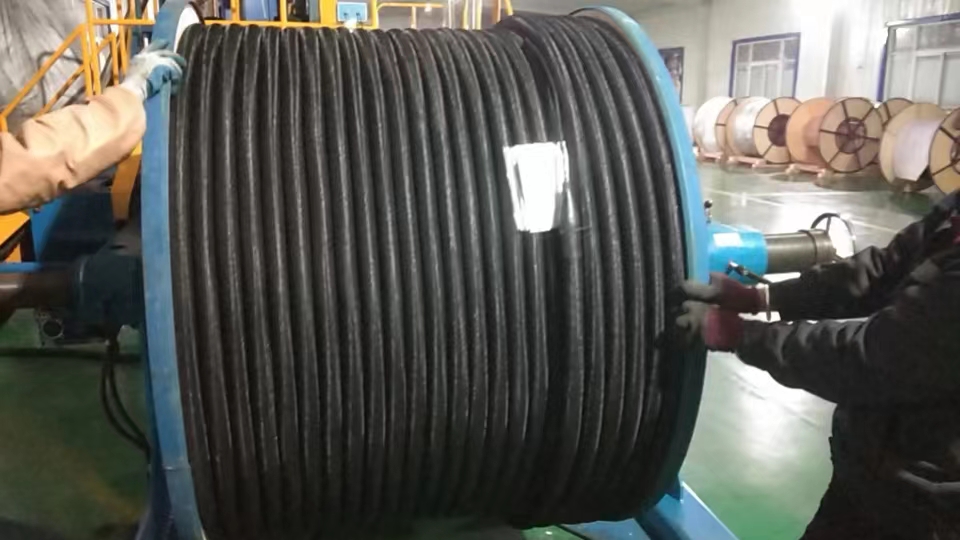
Understanding Polymer Flexible Anodes for Cathodic Protection
What They Are Made Of?
A polymer flexible anode has a core made of stranded copper wrapped in a conductive polymer layer. The whole thing is protected by an outer sheath. The copper core has a low resistance along its length, and the polymer coating has a high resistance across its width to ground. This design makes it possible for protective current to flow evenly along the length of the wire instead of gathering at a few places. This is very helpful on big, flat surfaces like the bottom of tanks.
How They Integrate Into ICCP Systems
In an impressed current cathodic protection system, the anode groundbed brings current into the soil from a transformer-rectifier. This current then flows to the steel structure that is being protected. Distributed auxiliary anodes are made of polymer flexible anode for cathodic protection. They are put right under or next to the floors of the tanks, filled with coke breeze, and hooked up to the rectifier's positive end. Coke backfill lowers grounding resistance and makes systems last a lot longer.
Key Technical Parameters to Know
When purchasing experts look over material requests, they should make sure that these details are correct:
- Output current: 300–1000 mA/m (with coke backfill, up to 82 mA/m in soil conditions without coke)
- Outer diameter: 38–40 mm
- Anode weight: 1.5 kg/m
- Bending radius: 500 mm minimum
- Weight loss rate: less than 1% per ASTM D-543 chemical immersion testing
- Operating temperature minimum: -18°C
- Roll lengths: 500 m or 1,000 m, with cut-to-length capability
These numbers come straight from product info that has been checked. To prove compliance, every supplier should give an English-language TDS, COC, and plant inspection record.
Evaluating Polymer Flexible Anodes for Large Tank Bottom Protection
The Problem With Traditional Rigid Anodes on Tank Floors
Deep-well graphite or silicon cast iron are common types of groundbed anodes that create a concentrated current discharge. This makes the potential distribution uneven on the floor of a 40-meter-diameter holding tank: areas close to the anode get too much current, while areas farther away aren't safe enough. This unevenness makes localized pitting rust more likely, which is the main reason why tank floors fail and need expensive fixes while they're still in use, unless a polymer flexible anode for cathodic protection is used to spread the current more evenly.
Why Flexible Geometry Changes the Outcome?
The current source length is the same as the covered surface area because the polymer bendable anodes are run in parallel rows right under the tank base. Each meter of the anode lets current flow on its own. In Saudi Arabia and Malaysia, field tests on the outside bottoms of above-ground storage tanks (ASTs) have shown potential distributions that are within ±50 mV of the goal across the entire floor area. This is something that rigid point anodes rarely achieve on tanks bigger than 20 meters in diameter.
Performance in Difficult Soil Environments
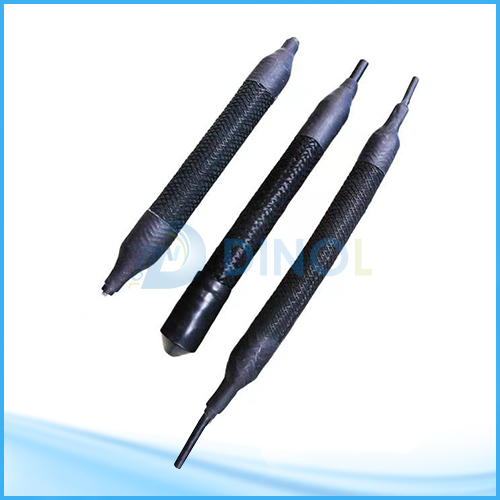
High-resistance soils are common in desert and ocean reclamation sites, and they present a significant problem for cathodic protection design. This is directly dealt with by polymer flexible anodes, since the coke breeze backfill column makes a low-resistance discharge zone that doesn't depend on the resistivity of the soil. Our MMO/Ti linear anode version has an MMO-coated titanium wire core that comes in two diameters: ¦1.5 mm and ¦3.0 mm. It is installed in the same way and delivers 328 mA/m or 656 mA/m of current, with a design life of more than 40 years.
Comparing Polymer Flexible Anodes With Traditional Anode Technologies
Zinc and Magnesium Sacrificial Anodes
Sacrificial anodes work well for small buildings and don't need any extra power. But because so many sacrificial anodes are needed on large tank bottoms—sometimes more than 2,000 m² of base plate—installation is not possible. Also, once underground, consumption rates can't be controlled, and replacing them involves shutting down the tank and digging up the ground.
Deep Anode Groundbeds
Deep anode groundbeds protect a lot of space, but they are hard to drill and can't be used to target the tank floor specifically. Stray currents can cause problems with nearby buildings, especially in petroleum plants with a lot of them.
Why Polymer Flexible Anodes Win on Value?
Because the output voltage is low with the flexible distributed anode method, the rectifier capacity needs are lower, which means that smaller transformer units are needed. The cost of installation is also lower, and the process is similar to installing cables: dig a shallow trench, spread coke breeze, lay the anode, cover with the rest of the coke, compact, and backfill. You don't need any big tools. When project engineers are working with tight building plans, 500 m or 1,000 m rolls that can be cut to any length save a lot of material and make installation go much faster.
Procurement and Implementation Considerations
Sourcing the Right Supplier
There are well-known Western brands and Chinese companies that have been steadily lowering the quality gap over the last ten years in the MMO flexible anode market. Tianyi, a company based in Baoji, China, makes polymer flexible anode for cathodic protection that are ISO 9001-certified and made from titanium with a 99.6% Ti content. These anodes are treated by sandblasting, pickling, and applying an MMO covering according to ASTM standards. The MMO/Ti wire comes in three different diameters: 1.0 mm, 1.5 mm, and 3.0 mm. Each one comes with an English TDS, COC, and factory test report.
This is what procurement managers should do to make sure everything is okay before placing an order:
- Request a first-article inspection report confirming contact resistance ≤ 0.0009 Ω between the MMO/Ti wire and cable
- Confirm carbon content ≥ 99.5% in the backfill material
- Verify cable type compatibility: 1×10 mm² XLPE/PVC is standard; PVDF/HMWPE and EPR/CSPE are available for aggressive service environments
- Confirm roll length tolerance and cut-to-length capability in the purchase order
Taking these steps will protect the project team while the owner approves the materials and lower the risk of not meeting standards during installation.
Installation Best Practices
Putting in flexible anodes under the floor of a tank works the same way as putting in trench cables. The cathodic protection design tells us how far apart the rows should be, usually between 1.5 and 3 m. All wire joints must use sealed, corrosion-resistant connections. Joint sealing is the most common place where things go wrong in the field. A supplier who uses tested joint materials and gives clear installation instructions is very helpful for the project.
Environmental Impact and Future Prospects
Lower Environmental Footprint Than Metal Anodes
Polymer bendable anodes don't use any metalite material while they work, unlike zinc or magnesium sacrificial anodes that break down and release metal ions into the soil. Because the MMO coating on the titanium core oxidizes water and chloride ions without losing substrate mass, there is no need to worry about heavy metals getting into groundwater.
Digital Monitoring Is Changing the Industry
With IoT-connected reference electrode arrays, you can now map the potential across tank floors in real time without having to physically get to them. When used with movable anode systems that are made to last a long time, these tracking tools give asset owners information about preventative maintenance that wasn't available before. This leads to a change from planned inspections to condition-based intervention, which lowers operating costs over the life of the system, which is 40 years.
Conclusion
Polymer bendable anodes have been used for a long time and are a good choice for protecting the bottom of large storage tanks. Their cut-to-length installation, spread current output, and 40-year design life solve the problems that make tank floor ICCP hard, like a lot of surface area, uneven soil resistance, and limited access. When purchasing teams look at polymer flexible anode for cathodic protection suppliers, Tianyi stands out as a strong option compared to well-known Western brands because it offers certified technical documentation, flexible specifications, and low prices.
FAQ
How long does a polymer flexible anode last in buried service?
A well-installed polymer flexible anode for cathodic protection with MMO/Ti wire (Φ1.5 mm or Φ3.0 mm) has a design service life of 40 years or more, provided coke breeze backfill is correctly applied and the rectifier output stays within design parameters.
Can these anodes be added to an existing ICCP system?
Yes. Polymer flexible anodes connect to any standard transformer-rectifier. Because output voltage is low, most existing rectifiers have sufficient capacity to drive an expanded anode groundbed without equipment replacement.
What documentation should I require from the supplier?
Request an English TDS, Certificate of Conformance (COC), factory inspection report, and third-party test results covering contact resistance, carbon content, and coating adhesion. ISO 9001 certification from the manufacturer is a baseline requirement.
Are custom cable lengths and specifications available?
Yes. Reputable suppliers offer rolls in 500 m or 1,000 m lengths with cut-to-fit capability. Cable type (XLPE/PVC, PVDF/HMWPE), MMO/Ti wire diameter, and current output can all be specified to match project drawings.
Request a Custom Quote From Tianyi — Your Trusted Polymer Flexible Anode Supplier
Tianyi offers polymer flexible anodes that are ISO 9001-certified for cathodic protection. They come with free samples, full English technical documentation, and the ability to make 1 m to 10,000+ m of anodes per order. Our engineering team checks the specs against the plans of your project and delivers within 15 to 20 days of receiving payment. You can email us at info@di-nol.com right now to get a technical information and a quote that is made just for your tank bottom safety project.
References
1. NACE International. Cathodic Protection of Aboveground Petroleum Storage Tank Bottoms (NACE SP0193). NACE International, 2016.
2. Peabody, A.W. Control of Pipeline Corrosion, 2nd ed. NACE International, 2001.
3. Baeckmann, W. von, Schwenk, W., and Prinz, W. Handbook of Cathodic Corrosion Protection, 3rd ed. Gulf Professional Publishing, 1997.
4. AMPP (formerly NACE). Impressed Current Cathodic Protection of Internal Submerged Surfaces of Steel Water Storage Tanks (AMPP SP0388). AMPP, 2020.
5. Gummow, R.A. "Cathodic Protection Considerations for Pipelines with AC Mitigation Facilities." Materials Performance, Vol. 37, No. 2, 1998.
6. ISO. Petroleum and Natural Gas Industries — Cathodic Protection of Pipeline Systems (ISO 15589-1). International Organization for Standardization, 2015.