




Common Cathodic Protection Anode Problems and How to Avoid Them
When a buried pipeline fails due to corrosion, the cost is rarely just the repair bill — it can mean regulatory penalties, environmental liability, and weeks of downtime. One of the most effective ways to prevent this is selecting the right anode system from the start. A polymer flexible anode for cathodic protection addresses many of the structural and electrochemical limitations that traditional rigid anodes cannot. This guide walks through the most common anode problems engineers and procurement managers face, and shows how modern linear MMO and conductive polymer anode systems resolve them.
Understanding Common Problems in Cathodic Protection Anodes
Material Degradation in Traditional Metal Anodes
Anodes made of high-silicon cast iron and graphite have been used in ICCP systems for decades, but the rate at which they are used up is a real problem. In high-resistivity soils, which are widespread in dry places like Saudi Arabia and the UAE, these materials rust unevenly, making hotspots where the protective current goes below the −850 mV CSE level that NACE SP0169 requires. Electrochemical corrosion starts up again once that barrier is passed, and there is usually no obvious sign above grade.
Uneven Current Distribution Across Protected Structures
In traditional point-source or deep groundbed setups, it's hard to get a steady flow of current along long pipelines or across tank floors. An article in the journal Corrosion says that uneven current distribution is one of the three main reasons why ICCP pipelines fail too soon. The bottoms of storage tanks are especially at risk because the current density drops sharply around the edges of the tank, leaving the edges unprotected while the center gets too much power.
Joint Failure and Coating Adhesion Loss
Groundwater, chloride ions, and mechanical stress from moving soil can get into below-grade anode joints. When connections aren't properly sealed, water can get in at the point where the cable meets the polymer flexible anode for cathodic protection. This speeds up localized corrosion and breaks the circuit in the end. For this kind of failure, there is no sound—the rectifier keeps showing regular output while the protected structure rusts away in the background. The trouble with coating delamination on rigid anodes is the same: when the substrate is revealed, it forms an oxide layer that is not conductive and stops sending current at all.
How MMO Linear Anodes and Polymer Flexible Anodes Work?
The Core Operating Principle
In a cathodic protection circuit with imposed current, an MMO/Ti linear anode works as an extra anode. The converter sends DC current through the anode and into the electrolyte (soil or water) around it. This current runs onto the pipe surface and stops the electrochemical corrosion process by making it cathodic. The mixed metal oxide coating on the titanium substrate (Iridium, Ruthenium, and Tantalum) allows current output at densities of up to 2,000 A/m² while keeping its shape over a design life of more than 40 years.
Conductive Polymer Architecture
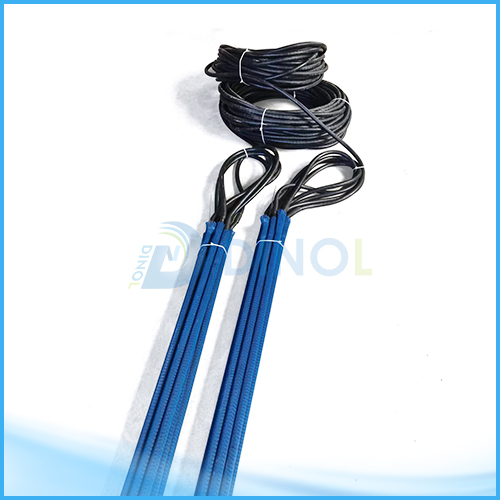
A conductive polymer flexible anode works in a different way. The core conductor is stranded copper wire that is covered with a carbon-loaded polymer matrix (with a carbon content of at least 99.5%). The copper core moves current along a lengthwise direction with very little resistance, while the polymer layer has a high resistance across the soil. The protective current spreads out slowly along the whole length of the anode because of this arrangement. This creates a regular protective electric field instead of discharge places that are close together.
Here are the most important efficiency criteria for this architecture:
- Output current: 300–1,000 mA/m depending on soil resistivity and backfill conditions
- Current in coke-backfilled soil: 82 mA/m; without coke backfill: 52 mA/m
- Outer diameter: 38 mm; weight: 1.5 kg/m
- Minimum bending radius: 500 mm — compatible with tank floor layouts and curved pipeline routes
- Weight loss rate (ASTM D-543 chemical immersion): less than 1%
- Contact resistance (MMO/Ti wire to cable): ≤0.0009 Ω
- According to ASTM D-543, the weight loss rate is less than 1%.
- The contact resistance between an MMO or Ti wire and a cable is 0.0009 Ω.
All of these factors together show if a system can meet the safety standards of AMPP/NACE for its entire design life. Before accepting a material submittal, procurement engineers should ask for factory test results that confirm each number.
Best Practices for Avoiding Anode Failures
Proper Trench Preparation and Coke Backfill
Long-term performance is directly related to how well the installation was done. To place a polymer flexible anode for cathodic protection groundbed, you usually dig a trench parallel to the pipeline, spread out half of the coke breeze layer, lay the flexible anode, cover with the other half of the coke breeze layer, pack down with native soil, and then fill the tunnel all the way back up. If you skip or reduce the coke layer, the grounding resistance goes up and the anode is used up faster. This is a trick that always shortens the service life.
Joint Sealing and Connection Integrity
Every place where a wire connects to an anode could fail. Joint sealing materials need to be able to withstand both chemical attacks and mechanical movement. Tianyi's MMO/Ti linear anodes have node sealing materials that are specially made to prevent corrosion and aging. The contact resistance at the MMO/Ti wire-to-cable junction is kept at ≤0.0009 Ω. One of the most common reasons systems fail early can be stopped by specifying this parameter in the material submittal and making sure it is correct during factory acceptance testing.
Batch Consistency and Third-Party Verification
Batch-to-batch consistency is a design requirement for projects that are between 500 and 1,000 m in size. Changes in the amount of carbon, the purity of the Ti, or the width of the coating have a direct effect on the estimates for current flow and service life. Asking for a Certificate of Conformance (COC), a report on the factory inspection, and a test by a third party on a sample from each production run gives procurement managers the proof they need to defend the choice of materials to owner engineers and site inspectors.
Selecting the Right Anode: MMO Linear vs. Polymer Flexible
Application Fit by Environment
It is best to use MMO/Ti linear anodes (DN-15 with φ1.5 mm wire or DN-30 with φ3.0 mm wire) for high-current tasks like underground pipes in low-resistance soils, seawater platform jackets, and groundbeds that are either horizontal or vertical. The DN-15 can send out 328 mA/m of current and the DN-30 can send out 656 mA/m. Both are designed to last at least 40 years. Conductive polymer flexible anodes work best in places with a lot of resistance and when the anode needs to lie flat against a structure, like when it's used for cathodic protection on the floor of a tank.
Customization and Procurement Logistics
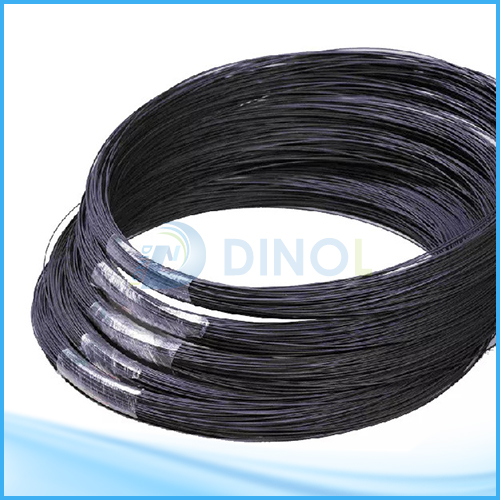
Both types of polymer flexible anode for cathodic protection come on 500 m and 1,000 m reels, and they can be cut to length, which saves material on jobs with non-standard run lengths. Project drawings can be used to fit cable specs, such as 1×10 mm² XLPE/PVC, PVDF/HMWPE, and EPR/CSPE. With diameters of φ1.0 mm, φ1.5 mm, and φ3.0 mm, MMO/Ti wires can meet all of your current output needs. Material traceability is based on ISO 9001 approval and ASTM-compliant tests, which go from raw titanium (99.6% Ti content) to final product after sandblasting, pickling, and applying an MMO coating.
Supplier Evaluation Criteria
The most important things for project approval when looking for a polymer flexible anode supplier are the quality of the technical documentation, the length of time it takes to make the product, and the supplier's ability to answer engineering questions in English. Standard wait time from Tianyi is 15–20 days for setups that are in stock, and 30 days for production runs of 1–10,000 m. You can get free examples to look at as a first piece before you place an order.
Conclusion
Most of the time, anode failures in ICCP systems are caused by one of three things: choosing the wrong material, installing it incorrectly, or not having enough quality documentation. All of these risks can be avoided with polymer flexible anode for cathodic protection and conductive polymer flexible anodes because they are stable in size, distribute current evenly, and meet standards that can be checked.
FAQ
What is the design life of an MMO linear anode?
Tianyi's MMO/Ti linear anodes carry a design life of ≥40 years, supported by an MMO coating thickness of 6–10 μm on a pure titanium (Gr1/Gr2) substrate. Actual service life depends on operating current density and soil chemistry.
Can these anodes be cut to custom lengths on site?
Yes. Both the MMO linear anode and the conductive polymer flexible anode are supplied in 500 m or 1,000 m reels and are designed for cut-to-length installation. No special tooling is required beyond standard cable-cutting equipment.
What documentation is provided with each order?
Each shipment includes an English-language Technical Data Sheet (TDS), Certificate of Conformance (COC), and factory inspection report covering carbon content, contact resistance, and dimensional checks. Third-party testing can be arranged on request.
What cable types are compatible with MMO linear anodes?
Standard cable configurations include 1×10 mm² XLPE/PVC, PVDF/HMWPE, and EPR/CSPE. Custom copper wire sizes and insulation types are available to match project-specific drawings.
Is coke backfill required for all installations?
Coke backfill is strongly recommended. It lowers groundbed resistance, improves current output — raising it from 52 mA/m to 82 mA/m in soil — and extends anode service life by providing a stable electrochemical environment around the anode surface.
Get a Technical Quote from Tianyi — Polymer Flexible Anode Supplier for ICCP Projects
Tianyi's MMO/Ti linear anodes are made to last at least 40 years. They have an MMO layer that is 6–10 μm thick and are made on a pure titanium (Gr1/Gr2) base. How long something actually lasts depends on how dense the current is and what kind of soil it is in. Email our team at info@di-nol.com.
References
1. NACE International. Corrosion Control in the Oil and Gas Industry. NACE International, 2013.
2. Peabody, A. W. Control of Pipeline Corrosion. 2nd ed., NACE International, 2001.
3. Baeckmann, W. von, Schwenk, W., and Prinz, W. Handbook of Cathodic Corrosion Protection. 3rd ed., Gulf Professional Publishing, 1997.
4. NACE SP0169. Control of External Corrosion on Underground or Submerged Metallic Piping Systems. NACE International, 2013.
5. Gummow, R. A. "Cathodic Protection Criteria — A Critical Review." Materials Performance, NACE International, 2019.
6. ISO 15589-1. Petroleum, Petrochemical and Natural Gas Industries — Cathodic Protection of Pipeline Systems — Part 1: On-Land Pipelines. International Organization for Standardization, 2015.