




ICCP MMO Canister Anode vs Linear Anode for Industrial CP Applications
When it comes to protecting buried pipelines, storage tanks, and offshore infrastructure from corrosion, choosing the right anode type is one of the most consequential decisions a procurement engineer makes. An ICCP MMO canister anode for cathodic protection delivers factory-controlled current output in a pre-packaged groundbed system, while linear anodes offer distributed protection across extended structures. Both serve impressed current cathodic protection (ICCP) systems, but their performance profiles differ sharply depending on soil resistivity, installation depth, project scale, and long-term maintenance expectations. This comparison helps procurement professionals align anode selection with real project requirements.
Understanding ICCP MMO Canister Anodes and Linear Anodes
What Is an MMO Canister Anode?
An MMO canister anode is made up of a Mixed Metal Oxide-coated titanium base that comes in the form of a rod, tube, or wire. It is packed inside a galvanized steel container that is full of calcined petroleum coke breeze (fixed carbon >98%, resistivity <0.1 ohm-cm). The titanium base is made to the standards of ASTM B338 Grade 1. The MMO layer is either Iridium-Tantalum (Ir-Ta) or Ruthenium-Iridium (Ru-Ir), and each one works best in a certain type of electrochemical setting. The anode uses up less than 1 mg/Amp-year, which means it's meant to last between 20 and 50 years in normal circumstances.
What Is a Linear Anode?
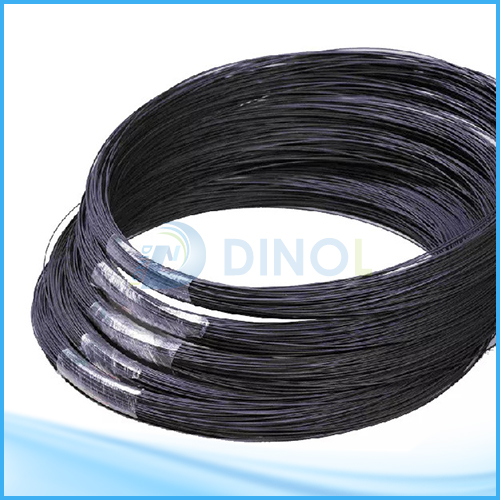
Along the length of a building, linear anodes are put out as continuous cables or strands. These are usually made of MMO-coated titanium wire, graphite-filled conductive polymer, or carbon-fiber composite. They spread current over a lot of horizontal space, which makes them perfect for pipes that run through crowded city streets or concrete floors, where point-source anodes would leave coverage holes.
How Each Integrates Into an ICCP System
Canister anodes are put vertically in deep wells that have been dug, usually 30 to 150 meters. They feed current into low-resistance coke backfill and protect the dirt around them. Linear anodes are put down horizontally next to or below buildings. The two systems deal with very different geometry issues: one focuses output on a single fixed point, while the other constantly spreads it along a straight line. As an ICCP MMO canister anode for cathodic protection, this vertical design is suited to deep-well installations.
Performance and Benefits Comparison: ICCP MMO Canister vs Linear Anode
Corrosion Resistance and Service Life
The anodes in MMO canisters are specially made to work in harsh chemical environments. Over decades of use, the Ir-Ta coating has not lost any of its dimensions, even in settings where oxygen is changing the dirt and chlorine is changing the water. Field data from cross-country pipeline projects in high-resistance dry soil constantly show that the planned life is more than 25 years without having to fix up the ground. Even though linear anodes are strong, they wear down at the connection points over time and need to be tested for resistance on a regular basis to make sure they are still solid along their entire length.
Current Distribution Efficiency
The already-compacted coke breeze in a cylinder anode makes a low-resistance path to ground right away. This gets rid of the uneven compaction mistakes that happen when backfilling a field. In this factory-controlled setting, the current output is stable and consistent, and third-party inspectors can compare it to the design specifications. Linear anodes spread current more equally along their shape, which is their main strength when guarding buildings with a lot of horizontal surface area, like the bottom of above-ground storage tanks or reinforced concrete decks.
Installation and Maintenance Requirements
Canister anodes are put in place just once and stay there for as long as the system is supposed to last. The galvanized steel container breaks down over time and comes loose, leaving the compacted coke column and titanium anode to act as a permanent groundbed, without the need to reenter. Linear anodes can be inspected, but they take more work to place per meter. When installed in a remote desert or mountain area, a canister system with a single-point deep well usually requires less long-term maintenance.
Cost and Procurement Considerations for Industrial Buyers
Total Cost of Ownership
A shallow straight placement costs less up front than a deep well canister anode groundbed. The 20–50-year plan life, on the other hand, gets rid of the need for expensive groundbed rehabilitation rounds. Having an anode groundbed fail is very expensive for projects in remote areas where moving a drill rig costs tens of thousands of dollars per well. When figuring out the total cost of ownership for NACE SP0169-compliant pipeline projects, procurement teams always include the risk of having to re-drill. When this risk is priced correctly, canister anodes always come out ahead.
Supply Chain and Lead Time Factors
Industrial buyers who need 50 to 300 canister anodes per project need a supplier whose production capacity is standard. Standard canister anode lengths of 1 m, 1.5 m, and 2 m, with outer sizes of 80, 100, or 150 mm, allow for batch production without having to wait for special tools to be made. To quickly get goods through customs in India, the Middle East, and Central Asia, procurement teams also need full export paperwork, such as a certificate of origin, packing lists, and inspection reports from SGS or Bureau Veritas. When suppliers make these documentation workflows a normal part of their delivery process, procurement risk goes down by a lot.
Warranty and After-Sales Support
A claim of a 20-year design life is only valid if it is backed up by accelerated life testing (ALT) according to NACE TM0108, XRF-verified MMO coating loading, and micro-ohm resistance approval at the anode-to-cable joint. As joint seal failure is the most common reason for early anode failure in the field, buyers should ask for helium pressure sealing test data for the cable entry point. Suppliers who include these data sets as standard delivery documents, not as extras, show that they are serious about quality.
Selecting the Right Anode for Your Industrial CP Application
Match Anode Type to Soil and Structure Geometry
Deep well ICCP MMO canister anode for cathodic protection groundbeds work better than shallow linear installations in dry, high-resistance soils (above 50 ohm-m) because they reach deeper, more conductive soil layers. Linear anodes are the best option when the covered building is flat and only a few inches deep, and the installation path is easy to get to. The procurement engineers should look over the groundbed design report, which has soil resistivity logs and current demand calculations, before they decide on the anode type.
Account for Installation Environment
People working on pipeline projects in deserts or mountains like canister anodes because they don't need to be taken out of service after the well is dug and the anode string is put in. Linear anodes are often chosen for urban gas network projects with crowded utility lines because they have a small installation area that doesn't interfere with buried services that are close by.
Evaluate Vendor Qualification Requirements
When it comes to long-delivery cathodic protection products, most national oil company owners and PMC experts keep an Approved Vendor List (AVL). Getting on that list requires proof of production skills, test reports from a third party, and project references that can be tracked down. Before placing an order, buyers should make sure that a possible supplier has up-to-date third-party certifications and can back up their claims with a witnessed factory acceptance test (FAT).
Leading Manufacturers and Reliable Suppliers of ICCP MMO Canister and Linear Anodes
Tianyi's Product Specifications and Certifications
The Baoji High-Tech Development Zone is home to Shaanxi Tianyi New Material Titanium Anode Technology Co., Ltd., which makes MMO-coated titanium anodes on premium Gr1/Gr2 titanium plates with Ru-Ir or Ir-Ta coatings. You can get products in mesh, ribbon, rod, tube, and unique shapes. Precision manufacturing protocols make sure that all dimensional tolerances are kept to the design specifications. Before being shipped, each batch goes through XRF coating verification and micro-ohm connection resistance testing.
Quality Control That Procurement Teams Can Document
Its quality process includes getting raw materials from trusted suppliers, checking the dimensions of the products as they are being made, testing their accelerated life according to NACE TM0108 standards, and making sure the high-pressure cable seals are correct. As a normal service, SGS or Bureau Veritas can do a third-party check. This gives procurement managers the test documentation that owner AVL audits need for the ICCP MMO canister anode for cathodic protection.
Global Delivery and Packaging for Remote Projects
Tianyi ships to work areas in India, the Middle East, Central Asia, and Africa. With reinforced crates and moisture-barrier inner packaging, packaging is made to handle the mechanical needs of last-mile logistics in desert and mountain terrain. Full export paperwork is made, such as a certificate of origin and business invoices, to meet the needs of each target country's customs clearance process.
Conclusion
Choosing between an ICCP MMO canister anode for cathodic protection and a linear anode depends on soil conditions, structural geometry, installation environment, and long-term maintenance expectations. Canister anodes excel in deep well groundbeds where design life, current stability, and zero-maintenance operation are priorities — particularly in remote, high-resistivity terrain. Linear anodes suit continuous horizontal coverage along accessible structures. Both rely on MMO-coated titanium technology for long service life, but the canister system's factory-controlled environment gives it a measurable edge in reliability documentation — which is exactly what owner AVL audits and third-party witnessed tests demand.
FAQ
How long do MMO canister anodes typically last?
Design life ranges from 20 to 50 years depending on coating thickness, current density, and soil chemistry. Standard industrial projects specify 20- or 25-year design life per NACE TM0108 testing protocols.
Can MMO canister anodes and linear anodes be used in the same ICCP system?
Yes. Some pipeline CP designs combine deep well canister groundbeds at CP stations with linear anodes in areas where shallow soil coverage is insufficient. System design should be validated by a qualified CP engineer.
What cable type should be used with canister anodes?
HMWPE or dual-insulated Kynar/HMWPE cables are standard. These materials resist the corrosive gases generated at the anode surface during impressed current operation, preventing cable jacket degradation at the entry seal.
How is anode-to-cable joint integrity verified?
Reputable suppliers conduct micro-ohm resistance testing and helium pressure sealing tests on every completed assembly. Request these test certificates as part of the delivery documentation package before accepting shipment.
What backfill material is used in canister anodes?
Calcined petroleum coke breeze with fixed carbon above 98% and resistivity below 0.1 ohm-cm is the industry standard. This material provides the low-resistance current transfer path that gives canister anodes their stable output performance.
Request a Quote from Tianyi — ICCP MMO Canister Anode Manufacturer
Design life is between 20 and 50 years, based on the thickness of the layer, the density of the current, and the chemistry of the soil. According to NACE TM0108 testing guidelines, standard manufacturing projects call for a design life of 20 or 25 years. Send your groundbed design plans and quantity needs to info@di-nol.com.
References
1. NACE International. NACE SP0169: Control of External Corrosion on Underground or Submerged Metallic Piping Systems. 2013.
2. NACE International. NACE TM0108: Evaluation of Internal Plastics Linings for Oilfield Tubular Goods and Accessories — referenced alongside electrochemical anode life testing protocols. 2008.
3. Baeckmann, W., Schwenk, W., & Prinz, W. Handbook of Cathodic Corrosion Protection. 3rd ed. Gulf Professional Publishing. 1997.
4. Peabody, A.W. Peabody's Control of Pipeline Corrosion. 2nd ed. NACE International. 2001.
5. Morgan, J.H. Cathodic Protection. 2nd ed. NACE International. 1993.
6. Gummow, R.A. "Cathodic Protection Considerations for Pipelines with AC Mitigation Facilities." Materials Performance, NACE International. 1999.