




How do MMO/Ti linear anodes compare with traditional anodes today?
When engineers and procurement managers ask me which anode material genuinely holds up over decades of buried or submerged service, the answer keeps pointing in one direction. MMO/Ti linear anode for cathodic protection technology has shifted the baseline expectation for what a modern impressed current system should deliver. Compared with graphite, zinc, or silicon cast iron anodes, titanium-substrate linear anodes offer a consumption rate as low as 1–6 mg/A-yr, a projected service life exceeding 40 years, and a flexible form factor that resolves current distribution problems that point anodes simply cannot address.
Understanding MMO/Ti Linear Anodes and Traditional Anodes
What Is an MMO/Ti Linear Anode?
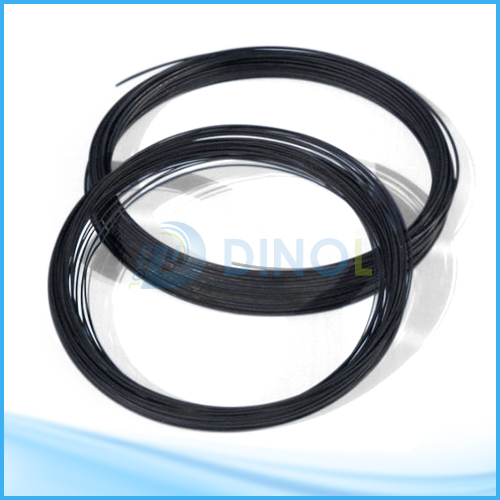
An MMO/Ti linear anode is made up of a Grade 1 or Grade 2 titanium wire that is 99.6% titanium and has a catalytic Mixed Metal Oxide layer on top of it that is 6–10 μm thick. This layer is usually made up of iridium, ruthenium, and tantalum oxides. The wire comes already wrapped in a porous cloth tube with a carbonaceous backfill. The titanium base doesn't corrode much on its own, and the MMO coating takes care of the electrochemical reaction. Tianyi makes wires with widths of 1 mm, 1.5 mm, and 3 mm, and the outside diameter of the finished product is 38–40 mm. They use sandblasting, pickling, and thermal decomposition finishing methods that are approved by ISO 9001 and ASTM.
How Traditional Anodes Work
Anodes made of graphite, high-silicon cast iron (HSCI), and zinc all drain electricity by using up their own power. The anode body breaks down with each ampere-year of power. Graphite anodes, for instance, use 0.1 to 1 kg/A-yr, which is a thousand times more than MMO/Ti. In systems with imposed current, zinc sacrificial anodes self-limit and break down quickly in warm or high-resistance soils. These materials were used in the industry for decades, but when they break, they need to be replaced, which costs money and causes systems to go down.
Core Material Differences at a Glance
The difference is not just chemical; it is also operational. When installing traditional anodes, they need to be bigger than they need to be to account for material loss over the design life. The current distribution profile stays the same from year to year because the MMO/Ti linear anodes keep their dimensions stable over time. System engineers who match the output of the anode to the capacity of the rectifier will not have to re-tune the power supply as often as needed as the system ages.
Comparative Analysis: MMO/Ti Linear Anodes vs Traditional Anodes
Service Life and Consumption Rate
Field tests and published data from NACE International both show that MMO/Ti linear anode for cathodic protection can last between 20 and 50 years when the current density is average, which is less than 2,000 A/m². Our DN-15 type (φ1.5 mm wire) has an output current of 328 mA/m and a working life of at least 40 years. With the DN-30 type (φ3.0 mm wire), the power doubles to 656 mA/m, and the life span stays the same. Graphite or HSCI anodes need to be replaced every 5–15 years in similar soil conditions, which costs a lot in material and extraction costs.
Current Distribution and Efficiency
The "shielding" effect that happens with deep-well or point-source groundbeds is not present with linear anode shape. The constant flow of current along the length of the anode creates a protective potential that is the same at the bottom of the pipeline or tank. This is especially important in crowded urban utility areas, sandy soils with a high resistance, and the floors of above-ground storage tanks, where regular anodes leave gaps that aren't covered. Tianyi goods have a contact resistance of 0.0009 Ω between the MMO/Ti wire and the header cable. This keeps the output consistent from the rectifier end to the farthest burial point.
Total Cost of Ownership
It costs more up front for MMO/Ti linear anodes than for graphite or zinc. But over the course of a 20-year project, the numbers change. Compared to traditional materials, these usually have a net cost benefit of 30–50% because they don't need to be replaced as often, use less power in the rectifier because the working voltage is lower, and don't need to be dug up again. That cost structure helps B2B developers keep 30–40% resale margins, so they can offer affordable project prices without losing technical performance.
Choosing the Right Anode: Key Factors for B2B Procurement and Engineering Teams
Environmental and Soil Conditions
The resistance of the soil, the amount of water in it, the percentage of chloride, and the temperature all affect the choice of anode. The pre-packaged coke breeze backfill (carbon content ≥99.5%) makes a stable low-resistance path to the earth, no matter what the native soil conditions are. This means that the MMO/Ti linear anodes work reliably in high-resistance environments. If the covering is used in salt water, the MMO formula changes to chlorine evolution chemistry. The method still works well at temperatures up to 80°C.
System Compatibility and Standards Compliance
When engineers add linear anodes to ICCP systems, they need to check the rectifier output range against the anode's maximum current density. Tianyi's products work with different kinds of cables, like XLPE/PVC, PVDF/HMWPE, and EPR/CSPE. They have a standard internal conductor that is 1×10 mm², which keeps the longitudinal resistance low over long runs. The line of products meets the NACE SP0169 standards for achieving a polarized potential of -850 mV and a polarization shift of 100 mV. Accelerated life testing protocols in NACE TM0108 make sure that coatings are durable before they are shipped.
Supplier Evaluation Criteria
Before agreeing to large orders, procurement teams should ask for XRF coating loading verification, batch certificates of titanium purity, and accelerated life test results. Tianyi is certified by ISO 9001 and uses ultrasonic flaw detection to check the integrity of every joint node and weld. You can get free samples to test the electrochemistry of MMO/Ti linear anode for cathodic protection before placing a trial order. Standard export packing works for express delivery, air freight, and sea freight. The factory takes care of all export paperwork, such as certificates of origin.
Advancements in MMO Coating Technology and Impact on Linear Anodes
Thermal Decomposition Process Improvements
The pyrolytic deposition method creates a thick, tightly linked MMO layer that doesn't come apart when it's handled in the field or bent. After grinding and pickling, Tianyi uses this method to make sure the titanium surface is free of oxides before covering. The result is constant bonding across wire widths from 1 mm to 3 mm, which means it can withstand the bending test without flaking.
Sealing and Joint Technology
In the past, linear anode systems have had trouble with node sealing. Field moisture getting into joints early on leads to failure and makes it hard to assign liability for buried products. Tianyi solves this problem with joint sealing materials that are rated for long-term resistance to corrosion and aging. They also support failure analysis reporting when there are questions about product performance, which is especially important for integrators who work in markets with slow customs clearance and long shipping windows.
Coating Formulation for Diverse Environments
Iridium-tantalum oxide coatings work well in underground pipeline systems where the current changes with air. Ruthenium-iridium mixtures work better in places with a lot of salt or in the ocean. Engineers can choose the right product without over-engineering coating loading when they know which oxide mix works best in the working environment. This keeps costs down without losing design life.
Best Practices for Installation, Maintenance, and Procurement of MMO/Ti Linear Anodes
If the service life is reached in the field, it is directly related to how well the MMO/Ti linear anode for cathodic protection was installed. The steps are easy to understand, and maintenance teams with a lot of knowledge can do them quickly.
Here are the main steps for setting up MMO linear anodes:
- Trench preparation: Dig a trench parallel to the pipeline, with depth and width sized to accommodate the anode outer diameter (38–40 mm) plus coke breeze backfill on all sides.
- Backfill layering: Spread half the coke breeze in the trench before placing the anode, ensuring full contact along the entire length. Cover with the remaining coke breeze before compacting with native soil.
- Cable routing: Route header cables to avoid sharp bends below the minimum bending radius, protecting the internal conductor and the MMO/Ti wire from mechanical stress.
- Joint sealing: Apply resin-filled T-joints or inline splice kits at all connection points to maintain environmental sealing and electrical integrity underground.
- Verification testing: After backfilling, measure pipe-to-soil potential at multiple test points to confirm the uniform protective potential distribution the linear geometry is designed to provide.
If you always do these steps, the anode system will be able to run at its rated current flow from the first day it is turned on. Potential surveys are done every 6 to 12 months after installation to find any rectifier drift or coating degradation before it affects the level of protection.
Conclusion
For long-term cathodic protection, MMO/Ti linear anode for cathodic protection are better than standard anode materials in terms of consumption rate, service life, even current distribution, and total cost of ownership over a 20–40 year project timeframe. The data consistently shows that titanium-based linear anodes are the best choice for procurement teams looking for impressed current components. This is especially true for those integrating ICCP systems for buried pipelines, storage tank floors, or complex piping networks. The important thing is to find a provider that can provide regular coating quality, adjustable order amounts, and dependable export services.
FAQ
How long do MMO/Ti linear anodes last compared with graphite anodes?
At normal working current levels, MMO/Ti linear anodes are said to last for more than 40 years. Because the material wears down, graphite anodes usually need to be replaced every 5–15 years. The titanium substrate is different because it is electrochemically stable, meaning it doesn't break down when the system is working normally.
Can the anode dimensions be customized for specific projects?
Yes, common wire sizes are 1 mm, 1.5 mm, 2.0 mm, and 3.0 mm. The outer diameter, internal cross-section, wire jacket material, and roll length (500 m or 1,000 m) can all be changed. On request, you can get custom current output specifications and different types of cables.
What quality documentation comes with each shipment?
There are ISO 9001 licenses, verifications of titanium purity (Ti ≥ 99.6%), coating loading data, contact resistance test results (≤0.0009 Ω), and ASTM-referenced measurement inspection records for each batch. Failure analysis records can be used to help with field probes when they are needed.
Is the product suitable for high-resistivity soils?
No matter how resistive the earth is naturally, the pre-packaged carbonaceous backfill (carbon content ≥99.5%) lowers grounding resistance. Because of this, the product works well in sandy, rocky, or dry soils where regular groundbeds don't work as well.
Partner With Tianyi for Proven MMO/Ti Linear Anode for Cathodic Protection Supply
With ISO 9001 certification, ASTM-standard procedures, and OEM white-label packing available for resale, Tianyi produces and ships MMO/Ti linear anode for cathodic protection supplier-grade goods from Baoji, China. Our factory takes both small and large orders, has tiered prices for long-term deals, and ships by sea freight or air freight with all the necessary export paperwork. You can get free samples to test the electrochemistry of before you place your first order. You can email us at info@di-nol.com to get a specification sheet and a quote that fits your needs.
References
1. NACE International. Impressed Current Cathodic Protection of Internal Submerged Surfaces of Steel Water Storage Tanks. NACE SP0196. 2010.
2. NACE International. Test Method for Evaluating the Shielding Effects of Pipeline Coatings. NACE TM0108. 2008.
3. NACE International. Control of External Corrosion on Underground or Submerged Metallic Piping Systems. NACE SP0169. 2013.
4. Baeckmann, W., Schwenk, W., & Prinz, W. Handbook of Cathodic Corrosion Protection. Gulf Professional Publishing. 1997.
5. Shreir, L. L., Jarman, R. A., & Burstein, G. T. Corrosion: Metal/Environment Reactions, 3rd Edition. Butterworth-Heinemann. 1994.
6. Peabody, A. W. Control of Pipeline Corrosion, 2nd Edition. NACE International. 2001.