




Can Titanium Conductor Bands Improve Cathodic Protection Performance?
True, and the evidence is overwhelming. Impressed Current Cathodic Protection (ICCP) systems use the titanium conductor band for cathodic protection as reliable, low-resistance current transmission paths. Commercially pure titanium (Gr1/Gr2) retains electrical conductivity in saltwater, dirt, and industrial conditions for decades, unlike other conductor materials. Titanium conductor bands with MMO anodes uniformly transmit protective current over buried or submerged structures, enhancing system dependability and lowering lifetime maintenance costs.
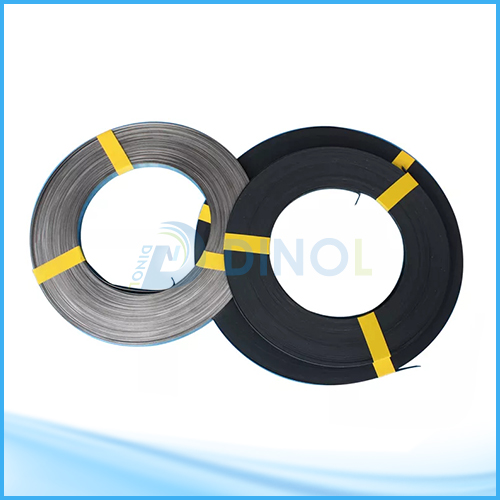
Understanding Titanium Conductor Bands in Cathodic Protection
What Is a Titanium Conductor Band?
Titanium conductor bands are flat-strip copper parts that are made from ASTM B265 Grade 1 or Grade 2 commercially pure titanium. It doesn't cover them. There are electrochemical processes going on on the surface of the anode that it doesn't take part in. To link the electrical parts of the ICCP circuit, all it does is send current between the MMO anodes, the busbars, and the DC power sources. Shapes that are often used are flat strips, bands, and sheets that are 10–50 mm wide, 1–5 mm thick, and up to 6,000 mm long.
How It Integrates Within ICCP Architecture
Electricity moves through the conductor band from a rectifier in an ICCP system to the MMO anode. Then it goes into the electrolyte, which could be soil or seawater, and finally it gets to the safe structure. There is a stable contact resistance strip between the power source and the anode. This strip can't be skipped. At this important point, titanium forms a passive oxide film that fixes itself. This keeps it from corroding without adding a polarization layer that would block the flow of electricity.
Applicable Standards and Quality Benchmarks
There are rules, such as NACE SP0176, EN 12954, and GB/T 50934, that are used to test the titanium conductor bands that are used in ICCP projects. Suppliers give design engineers a Certificate of Conformance (CoC) that shows how the materials can be traced back to the titanium substrate. This is the paperwork they need for technical standard approval and to be added to the approved vendor list.
Benefits of Using Titanium Conductor Bands for Cathodic Protection
Extended Operational Lifespan
Living longer is one of the benefits that is easiest to measure. When it comes to electricity and mechanics, commercially pure titanium can work for up to 50 years in saltwater, brackish water, and wet soil. This cuts down on the number of times an ICCP system that is buried or underwater needs help. Longevity is not a nice-to-have for infrastructure that is hidden, like the bottoms of storage tanks and subway pipes. It's a project condition.
Uniform Current Distribution and Low Contact Resistance
Engineers can use the shape of titanium conductor bands to make ways for current to flow along the whole length of an anode string or busbar assembly. The bands can be straight or coiled. Hotspots of high resistance are less likely to happen with this shape. When current flows evenly across an MMO anode array, there are no areas that are too protected and let the coating come off faster, and there are also no areas that are not protected enough and let the steel rust.
Because of these key performance traits, the titanium conductor band for cathodic protection is a good choice for ICCP setups that are hard to do:
- No polarization layer formation: Because the titanium band does not participate in anodic reactions, it does not build up oxide deposits that increase resistance over time. Current output stays predictable throughout the system's service life.
- Weldable and bolt-fastenable: Titanium Gr1/Gr2 supports both welding and mechanical fastening, giving installation crews flexibility on offshore platforms, wharves, and bridge structures where access conditions vary.
- Lightweight construction: Titanium's density (approximately 4.5 g/cm³) is about 60% of steel, which simplifies handling and reduces structural loading on anode frames deployed in offshore applications.
There are three main reasons why ICCP systems break: resistive connection joints, busbars that rust, and uneven current density along long anode strings. These features take all of these into account.
Corrosion Resistance in Aggressive Environments
Titanium is not easily damaged by chloride-induced pitting, crevice corrosion, or stress corrosion cracking. These problems happen a lot in sea splash zones, places with a lot of salt, and soils that are full of water. Copper wires are very conductive, but they can rust in places with a lot of chloride. To keep them in good shape, you may need to coat them or replace them every so often. It is better for ships to use stainless steel than copper, but there is still a chance of crevice rust at bolted joints. Titanium doesn't break in these two ways.
Titanium vs Other Conductor Band Materials: Making the Right Choice
Copper: High Conductivity, Limited Durability
Copper moves energy through it better than titanium (about 59.6 MS/m vs. 2.38 MS/m), but that's only one point. The conductor band must last for decades before it needs to be changed in ICCP uses that are buried or underwater. It rusts in chloride-rich water and in soils that don't have oxygen. This makes joints less flexible and increases the chance that the system will fail. This is why fixing hidden infrastructure costs so much.
Stainless Steel: Moderate Performance at Higher Weight
A lot of fabricators know about stainless steel. It doesn't rust very easily, but it's about 70% heavier than the titanium conductor band for cathodic protection. 316L stainless steel, which is often used in naval applications, can rust in cracks at bolted joints. This is especially true in low-oxygen areas below the bottoms of storage tanks. This amount of risk is too high for long-term projects that are hard to get to for upkeep.
Zinc and Other Alternatives: Premature Degradation
Most of the time, zinc-based wires are used in systems with a sacrifice anode and not to send power. When there is impressed current, zinc doesn't help, and it breaks down quickly at the potentials found in ICCP circuits. It's not as easy for the government to use other options, like lead alloys, on infrastructure projects because they are bad for health and the environment. It's clear what this comparison means: titanium is the best material for conductor bands in ICCP systems that are meant to last at least 20 years.
Procurement Guide: How to Source Titanium Conductor Bands
Key Supplier Evaluation Criteria
There are three things that procurement managers and project engineers should look for in a titanium conductor band supplier for a large ICCP project: the material must be certified to ASTM B265 Gr1 or Gr2, there must be a full CoC with heat number traceability, and the supplier must have shown that they can meet phased delivery schedules. If you need to finish a project in 12 to 18 months, you need sources who can promise to send out batches every month without reducing the size.
Customization and Dimensional Flexibility
The widths range from 10 mm to 50 mm, the thicknesses from 1 mm to 5 mm, and the lengths go up to 6,000 mm. But project needs often call for plans that aren't normal. Companies that make titanium conductor bands that you can trust can make strips, coils, and assemblies with built-in anode modules that are shaped to your specifications. This flexibility is helpful for tasks that need complicated shapes, like creating ring anodes for pipe casings or shaped brackets for offshore platform legs.
Documentation for Design Institute Approval
Design firms and project owners usually want to see standard safety paperwork before putting a material on a list of qualified vendors. Technical response time during bid review goes down when sellers provide cross-reference tables, installation method statements, and third-party test reports ahead of time. These are in line with EN 12954, NACE SP0176, and GB/T 50934. This helps workers meet project goals right away.
Case Studies and Future Outlook
Offshore Platform and Marine Infrastructure Applications
It is possible for ICCP systems to work on offshore platforms and steel sheet pile wharves, which are some of the most acidic places on Earth. The titanium conductor band for cathodic protection has worked well in these installations across coastal zones, where other types of conductors would have broken down in just a few years due to the wet and dry cycles. Titanium has been the main material used for 15 years to transmit electricity in projects in the Gulf of Mexico and the North Sea. The system output has been stable.
Storage Tank and Underground Pipeline Projects
For AST bottoms and long-distance underground pipes, it is hard and expensive to fix an ICCP system that has already been put into use if it breaks down. If you put titanium conductor bands under the tank floors and connect them to MMO ribbon anodes that are spread out on the sand pad, the cathodic protection is even in high-resistance soil, where regular anode arrangements make the current density uneven.
Trends Shaping Future CP Material Selection
Up until 2030, the world market for cathodic protection is expected to grow at a rate of about 5% per year. This is because of money being put into older systems and the rise of sea energy. Because of this growth, more people want ICCP parts that don't need much maintenance and last a long time. Because of new titanium alloy mixes and better MMO coating chemistry, the design life estimates are now more than 30 years. We need to know about the conductor band specification as well as the anode in order to model how well the whole system works.
Conclusion
The titanium conductor band for cathodic protection makes the ICCP system work better by making a stable, corrosion-proof way for current to flow. This keeps the electrical contact stable over many years of use. There are several ways to place them, they are compliant with international standards, and they work with MMO anode systems.
This makes them a good choice for marine buildings, offshore platforms, storage tanks, and buried pipes. Specifying titanium conductor bands lowers the risk of connection-point failures that are hard to fix and cost a lot of money once the system is underground or submerged. This is what project engineers and procurement teams do when they are in charge of long-term infrastructure security contracts.
FAQ
What material grade is used in titanium conductor bands?
Titanium conductor bands are typically fabricated from commercially pure titanium Grade 1 (Gr1) or Grade 2 (Gr2), conforming to ASTM B265. Gr1 offers the highest ductility and is preferred for applications requiring bending or complex forming. Gr2 provides slightly higher strength and is the most widely used grade in ICCP conductor band applications.
Can titanium conductor bands be used in both seawater and soil environments?
Yes. Titanium Gr1/Gr2 performs reliably in both seawater immersion and buried soil conditions. Its passive oxide film resists chloride attack in marine environments and remains stable in moist, low-oxygen soil conditions where other metals would corrode at buried connection points.
What installation methods are compatible with titanium conductor bands?
Titanium conductor bands support welding, bolting, clamping, and integrated assembly with anode modules. The choice of installation method depends on the substrate material, access conditions, and project specifications.
Do titanium conductor bands require a special coating?
No. The conductor band is an uncoated component. Its natural oxide layer provides sufficient corrosion protection for long-term service without any additional surface treatment.
What documentation should a supplier provide?
A qualified supplier should provide a Certificate of Conformance (CoC), material test reports with heat number traceability, dimensional inspection records, and standard compliance documents referencing NACE SP0176, EN 12954, or GB/T 50934 as applicable to the project specification.
Partner with Tianyi for Your ICCP Conductor Band Requirements
A business called Shaanxi Tianyi New Material Titanium Anode Technology Co., Ltd. sells pure titanium conductor bands (Gr1/Gr2) that are used in ICCP anode systems offshore, in pipelines, and in storage tanks. The company Tianyi has been making titanium wire bands for cathodic protection for a long time. They can offer full dimensional adjustments, CoC paperwork, and shipping plans that are broken up into stages to meet the needs of your project. Feel free to email our tech support team at info@di-nol.com or visit dsa-anodes.com to get a product sheet or an application review.
References
1. NACE International. Corrosion Control in the Refining Industry — Course Manual. NACE International, 2015.
2. Baeckmann, W. von, Schwenk, W., and Prinz, W. Handbook of Cathodic Corrosion Protection. Gulf Professional Publishing, 1997.
3. Lide, D.R. (Ed.). CRC Handbook of Chemistry and Physics, 95th ed. CRC Press, 2014.
4. ASTM International. ASTM B265: Standard Specification for Titanium and Titanium Alloy Strip, Sheet, and Plate. ASTM International, 2020.
5. EN 12954: Cathodic Protection of Buried or Immersed Metallic Structures — General Principles and Application for Pipelines. European Committee for Standardization, 2019.
6. Morgan, J.H. Cathodic Protection, 2nd ed. NACE International, 1993.