




Canister Anodes vs Ribbon Anodes: Which Is Better for ICCP Systems?
Cannon and ribbon anodes affect system lifetime, installation cost, and long-term maintenance when engineers and procurement managers choose them for impressed voltage cathodic protection (ICCP) systems. The ICCP MMO canister anode for cathodic protection surpasses ribbon versions for deep well beds and long-distance pipeline protection. Ribbon anodes are flexible for scattered or near-surface applications. This page explains both kinds so you can choose the correct anode for your project.
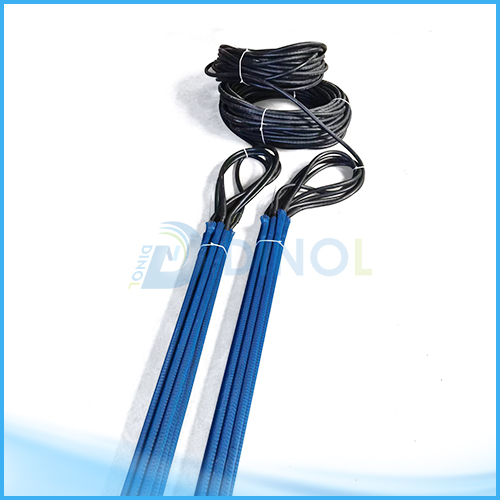
Understanding Anode Types in ICCP Systems
What Is an MMO Canister Anode?
An MMO canister anode is a factory-built part that has a titanium base covered in Mixed Metal Oxide (MMO) that comes in the form of a rod, tube, or wire. It is then packed inside a galvanized steel container that is full of calcined petroleum coke breeze (fixed carbon >98%, resistivity <0.1 ohm-cm).
The pre-packaged design gets rid of field backfill errors and makes sure that there is instant low-resistance current release after installation. Tianyi makes these units on a high-purity Grade 1/Grade 2 titanium base with Ir-Ta or Ru-Ir MMO coatings. The units are designed to last 20 to 50 years according to NACE SP0169 and TM0108 standards.
What Is a Ribbon Anode?
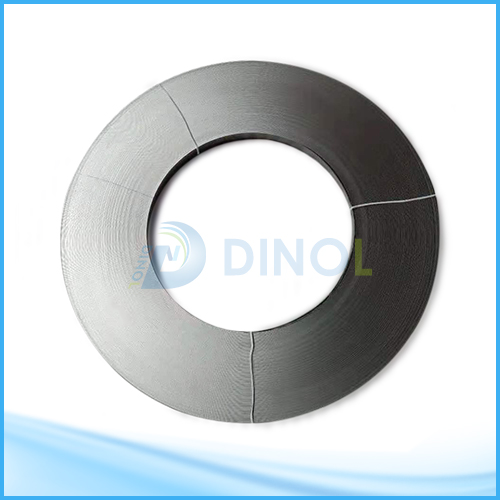
A ribbon anode is a thin, flat piece of titanium that is coated with MMO and made for installation areas that are shallow, spread out, or crowded. Because it has a thin profile, it can be installed along the length of a buried pipe or under concrete slabs without having to drill vertically.
Titanyi's ribbon anodes can have coatings on one or both sides, and their sizes can be changed to fit the needs of the project. They are often used for horizontal groundbeds, protecting the base of tanks, and applications involving reinforced concrete where the main goal is to keep the current flowing in a straight line.
How MMO Coating Works in Both Types
The electrical theory behind both types of anodes is the same. The MMO coating, which is usually Ru-Ir for environments that change to oxygen (soil and freshwater) or Ir-Ta for environments that change to chlorine (brackish water, high-chloride soils), speeds up the oxidation reaction at very low rates, usually less than 1 mg/Amp-year.
This means that the titanium base doesn't change size over decades of use, while regular graphite or high-silicon cast iron anodes keep wearing away. Service life is directly affected by the type of coating, the amount of weight that is loaded, and the purity of the base. This is proven by XRF analysis and rapid life tests according to NACE TM0108.
Performance Comparison: Canister Anodes vs Ribbon Anodes
Lifespan and Corrosion Resistance
ICCP MMO canister anode for cathodic protection works well as canister anodes are more stable when used in deep wells in high-resistivity soils, which are common in dry parts of the Middle East, Central Asia, and sub-Saharan Africa. The factory-compacted coke breeze backfill stops air holes that lead to overheating in certain areas and early covering degradation.
On the other hand, ribbon anodes that are put in shallow ditches that aren't well compacted can have uneven current discharge and faster wear at places that are visible. For canister anodes with the same current density, service times of 25 years are common. Ribbon anodes in hard soil may need to be inspected or replaced every 15 years.
Current Output and Distribution Efficiency
Canister anodes are designed to inject concentrated, high-output current at specific groundbed locations. This makes them ideal for systems that use impressed current to protect long-distance pipelines with centralized rectifier stations. Each canister unit gives off a set amount of current that can be measured and is directly related to the anode surface area and column resistance of coke air. Ribbon anodes, on the other hand, spread out less current over a longer distance. This is good for applications close to the surface, but it limits how much current they can carry per unit in deep wells.
Maintenance and Troubleshooting
The connection between the cable and the anode is where most problems happen with both types of anodes. When moisture gets into the lead wire joint, resistance goes up and the circuit breaks. This is an expensive problem when the anode is 50–150 meters below ground.
This is taken care of by Tianyi, who tests every canister connection joint for micro-ohm resistance and high-pressure helium sealing. Ribbon anodes, which are put in at shallower depths, allow for regular inspection and connection repair, but if the ribbon itself gets damaged mechanically, the section needs to be replaced.
Selecting the Right Anode for Your ICCP Application
Matching Anode Type to Application
When you plot the anode type against the installation depth and soil conditions for ICCP MMO canister anode for cathodic protection, the choice structure is easy to understand. Here are the main criteria that engineering teams use to choose candidates:
- Deep well groundbeds (>30 m depth): Canister anodes are the standard choice. The pre-packaged coke breeze column ensures consistent resistivity regardless of native soil variability, which is critical in desert or rocky terrain where manual backfill compaction is unreliable.
- Shallow horizontal groundbeds or tank base protection: Ribbon anodes provide cost-effective coverage with minimal excavation. Their flexible geometry conforms to irregular surface geometries, reducing installation labor.
- Urban utility corridors: Canister anodes in vertical configurations minimize excavation footprint, reducing interference with adjacent buried infrastructure—an important factor in congested pipeline networks.
In engineering, each configuration is useful for a different situation. Choosing the right one often relies on the groundbed design specifications that have been accepted by the project's corrosion engineer and owner PMC.
Supplier Qualification and Procurement Logistics
For projects that need to get on the owner's Approved Vendor List (AVL), procurement teams should give more weight to suppliers who can provide third-party inspection reports (SGS/BV), material test certificates (MTC), and accelerated life test data that is NACE-compliant.
As a result of supporting FAT (Factory Acceptance Testing) and SGS/BV witness inspection for large orders, Tianyi makes it easier to submit documents for AVL. Standard container anode sizes—1.0 m, 1.5 m, and 2.0 m lengths and 80, 100, and 150 mm outer diameters—work with most deep well groundbed designs. This lets batches be made and wait times be planned.
Installation, Safety, and Lifecycle Management
Installation Procedures
The lead cable is used as the main tension member to lower the canister anodes into vertical wells that have already been drilled. More coke breeze is then pumped back in to finish the column. The galvanized steel canister is used for shipping and the first structure.
It breaks down over the first few years, leaving the MMO anode and the tower of compressed coke breeze as the stable base. Ribbon anodes are placed horizontally in trenches that are 0.5 to 2.0 m deep, hooked up to a header cable, and then filled back in with carbonaceous material or native soil, depending on the resistivity needs.
Safety Protocols and Compliance
DC voltages can make chlorine gas and hydrogen near the anode surface in some fluids when used in ICCP systems with ICCP MMO canister anode for cathodic protection. Allowing enough air flow in junction boxes, using the right wire insulation (HMWPE or dual-insulated Kynar/HMWPE), and following the construction standards set by IEC 62068 and NACE SP0169 are all ways to keep people safe and protect the groundbed in the long term. Tianyi requires that all canister anode units have PVDF or HMWPE lead wires so that they can withstand the corrosive gas environment that is created when the ICCP is working normally.
Lifecycle Monitoring
After being put in place, both types of anodes need to have their pipe-to-soil potential, groundbed resistance, and rectifier current output checked on a regular basis to make sure they meet the NACE SP0169 protection standard of −850 mV (CSE). Having remote monitoring units that are connected to rectifier stations lets you log data continuously without having to visit the site. This is especially helpful for pipeline segments that are far away in deserts or mountains where it would be expensive to do a physical inspection.
Making the Final Decision: Which Anode Is Better for ICCP Systems?
Application-Driven Selection
The MMO canister anode is the better technical choice and more practical for most cross-country oil and gas pipeline ICCP stations, especially in high-resistance soils, dry environments, or places that need to run for 20 years or more without any maintenance. The two most common types of failure in the field are uneven backfill compaction and poor cable joint sealing. This product's pre-packaged, factory-controlled design gets rid of both of these problems.
When Ribbon Anodes Make Sense
Ribbon anodes are still the best choice for shallow, spread-out uses like protecting tank bases, jetties, reinforced concrete structures, and utility corridors in crowded cities where vertical drilling is not an option. Because they are flexible and cost less per unit, they are a good choice for these situations.
Long-Term Value Consideration
In deep well applications, the total cost of ownership is better for canister anodes. To re-drill a deep well that has already failed costs tens of thousands of dollars. Putting money into a well-designed and checked-for-quality canister anode assembly at the start of the project protects that investment throughout the whole process.
Conclusion
In the design of an ICCP system, the canister anode and the ribbon anode each do specific jobs. For deep well pipeline groundbeds—the most important part of long-distance oil and gas cathodic protection—the ICCP MMO canister anode for cathodic protection gives 20+ years of maintenance-free performance by being durable, consistent in current flow, and easy to install.
Ribbon anodes are used in shallow and spread-out uses that need freedom and a straight flow of current. Make sure the anode is right for the job, that the quality is checked by certified testing, and that you work with a supplier who can help you with your AVL documentation needs.
FAQ
How long do MMO canister anodes last in deep well groundbeds?
The coating thickness, current flow, and earth conditions all affect how long the design life is. Standard goals in the industry are 20, 25, or 30 years. With Ir-Ta MMO coats and a confirmed consumption rate below 1 mg/Amp-year, canister anodes that are placed correctly in the groundbeds of oil and gas pipelines usually last for 25 years without any maintenance.
Can ribbon anodes replace canister anodes in a deep well design?
Not at all. Ribbon anodes are not designed to be installed vertically in deep wells. For deep groundbed designs, they don't have the structural support and focused current flow that are needed. In this case, using ribbon anodes instead of canister anodes would make current distribution worse, speed up wear, and increase the chance of system failure early on.
What cable type is required for canister anode connections?
Standard cables are either made of HMWPE (High Molecular Weight Polyethylene) or Kynar/HMWPE with two layers of insulation. These insulation materials don't react with the corrosive gasses (mostly chlorine and oxygen) that are made at the anode surface during ICCP operation. This keeps the cable from breaking down too quickly at the lead wire junction.
How is canister anode quality verified before shipment?
Some of the most important quality checks are XRF analysis of the MMO coating loading, accelerated life testing according to NACE TM0108 standards, micro-ohm resistance testing of the anode-to-cable connections, helium pressure sealing tests, and backfill compaction density verification. You can ask for a third-party witness review by SGS or BV.
Partner with Tianyi for Certified MMO Canister Anode Solutions
The company Tianyi is a specialized ICCP MMO canister anode for cathodic protection manufacturer based in Baoji, China. They sell to pipeline EPC contractors and corrosion engineers in Africa, the Middle East, India, and Central Asia. Our canister anodes are up to code with NACE SP0169 and TM0108 standards, and every large order comes with SGS/BV third-party testing support.
Standard sizes (lengths of 1.0, 1.5, or 2.0 m and diameters of 80, 100, or 150 mm) make it possible for fast production processes that fit your building plan. Get in touch with our technical team to get pricing, project-specific specs, and AVL documentation packages. You can email us at info@di-nol.com or go to dsa-anodes.com.
References
1. NACE International. NACE SP0169: Control of External Corrosion on Underground or Submerged Metallic Piping Systems. NACE International, 2013.
2. NACE International. NACE TM0108: Evaluation of Internal Plastic Linings for Oilfield Tubular Goods and Accessories. NACE International, 2008.
3. Peabody, A.W. Control of Pipeline Corrosion. 2nd ed., NACE International, 2001.
4. Baeckmann, W. von, Schwenk, W., and Prinz, W. Handbook of Cathodic Corrosion Protection. 3rd ed., Gulf Professional Publishing, 1997.
5. Lazzari, L., and Pedeferri, P. Cathodic Protection. Polipress, Milan, 2006.
6. ASTM International. ASTM B338: Standard Specification for Seamless and Welded Titanium and Titanium Alloy Tubes for Condensers and Heat Exchangers. ASTM International, 2021.
