




Diaphragmless Electrolyzer Uses in High-Purity Hydrogen Plants
When facilities need a reliable, low-maintenance way to produce hydrogen on-site, a diaphragmless electrolyzer stands out as a practical choice. Unlike conventional membrane-based systems, this type of electrolytic cell removes the physical separator between electrodes, reducing internal resistance and simplifying the overall cell structure. The result is a more direct electrochemical reaction, lower energy consumption per unit of gas produced, and a hydrogen output that meets the purity demands of industries ranging from electronics fabrication to fuel-cell testing. For procurement teams weighing long-term operational costs, this technology deserves a close look.
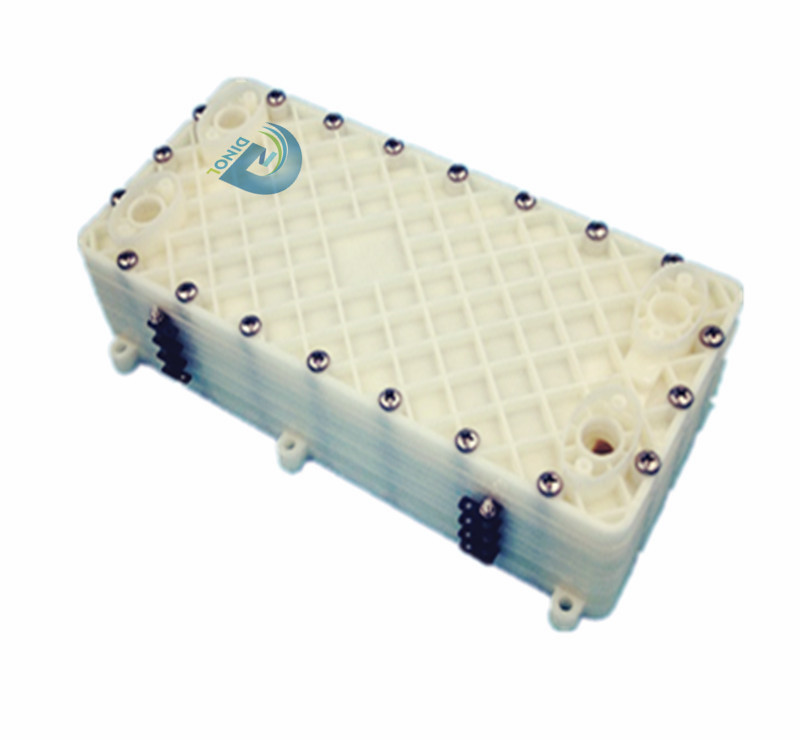
Understanding Diaphragmless Electrolyzers and Their Role in High-Purity Hydrogen Production
Core Electrochemical Principle
The way it works is based on well-known electric responses. When electrons are added to the anode, they change chloride ions into Cl₂↑. When electrons are taken away from the cathode, they change protons into hydrogen gas (2H⁺ + 2e⁻ → H₂↑). Ions can move freely between the two electrodes because there is no physical barrier in the way. This means that the reaction goes smoothly with little voltage drop, and the hydrogen that forms at the cathode side has almost no anodic by-products mixed in with it.
Key Structural Components
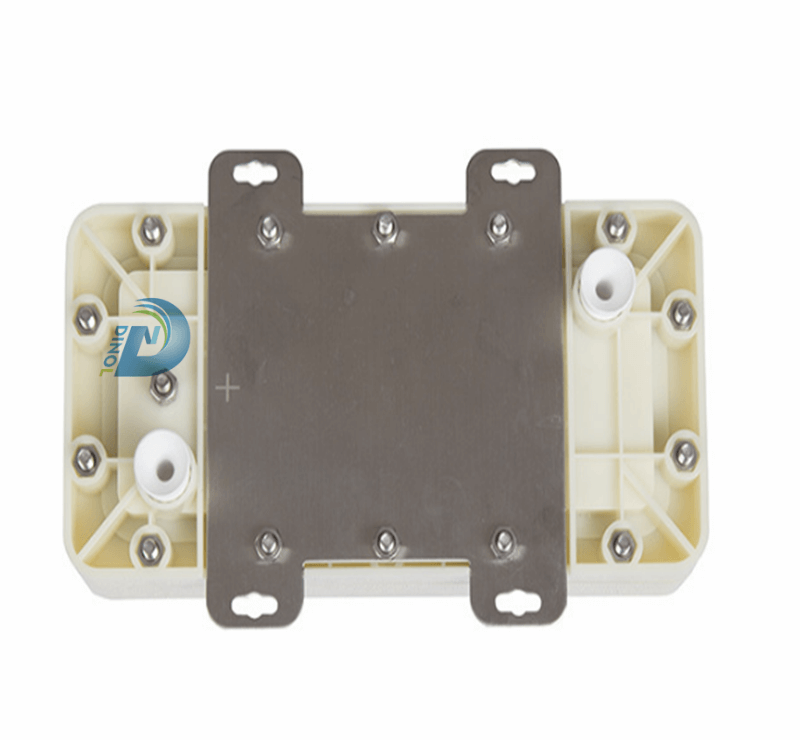
The TY-WL series cells from Tianyi have PMMA/PVC housings that can withstand a working pressure of 0.2 MPa. The electrode plates have a Ru-Ir nano-coating on a titanium base. This coating doesn't rust even in seawater with low salt content, and the plates can still work in water as cold as 5 °C. The new structure electrode connection design actively lowers stray currents during electrolysis, which is said to protect the integrity of the coating for at least five years.
Why Purity Matters for Industrial Hydrogen
High-purity hydrogen is not a nice-to-have feature; it is necessary for the process. Hydrogen purity levels above 99.999% are usually needed for annealing semiconductors, and fuel-cell membrane electrode assemblies break down quickly when they come into contact with even a small amount of chlorine. The diaphragmless design gets rid of the membrane, which has been a common source of particulate contamination in the past. This makes the feed stream cleaner for equipment that comes after it.
Comparing Diaphragmless Electrolyzers with Traditional Electrolyzer Technologies
Structural Differences
Normal asbestos or polymer diaphragm cells need to have their membranes replaced every so often, which adds to the planned downtime and the cost of replacement parts. A solid polymer electrolyte membrane that is sensitive to water quality is used in PEM electrolyzers. This membrane is very expensive. Both of these worries are taken away by the diaphragmless cell, which controls gas mixing through electrode shape and flow management instead of a separation material.
Operational Cost Comparison
The diaphragmless design of diaphragmless electrolyzer works at a lower voltage for the same current density because the internal cell resistance is lower without a separation. There is a lack of energy in the TY-WL product line, from the WL50B at -5 V/60 A to the WL2000B at -40 V/460 A, as shown by the voltage-to-output ratio. Less voltage means less money spent on electricity per gram of hydrogen, which is important when a plant is used for more than 8,000 hours a year.
Long-Term Reliability Data
Field experience with Ru-Ir MMO coatings shows that they work well for more than 5,000 hours at normal current densities (Trasatti, Electrochimica Acta, 2000). The lack of a membrane also gets rid of the growth, pinhole formation, and ionic-resistance drift that shorten the life of membrane cells. This makes it easier for procurement engineers to plan when to do maintenance.
Applications of Diaphragmless Electrolyzers in Industrial High-Purity Hydrogen Plants
Electronics and Semiconductor Manufacturing
In semiconductor factories, bright-annealing furnaces and diffusion bonding processes use a lot of high-purity hydrogen every day. A bank of modular TY-WL units can be made to fit the exact needs of the plant. The WL500B, for example, can produce hydrogen and 500 g/h of chlorine, while the WL2000B is the largest unit in the range. This is done without the safety risks that come with storing large amounts of liquid.
Renewable Energy and Power-to-Gas
More and more, electrolytic hydrogen is being used as a buffer for extra electricity from renewable sources. Small to medium diaphragmless cells work well in distributed generation sites that don't have a lot of room and can't afford to connect large PEM stacks to the grid. The TY-WL series' small shell diameter (100–270 mm) makes it possible to install in equipment rooms that aren't very big.
Pharmaceutical and Laboratory Settings
Hydrogen generators for pharmaceuticals must meet strict standards for cleanliness and tracking using diaphragmless electrolyzer. The TY-WL cell structure only needs a 2–5% saline feed solution and makes a clean gas stream. This means that it works well with inline purification columns (palladium purifiers or pressure-swing adsorption units) that meet the standards set by the pharmaceutical industry.
Here are the main ways this cell works that make it suitable for these sectors:
- Low stray current design — the new-structure electrode connection keeps parasitic current losses minimal, protecting coating life even at continuous high-current operation.
- Wide current tolerance — most models carry a ±20% current tolerance, allowing output adjustment without hardware changes.
- Acid-wash compatibility — electrode cleaning uses 15–18% hydrochloric acid, a standard industrial chemical, keeping maintenance simple and cost-controlled.
- Low-temperature operation — functional at 5 °C inlet water temperature, supporting year-round outdoor or unheated-room installations.
These operational features address the most common concerns plant engineers have when choosing equipment: the coating's durability, the stability of operation without supervision, and the ease of maintenance.
Procurement Considerations for Diaphragmless Electrolyzers
Evaluating Supplier Credentials
Municipal water, marine, and food processing procurement managers often need CE certification for equipment sold in Europe and CCS (China Classification Society) certification for installations on ships. Make sure the supplier can give you certified documents as well as a declaration of conformity. Tianyi can do OEM/ODM, which means that the cell can be sent as a separate unit or as part of a full control cabinet package with a matching power supply.
Model Selection and Sizing
There are nine basic models in the TY-WL line. The key size factors are shown in the table below:
| Model | Effective Output | Current | Voltage | Flow Rate |
|---|---|---|---|---|
| WL50B | 50 g/h | 60 A ±20% | ≤5 V | 6–8 L/h |
| WL200B | 200 g/h | 84 A ±20% | ≤15 V | 25–35 L/h |
| WL500B | 500 g/h | 120 A | ≤30 V | 65–85 L/h |
| WL1000B | 1,000 g/h | 156 A ±20% | ≤40 V | 125–170 L/h |
| WL2000B | 2,000 g/h | 460 A ±20% | ≤40 V | 250–400 L/h |
Choose the model of diaphragmless electrolyzer whose flow and current ratings match your current power infrastructure to avoid having to buy a transformer that isn't standard.
After-Sales and Spare-Part Support
Tianyi offers re-coating services for electrode plates, so customers don't have to buy a whole new cell when the active layer goes off. This is a big benefit over providers who treat the electrode assembly like a disposable item that can't be fixed.
Maximizing Operational Efficiency and Safety in Hydrogen Plants Using Diaphragmless Electrolyzers
Energy Management Best Practices
During times when rates are low, run the cell at the lower end of its ±20% current limit. For times when demand is high, store hydrogen in a buffer tank. This method lowers the cost of electricity without lowering daily output goals. Overloading, which would speed up covering wear, can't happen because the control box automatically changes the current.
Safety Monitoring Requirements
When hydrogen is 4–75% of the air, it can catch fire (Lower Explosive Limit: 4%). Fixed-point hydrogen detectors should be placed at ceiling level in any room that is closed off and holds the electrolyzer. The outputs of the detectors should be connected to the cell's emergency shutdown relay. The TY-WL cell works at 0.2 MPa, which is well within the safe pressure range for standard industrial pipework. However, the outlet line still needs to have a pressure relief valve.
Maintenance Schedule
Electrode acid-washing with 15–18% hydrochloric acid should be done as often as Tianyi's expert team tells you to, based on the salt of the feed water and the number of hours the machine is running. The outside of the cell and the flange seals need to be looked at every three months. Keep track of all the working factors, like current, voltage, flow rate, and outlet pressure, so you can find drift before it turns into a fault.
Conclusion
For producing high-purity hydrogen in many different businesses, diaphragmless electrolyzer is a good choice because it has low working voltage, long electrode life, and easy upkeep. Tianyi's TY-WL series can handle outputs from 50 g/h to 2,000 g/h. It is made of PMMA and PVC and has Ru-Ir nano-coated titanium electrodes that are guaranteed to last at least five years. When purchasing professionals look at on-site hydrogen generation equipment, the lack of a membrane takes away a big maintenance factor and lowers the cost of ownership over time.
FAQ
What hydrogen purity level does a diaphragmless electrolyzer produce?
Before going further, the raw gas from the cathode side of a diaphragmless cell usually has more than 99.5% H₂ in it. Adding a palladium purifier or PSA unit to the cell usually gets it to 99.999% (5N grade), which is good enough for use in semiconductors and fuel cells.
How does electrode coating wear affect performance over time?
After a long time of high-current operation, Ru-Ir MMO coatings on titanium substrates slowly lose their ability to do their job. Electrochemical studies that have been published (Da Silva et al., Journal of Applied Electrochemistry, 2010) say that the performance stays stable for more than 5,000 hours at a modest current density. The base electrode can be fixed up instead of being replaced by Tianyi's re-coating services.
Can the TY-WL series operate in remote or unattended installations?
Yes. The structure of the cell can handle electrodes being exposed to air without damage, and the control box can handle automatic fault shutdown and integration of remote monitoring. These features allow operation without an operator present, as long as the systems for detecting hydrogen and letting air flow meet local safety standards.
What feed-water quality does the electrolyzer require?
The TY-WL series uses a saline solution that is 2–5% and has an inlet temperature of 5–15 °C. Pretreatment to get rid of heavy metals and suspended solids extends the life of the covering and lowers the number of times it needs to be acid washed.
Connect with Tianyi — Your Diaphragmless Electrolyzer Supplier
Tianyi is an expert in MMO-coated titanium anodes and the TY-WL line of membrane-free electrolytic cells. They can also make electrodes to your specifications and offer OEM/ODM production services. We can help you find a solution that meets your power supply, flow, and certification needs, whether you need a single WL50B unit or a multi-cell installation at the WL2000B level. To get a datasheet or price list right away, email your requirements to info@di-nol.com or go to dsa-anodes.com.
References
1. Trasatti, S. "Electrocatalysis: Understanding the success of DSA." Electrochimica Acta, 2000.
2. Da Silva, L. M., Boodts, J. F. C., & De Faria, L. A. "Chlorine evolution reaction at RuO₂/TiO₂ coated electrodes." Journal of Applied Electrochemistry, 2010.
3. Zeng, K., & Zhang, D. "Recent progress in alkaline water electrolysis for hydrogen production and applications." Progress in Energy and Combustion Science, 2010.
4. Carmo, M., Fritz, D. L., Mergel, J., & Stolten, D. "A comprehensive review on PEM water electrolysis." International Journal of Hydrogen Energy, 2013.
5. Holladay, J. D., Hu, J., King, D. L., & Wang, Y. "An overview of hydrogen production technologies." Catalysis Today, 2009.
6. Ursúa, A., Gandía, L. M., & Sanchis, P. "Hydrogen production from water electrolysis: Current status and future trends." Proceedings of the IEEE, 2012.