




Titanium Conductor Strap vs Cable: Which Fits Cathodic Protection?
When engineers specify components for an Impressed Current Cathodic Protection (ICCP) system, one question surfaces repeatedly: should the anode-to-busbar connection be a titanium conductor strap for cathodic protection, or a flexible titanium cable? Both carry current reliably, yet each suits a different set of site conditions. This guide walks through the key differences so procurement managers, project engineers, and corrosion contractors can make a confident, data-backed choice before the specification is locked.
Understanding Titanium Conductor Straps and Cables in Cathodic Protection
What Is a Titanium Conductor Strap?
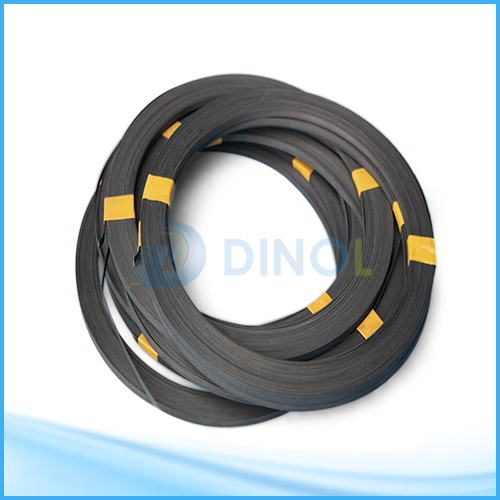
As per ASTM B265, a titanium conductor strap is a flat, uncoated strip made from commercially pure titanium, usually Grade 1 or Grade 2. Tianyi makes straps in lengths up to 6,000 mm, widths 10–50 mm, and thicknesses 1–5 mm. The straps can be coil-shaped or made to order. The strip joins MMO anodes to busbars or power cables, but it doesn't take part in the chemical reaction itself. This material has a tensile strength of about 240 MPa and doesn't form a polarization layer, so its conductivity stays the same even after decades of use.
What Is a Titanium Cable?
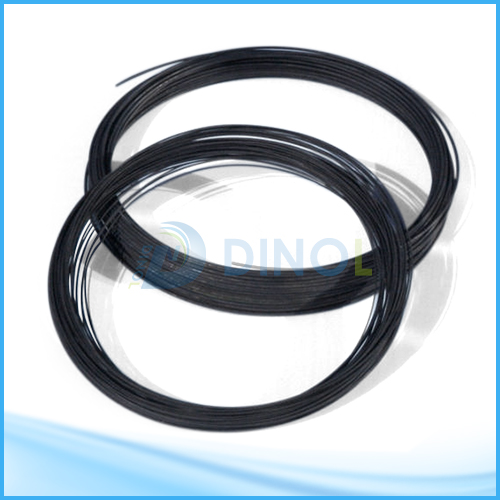
A titanium cable has stranded titanium wire inside a protective jacket. This makes it flexible enough to bend around obstacles, handle vibrations, and go through narrow conduit runs. Cables are usually used when the shape of the object isn't straight, like on ship hulls with frame intersections or buried pipeline bends. There are more connection points in the stranded design, though, and each one needs a watertight end to stop crevice corrosion at the contact.
Where Each Type Appears in Real Projects
When the anode row runs in a straight line, like on the bottom of a storage tank, a jetty steel pile system, or a bridge deck, straps are usually used. Cables are used in offshore platform lifts, ship hull arrays, and other places where the wire needs to go in a way that isn't straight. NACE SP0176 says that every joint must have stable electrical continuity as a minimum. The number of joints is important when choosing between the two forms.
Performance Comparison: Titanium Conductor Strap vs Cable
Corrosion Resistance and Service Life
Since both materials of titanium conductor strap for cathodic protection are made from the same base metal, they don't react very differently to rust in salt water and rough dirt. Titanium grade 1 forms a stable passive film of TiO₂ that doesn't react with chloride, even when temperatures are high. Straps have a slight edge when it comes to surface area. A flat shape has fewer cracks than a stranded one, which lowers the risk of deposit-driven corrosion over a 20–50-year design life.
Mechanical Strength and Current Distribution
Straps have a bigger cross-section per unit width, which helps make sure that current flows evenly along a line of anodes. The data from pipeline ICCP projects in the field shows that it is harder to keep the current flow constant with wires when the termination resistance changes across joints. When straps are bolted or soldered directly to the anode module, they produce lower and more consistent contact resistance. This is an important factor that design engineers consider when they are trying to meet a ±10 mV potential uniformity standard.
Installation Effort and Practical Handling
Cables are faster to install in complicated shapes. In minutes, a stranded cable can be pulled through a conduit, looped around structural members, and cut off. For runs that aren't straight, straps need to be pre-formed with bends or welded into unique forms, which adds time to the manufacturing process. Still, straps are faster to install because they replace multiple short cable pieces and the connectors that go with them for tank bottom and flat-surface uses.
Key Factors in Selecting the Right Conductor for Cathodic Protection
Application Geometry and Structure Type
The single most important selection variable is the shape of the protective structure. Straps fit easily with flat, straight structures like the sides of storage tanks, bridge deck slabs, and quay walls. Cables work best in curved or three-dimensional structures, like ship hulls, offshore jacket legs, and underground pipe bends. It is usual to have both in the same system: straps handle the main busbar runs, and short wire tails connect each anode at an angle.
Environmental and Standards Requirements
Soil and seawater projects that follow ISO 15589-1 or NACE SP0169 need conductors of titanium conductor strap for cathodic protection that can be fully submerged and, if needed, IP68 connection sealing. This is true for straps whose seams are bonded or sealed with an approved epoxy/heat-shrink system. When engineers specify to EN 12954 or GB/T 50934, they should make sure that the strap seller gives them a Certificate of Conformance and material test results. These are the kinds of papers that design institutes need before they approve a vendor.
Procurement and Project Timeline Factors
When a big pipeline or offshore project is awarded, it usually takes 12 to 18 months to finish. Working cash is less of a problem for the contractor when the seller can schedule deliveries once a month. Most of the time, it takes 4 to 6 weeks to make a lot of custom straps with non-standard widths or angles that are already made. This should be taken into account when making the budget, especially if the specification calls for both straps and cable tails to come from the same qualified vendor.
Advantages and Disadvantages of Titanium Conductor Straps vs Cables
Before going over the comparison, it's helpful to make a decision: neither style is clearly better than the other. The best choice depends on where the current needs to go and what the site lets it do.
To see the two conductor formats side by side, look at this:
- Titanium conductor strap — flat geometry: Delivers even current distribution along linear anode arrays; low contact resistance when welded or bolted; no polarization layer; customizable width and thickness; ideal for tank bottoms, bridge decks, and quay wall systems where geometry is predictable.
- Titanium cable — stranded format: Handles non-linear routing and vibration-prone environments; faster to install on curved structures; requires watertight termination at every joint; stranded construction introduces more potential crevice sites over long service periods.
- Cost profile: Straps carry a slightly higher material cost per meter than equivalent cables, but the reduction in connector count often offsets this in the total installed cost calculation for large flat-surface projects.
These differences for titanium conductor strap for cathodic protection have a real effect on how long the system lasts. If you pick the wrong format for an installation that is buried or submerged and hard to get to for repairs, the system could fail early and cost a lot more than the material savings.
Procurement and Supplier Insights for Titanium Conductor Straps and Cables
Certifications and Technical Documentation
Suppliers that are qualified should give you ASTM B265 material certificates, certificates of conformity, and standard cross-reference tables for EN 12954, NACE SP0176, and GB/T 50934. These papers must be signed in order for the design institute to approve the project and for the owner to add the company to their list of qualified vendors. Tianyi gives full documentation packages as normal, not when asked, because we know that missing paperwork can cause project deadlines to be missed.
Customization and Batch Delivery Capability
Straps made by Tianyi can be 10 mm wide, 50 mm long, 1 mm thick, or 6,000 mm long. They are made from Gr1/Gr2 commercially pure titanium. Angles, coil formats, and pre-drilled bolt patterns can be made to order. We can handle monthly batch exports with consistent lot traceability for projects with delivery plans that are spread out over 6 to 18 months.
Quality Control at Every Stage
At Tianyi, every batch of straps goes through a final visual inspection, checking for conductivity, checking the dimensions, and inspecting the raw materials before they are packed. Moisture-barrier film and reinforced crates are used in export packing to keep goods safe during travel. This is a concern that is often raised by international contractors who have received other goods that were damaged upon arrival, such as having surface oxidation or mechanical deformation.
Conclusion
A titanium conductor strap or a titanium cable should be chosen based on the geometry, the placement surroundings, and the paperwork needs. Titanium conductor strap for cathodic protection works better than wires on flat or straight buildings where even current flow and few joints are most important. Cables are used for complicated routes where freedom is a must. This product is the more durable and low-maintenance choice for most tank, pipeline, and marine wharf projects, as long as the supplier can back it up with certified material data and staged delivery.
FAQ
Is titanium better than copper for conductor straps in ICCP systems?
In places where things break down, yes. Copper rusts quickly in chloride-filled seawater and rough soils, so it needs to be replaced often. For Titanium Grade 1/2, a steady passive oxide layer forms that doesn't allow attack in all the situations that are common in ICCP service. Copper is a better conductor, but it doesn't last long in underground or submerged uses.
Can titanium cables be used where straps are specified?
Most of the time, yes, as long as the engineers say it's okay. The most important thing is that all joints must have IP68-rated terminations and cross-sectional areas that are the same for current capacity. Design schools sometimes need a written request for a change backed up by material certificates.
What lead times should I plan for?
Standard strap sizes take two to three weeks to ship. It usually takes 4–6 weeks for custom widths, thicknesses, or pre-formed shapes. To lock in batch times for big projects that will be delivered in stages over 6 to 18 months, Tianyi can agree on a production plan when the order is placed.
What standards govern titanium conductor selection?
Some important sources are ASTM B265 (titanium strip material), NACE SP0169 and SP0176 (cathodic protection practice), ISO 15589-1 (pipeline CP), EN 12954, and GB/T 50934 for Chinese national standards projects.
Partner with Tianyi for Your Next Cathodic Protection Project
Tianyi makes certified titanium conductor strap for cathodic protection supplier-grade parts, ranging from Gr1/Gr2 flat strips to fully custom anode kits. Their products come with traceable certificates of conformity and delivery plans that work with your project's timeline. You can visit dsa-anodes.com or email our technical team at info@di-nol.com to get a material datasheet, a custom quote, or a standards cross-reference package for your design institute. We answer in one business day.
References
1. NACE International. NACE SP0169: Control of External Corrosion on Underground or Submerged Metallic Piping Systems. 2013.
2. NACE International. NACE SP0176: Corrosion Control of Steel Fixed Offshore Structures Associated with Petroleum Production. 2007.
3. ASTM International. ASTM B265: Standard Specification for Titanium and Titanium Alloy Strip, Sheet, and Plate. 2020.
4. ISO. ISO 15589-1: Petroleum, Petrochemical and Natural Gas Industries — Cathodic Protection of Pipeline Systems — Part 1: On-Land Pipelines. 2015.
5. European Committee for Standardization. EN 12954: Cathodic Protection of Buried or Immersed Metallic Structures — General Principles and Application for Pipelines. 2019.
6. Broomfield, J. P. Corrosion of Steel in Concrete: Understanding, Investigation and Repair. Taylor & Francis, 2007.