




How are ICCP MMO ribbon anodes installed for tank protection today?
When a storage tank or marine structure starts losing its corrosion protection, the cost of doing nothing adds up fast. ICCP MMO ribbon anodes for cathodic protection have become the go-to solution for engineers managing long-term asset integrity on bridges, parking decks, and aboveground storage tanks (ASTs). In this guide, I walk through exactly how these anodes are installed today, what makes them worth specifying, and how to avoid the field mistakes that cut service life short.
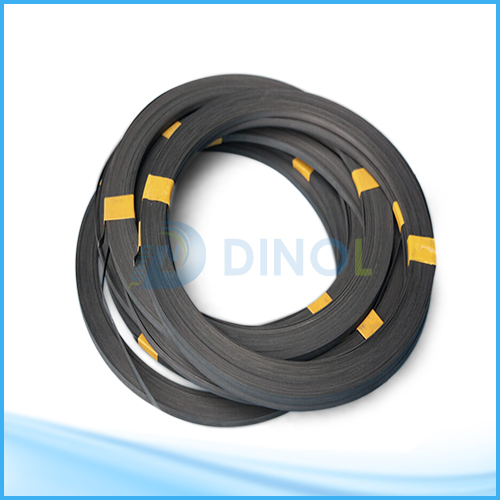
Understanding MMO Ribbon Anodes and Their Role in Tank Protection
To set up ICCP MMO ribbon anodes for cathodic protection today, a titanium-substrate ribbon is laid out in a grid pattern either under the tank's floor or on top of concrete. Now, connect the ribbon to a DC power source so it can send a controlled current to protect the steel frame. There is no oxidation in the steel frame, which stops rusting. Oxidation is an electrical process.
What Makes MMO Ribbon Anodes Different
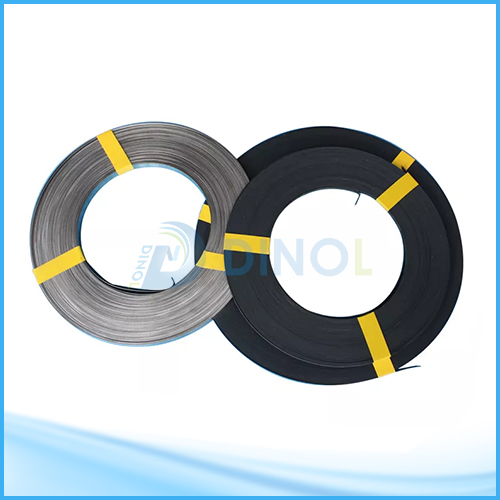
For sale, the ribbon is made of Grade 1 or Grade 2 titanium that is pure enough to meet ASTM B265. It is then covered with a Mixed Metal Oxide layer, either Ru-Ir or Ir-Ta. This layer speeds up the flow of current while using as little of the anode as possible. In general, the ribbon is between 6.35 mm and 12.7 mm wide and 0.5 mm to 0.635 mm thick. This makes it thin enough to fit between rebar without getting in the way of the space between the bars.
Ru-Ir vs. Ir-Ta Coatings
If you want to choose a coating, please read this. Because they let chlorine escape, Ru-Ir coatings are great for marine piers and jetties that are submerged in water. Ir-Ta layers let oxygen pass through them and work best in soil, coke breeze, or concrete, which is what you'll find on top of a bridge deck or under the floor of an above-ground storage tank. Picking the wrong finish makes the item work less well and last less long.
Performance Benchmarks
NACE TM0108 (accelerated life testing) tests are used to predict how well an anode will work in the real world before it is used in the field. It can send up to 100 mA/m² of electricity through concrete and up to 600 mA/m² through soil or coke breeze backfill. Resistance to electricity is equal to about 0.05 ohms per meter. Service life can be anywhere from 20 to 50 years if it's built right. Plans can be made that last up to 75 years for important infrastructure that is paid for by the government and needs to have long warranty paperwork.
Step-by-Step Installation for Tank and Concrete Structure Protection
When installing ICCP MMO ribbon anodes for cathodic protection, anything you put together won't work for long if you don't do it right. In the third year, some projects with great plans have failed because the field work was done too quickly.
Pre-Installation Planning
A resistivity survey of the dirt or concrete should be done by the project team before unrolling a single ribbon. They should also figure out how far apart the anodes should be and how long the ribbon should be. Ribbon is often laid out in a grid on top of a cushion of sand or fine dirt for AST floors. Titanium conductor bars are put where the lines meet to make sure the voltage stays high over long distances. The potential spread isn't even without the conductor bars, so some parts of the tank floor aren't safe.
Surface Preparation and Anode Placement
The concrete base or tank floor must be clean, free of oils, and stable in shape before it is put down. The ribbon is laid out in a grid design that was planned ahead of time. It is then automatically held in place, most often with plastic clips or ties, so it doesn't move while the concrete is poured or the backfill is packed down.
Ribbons and titanium conductor bars can be welded together or crimped together mechanically. After that, high-quality glue or heat-shrink tubing is used to seal the joints and keep water out. The enclosure being broken is one of the main reasons why connections fail early in the field.
Commissioning and Electrical Verification
It is slowly turned on and watched after the backfill or concrete is put down for ICCP MMO ribbon anodes for cathodic protection. Use reference electrodes, like Silver/Silver Chloride in water and Copper/Copper Sulfate in dirt, to check the structure-to-electrolyte potential and make sure the steel has reached the NACE SP0169 or SP0290 safety level. Before the system is given to the owner, readings of voltage and current are compared to the design document and written down.
Comparing Ribbon Anodes with Other Anode Types
People often say that ribbon anodes are like solid rod anodes, wire anodes, and mesh configurations. There is a way that each style works.
Flexibility Advantage Over Solid and Wire Formats
Solid MMO rod anodes can be laid out on a flat tank floor or woven between rebar, but they only work well in deep ground. If you bend wire anodes, they have more electrical resistance per meter and can be harder to link properly. Ribbon anodes are a good middle ground because they are low in resistance, very flexible, and have a flat shape that makes them useful for both concrete overlays and trench-laid pipeline protection beds.
Total Cost of Ownership
When ribbon anodes are first made, they might cost more than zinc or magnesium sacrificial alternatives. But, over the design life of 20 years or more, the total cost changes. Because they need to be changed, sacrificial anodes wear out over time and cost money to drill or shut down. It doesn't matter how you power MMO ribbon anodes; they lose very little mass and work for decades. The lifecycle profile is very important for government building projects that have guarantees that last for 20 years.
Application-Specific Selection
Ribbon anodes set in a shallow trench next to the pipe only offer limited protection for underground pipes in soil with a high resistance. They don't need to be buried very deep. The thin ribbon shape fits between layers of rebar in bridges and parking garages made of reinforced concrete without making the cover deeper. This keeps the structure's original design while also protecting it from corrosion.
Selecting and Procuring MMO Ribbon Anodes: What to Check
To find the right product for a government-funded project, you need to do more than just look at prices per meter.
Documentation and Certification Requirements
In the US, UK, Canada, and Australia, projects usually need ASTM B265 titanium material certification, EN 10204 3.1 mill test records, and test data from a third party, such as Intertek or SGS. When working on public infrastructure projects, professional engineers and owner agents often ask for accelerated life test results according to NACE TM0108 and XRF analysis to make sure they know what the coating is made of.
Customization and Lead Time
Most of the time, standard stock lengths of ICCP MMO ribbon anodes for cathodic protection aren't used for restoration projects. For example, a bridge deck fix might need 800 meters of one width, but a tank floor might need a different pitch and more room between the bars. A supplier who can quickly cut to the right length and include matching titanium conductor bars, connection hardware, and installation instructions all at the same time saves a lot of time and makes it less likely that mistakes will be made in the field.
Tianyi's Product Range
The MMO ribbon anodes that Shaanxi Tianyi New Material Titanium Anode Technology Co., Ltd. makes are on Grade 1/Grade 2 titanium plates. The anodes can have one or two sides, and the coatings can be Ru-Ir or Ir-Ta. The sizes can be changed to fit the job, and the business sells titanium conductor bars that match and all the hardware you need to put them all together. A third party can give you test paperwork that meets ASTM and EN standards.
Maintenance, Lifespan, and Troubleshooting
It's important to check on a system often, even if it was installed correctly, so it can work as planned.
Routine Monitoring
The reference electrode is read every year to make sure that the safety potentials stay in the range set by NACE. When you compare the current coming out of the transformer-rectifier to records from the first time it was set up, you should keep track of it. The link is most of the time to blame for output drift, not the anode wearing down.
Common Field Problems
Most of the time, an uneven current distribution is due to not enough wire bar covering or a failed junction splice. This can happen if the heat shrink isn't applied correctly or the resin is cracked. Water can then get to the metal-to-metal joint and create high-resistance spots. If you find these joints early and seal them again, you can stop local corrosion from spreading faster, which could damage the whole circuit.
When to Consider Retrofitting
If a system is more than 25 years old, keeps giving low-potential readings even when the rectifier is fully on, and reference electrode data shows protection levels that are all over the place, it might be time to upgrade the ribbon anode instead of doing regular reactive maintenance. These days, Ir-Ta ribbon systems are built to last between 20 and 50 years. This means that an upgrade can now protect infrastructure for a long time after it was first planned.
Conclusion
ICCP MMO ribbon anodes for cathodic protection keep tanks, bridges, and other structures in the water from rusting for a long time if they are placed correctly on a grid, linked with titanium conductor bars, and turned on with reference electrode verification. It has a titanium base with low resistance, an MMO coating that was carefully chosen, and test results that can be backed up by evidence. This gives engineers the proof they need to meet government project standards and professional engineer reviews.
FAQ
What is the expected service life of MMO ribbon anodes?
It is meant to last between 20 and 50 years at normal present amounts. What the environment is like and how much the layer is loaded change this. If you choose the right coating thickness and low current density, you can make 75-year plans for important public infrastructure that comes with long guarantee responsibilities. Acute life tests (NACE TM0108 tests) proved this.
Can ribbon anodes fit irregular tank floor surfaces?
Yes. The metal base is bendable, so the ribbon can follow the shape of the surface. The MMO layer is not hurt by this. The standard bend test makes sure that the coating stays on even when it is bent by hand. This is important for when workers put down ribbon over rough ground before putting down concrete or backfill.
What safety steps matter most during installation?
It is very important that the link covering doesn't get broken when the backfill or concrete is put or packed down. It's important not to scratch the coating of ribbon when you handle it. Before covering, you should look at all of the joints and make sure they work electrically. When the covering is being shipped or stored on-site, it should be kept safe with protective sleeves in the package.
How do I confirm the system is working after installation?
Reference electrodes are placed in different places to measure the voltage between the steel and the liquid. Numbers must be less than or equal to –850 mV (CSE) at all monitoring points in the protected area in order to meet the NACE standard.
Get a Custom MMO Ribbon Anode Quote from Tianyi
Tianyi sells ICCP MMO ribbon anodes for cathodic protection projects that need full paperwork, hardware at the system level, and custom forms. In just one order, our team can give you ASTM B265-certified materials, third-party test results, and matched titanium conductor bar systems. This is true whether you are putting together a bid package for a state bridge project or looking for materials for an AST floor repair. Email us at info@di-nol.com or visit dsa-anodes.com to get a sample or price quote for your project from a reputable company that makes ICCP MMO ribbon anodes.
References
1. NACE International. NACE SP0290: Impressed Current Cathodic Protection of Reinforcing Steel in Atmospherically Exposed Concrete Structures. NACE International, 2007.
2. NACE International. NACE TM0108: Evaluation of Internal Plastic Coatings for Corrosion Control of Tubular Goods in an Aqueous Salt Environment (also referenced for anode accelerated life testing protocols). NACE International, 2008.
3. ASTM International. ASTM B265: Standard Specification for Titanium and Titanium Alloy Strip, Sheet, and Plate. ASTM International, 2020.
4. Broomfield, J. P. Corrosion of Steel in Concrete: Understanding, Investigation and Repair. 2nd ed. Taylor & Francis, 2007.
5. Pedeferri, P. "Cathodic Protection and Cathodic Prevention." Construction and Building Materials, vol. 10, no. 5, Elsevier, 1996.
6. Chess, P., and Broomfield, J. Cathodic Protection of Steel in Concrete and Masonry. 2nd ed. CRC Press, 2014.
