




How Does Anode Current Capacity Affect Cathodic Protection Design?
Anode current capacity directly determines whether a cathodic protection system can maintain the protective potential required by NACE SP0169—typically −850 mV (CSE) or a 100 mV polarization shift. When I size an impressed current system, the output rating of each anode dictates how much protective current reaches the structure's surface. Using an MMO/Ti linear anode for cathodic protection, which delivers up to 656 mA/m (DN-30 model), I can distribute current evenly along buried pipelines or tank bottoms, eliminating the protection gaps that point-source anodes often leave behind.
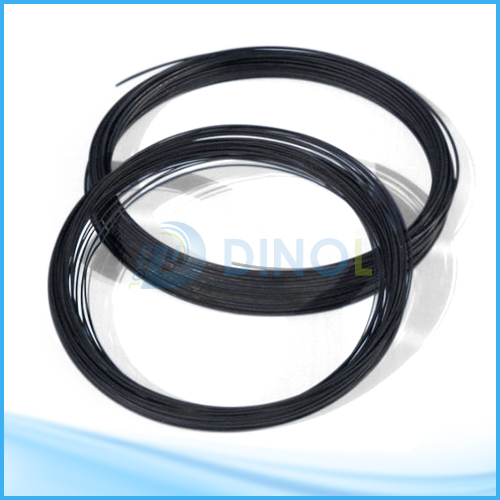
Understanding Anode Current Capacity in Cathodic Protection
What "Current Capacity" Actually Means
Current capacity is the highest steady current that an anode can discharge along a unit length before its layer breaks down. When mixed metal oxides (iridium, ruthenium, and tantalum) are applied to a titanium substrate, the rate of consumption is as low as 1–6 mg/A·yr, which is about 50 times less than cast iron. Because they don't use much power, properly rated linear anodes can protect you for at least 40 years.
How Current Density Connects to Coating Life
When you operate above the rated current density, the MMO layer wears out faster and the service life is shortened. Tianyi's DN-15 model (Φ1.5 mm Ti wire) sends out 328 mA/m, and its DN-30 model (Φ3.0 mm Ti wire) sends out 656 mA/m. By staying within these given values, the catalytic oxide layer stays whole and the anode's electrochemical activity stays the same for as long as it's supposed to.
Why Linear Distribution Changes the Protection Geometry
A cone-shaped current field is made by a single deep-well anode. Along the tunnel, there is a linear anode that makes sure that every meter of the construction gets current from a nearby discharge point. Because of this shape, ICCP designers choose continuous linear anodes for busy urban areas and closely spaced parallel pipes where stray current issues are caused by point-source interference.
Key Factors Affecting Anode Current Capacity in Design
Material Properties: Substrate and Coating
The titanium substrate (Gr1/Gr2, Ti content ≥ 99.6%) is strong and flexible, and it doesn't rust when the anodic potential is high. The MMO coating is put on using sandblasting, pickling, and thermal decomposition. It is 6–10 μm thick and can handle current densities below 2,000 A/m². The stability of the covering from batch to batch, which can be checked using XRF analysis and NACE TM0108 accelerated life testing, directly affects how well each production lot meets its output goals.
Geometric Dimensions: Wire Diameter and Outer Diameter
The output ability of MMO/Ti linear anode for cathodic protection is mostly controlled by the width of the wire. When you go from φ1.5 mm to φ3.0 mm, the active oxide surface area and rated current output both double. The outer diameter of the product (38–40 mm, or φ39.5 ± 0.5 mm) determines how much carbonaceous backfill surrounds the Ti wire. More backfill lowers grounding resistance and keeps a stable low-resistance path even in sandy or rocky soils with resistivity above 100 Ω·m.
Environmental Conditions: Soil Resistivity and Installation Medium
The voltage drop between the anode and the framework is set by the resistance of the soil. In places with a lot of resistance, putting pre-packaged conductive coke backfill (with a carbon content of at least 99.5%) around the anode lowers grounding resistance without the need for a higher-voltage rectifier. When used in seawater or on a marine platform, the MMO coating changes to a chlorine-evolution chemistry. The outer diameter geometry stays the same, but the oxide blend changes.
Practical Implications of Anode Current Capacity on Cathodic Protection Design
The Cost of Under-Sizing
An anode bed that is too small can't keep up the necessary safety current along the whole length of the pipeline. When coatings break, bare metal sections fall below the −850 mV level, which speeds up localized rust. Researchers who looked at old pipes in the field found that pits grew at rates of more than 0.3 mm/year in places where the ICCP system wasn't working well (by as little as 15%).
The Waste of Over-Sizing
People often over-sample when they don't know what will happen, but it has real costs: a bigger rectifier, more energy use, and the chance that hydrogen will weaken high-strength steel fittings near the anode. Finding the needed current by looking at the structure's surface area, the state of the coating, and the resistivity of the dirt is the right way to do it. Then, choose the anode model whose rated output meets that need without going over by a lot.
Optimization Strategies for Common Applications
It's cheaper to make changes after the fact if the design of MMO/Ti linear anode for cathodic protection is correct from the start. In the field, these are the three situations I see most often:
- Aging buried pipelines with deteriorated coatings: Coating conductance rises as holiday density increases, so total current demand can double compared to a new pipeline. DN-30 anodes (656 mA/m) installed in parallel trenches with coke backfill handle this demand without switching to a larger rectifier.
- Aboveground storage tank (AST) bottoms: A grid or spiral layout in the confined 300–900 mm space beneath the tank floor requires a flexible anode with a tight bending radius (≥ 500 mm). The 38 mm outer diameter and cut-to-length capability allow precise fitting without field splicing risk.
- High-resistivity soil regions: Pre-packaged coke breeze maintains contact resistance (MMO/Ti wire to cable ≤ 0.0009 Ω) even where native soil resistivity would otherwise force operating voltage above rectifier limits.
Most ICCP retrofit situations that happen in the real world can be solved with these three methods. By matching the right anode model to the application, you can avoid both premature failure and spending money on things that aren't needed.
Comparing MMO/Ti Linear Anodes and Alternative Anode Technologies
MMO/Ti vs. Graphite Anodes
In soil, graphite anodes break down at a rate of about 0.5 to 1 kg/A·yr, which is hundreds of times faster than MMO/Ti. A 10 km section of a pipeline may need a new graphite bed within 8–12 years. This will add labor and excavation costs that are much higher than the initial material savings. The total cost of ownership estimate changes a lot because MMO/Ti linear anodes work for at least 40 years under normal conditions.
MMO/Ti vs. Zinc Ribbon Anodes
There is no impressed current in zinc ribbon anodes; they are galvanic (sacrificial). The zinc-to-steel potential difference (~250 mV) sets their operating voltage, which isn't always enough in high-resistance soils above 50 ··m. ICCP systems with MMO/Ti linear anodes send variable current through a rectifier. This lets the operator make up for changes in soil resistance or coating wear and tear that happen over time without having to replace any hardware.
Compliance and Industry Standards
Tianyi's MMO/Ti linear anode for cathodic protection are made according to ASTM standards, have ISO 9001 certification, and work with NACE SP0169 design guidelines. The coating process (sandblasting → pickling → thermal decomposition) makes an oxide layer that is smooth, sticks to itself, and passes bending adhesion tests. This is something that engineering firms are asking for more and more in their purchasing requirements, along with XRF coating loading data.
Guide to Procuring MMO/Ti Linear Anodes for Optimal Current Capacity
Specifications to Request from Any Supplier
Before I place an order, I always ask for the following information: the rated output current (mA/m), the wire diameter (1.0, 1.5, 2.0, or 3.0 mm), the outer diameter tolerance (±0.5 mm), the contact resistance value, the carbon content of the backfill, and the type of cable (XLPE/PVC, PVDF/HMWPE, or EPR/CSPE). Batch-to-batch difference can't be seen until a system fails in the field and these numbers are written down.
OEM, MOQ, and Lead Time Considerations
Small developers who put together ICCP kits for local markets often need both normal stock units (DN-15/DN-30) and reels that are wound to specific project lengths. Tianyi sells reels in lengths of 500 m and 1,000 m, can make custom sizes, and offers OEM/neutral packaging. This way, a reseller can keep their profit margin while still being able to track the goods back to the original ISO 9001-certified production batch.
Logistics and Documentation for Export Orders
When a buyer in Brazil, Argentina, Turkey, or the Middle East buys something, the project schedule is set by wait time and customs paperwork. Clearance times are cut down by using standard export packaging that comes with a Certificate of Origin and test reports that meet ASTM standards. Tianyi ships by sea freight (FCL/LCL) and courier. Production lead times range from 15 to 30 days, depending on the quantity, which gives integrators enough time to plan their inventory around buying cycles that last between one and three months.
Conclusion
The reliability of any ICCP design depends on anode current capacity. MMO/Ti linear anode for cathodic protection delivers stable performance for this system. The improper output grade can hasten corrosion by not protecting it sufficiently or cost you money by overdesigning it.
Design engineers may accurately reach protective potential objectives in subterranean pipelines, tank bottoms, and maritime structures using these anodes' steady oxide coating, 40-year service life, and wire widths from 1.0 mm to 3.0 mm. Matching rated production to current demand is the most cost-effective strategy to permanently eliminate corrosion. Correct soil resistivity and coating condition investigations can confirm this.
FAQ
Does higher anode current capacity always mean longer service life?
Not automatically. Service life depends on operating the anode within its rated current density. Running a DN-15 anode (rated 328 mA/m) at 500 mA/m accelerates MMO coating depletion and shortens life well below the 40-year design target. Match the model to the calculated demand, and the rated life holds.
What factors determine how much current my ICCP system needs?
The primary inputs are structure surface area, coating conductance (affected by holiday density and coating age), and soil or electrolyte resistivity. A pipeline with a degraded coating in low-resistivity clay requires significantly more current per meter than a new coating in dry sandy soil.
Can MMO/Ti linear anodes work in both soil and seawater?
Yes, but the MMO coating formulation changes. Soil applications favor oxygen-evolution chemistry; seawater applications shift toward chlorine-evolution chemistry. When ordering, specify the installation medium so the supplier can confirm the correct oxide blend for your environment.
What is the minimum order quantity for small integrators?
Tianyi accepts small-batch orders and supplies reels in 500 m and 1,000 m lengths with custom-cut options. Free samples are available for electrochemical testing before committing to a volume order.
How do I verify coating quality before installation?
Request XRF coating loading data and the NACE TM0108 accelerated life test report from your supplier. Also perform a bending adhesion check on a sample length to confirm the oxide layer does not flake during field handling.
Partner with Tianyi for Your Next MMO/Ti Linear Anode for Cathodic Protection Project
From its Baoji factory, Shaanxi Tianyi New Material Titanium Anode Technology Co., Ltd. makes MMO/Ti linear anodes for cathodic protection that are ISO 9001-certified and are used by integrators in North America, South America, Europe, the Middle East, and Southeast Asia. If you need regular DN-15/DN-30 stock or reels made to your exact specifications with OEM packing, Tianyi's production team can make it happen.
We are a direct provider of MMO Ti linear anodes for cathodic protection. We offer tiered prices, a flexible MOQ, and accurate export paperwork. You can email us at info@di-nol.com or go to dsa-anodes.com to ask for a sample or a quote that is tailored to your project.
References
1. NACE International. NACE SP0169: Control of External Corrosion on Underground or Submerged Metallic Piping Systems. NACE International, 2013.
2. Peabody, A. W. Control of Pipeline Corrosion, 2nd ed. NACE International, 2001.
3. Baeckmann, W. von, Schwenk, W., and Prinz, W. Handbook of Cathodic Corrosion Protection, 3rd ed. Gulf Professional Publishing, 1997.
4. NACE International. NACE TM0108: Evaluation of Internal Plastic Coatings for Corrosion Control of Tubular Goods in an Aqueous Flowing Environment. NACE International, 2008.
5. Jones, D. A. Principles and Prevention of Corrosion, 2nd ed. Prentice Hall, 1996.
6. Broomfield, J. P. Corrosion of Steel in Concrete: Understanding, Investigation and Repair, 2nd ed. Taylor & Francis, 2007.
