




How do I choose an alkaline water generator by output capacity?
Choosing the right alkaline water generator by output capacity starts with matching the unit's flow rate to your actual daily water demand. A device producing 1–2 L/min suits a small household or compact office, while a unit rated at 3–5 L/min covers clinics, gyms, or mid-sized commercial spaces. For OEM procurement or industrial-scale deployment, output must stay consistent even under continuous operation. Beyond volume, stable pH (8.0–11.0) and ORP values (−300 to −500 mV) must hold at peak flow — because capacity without quality is just water pressure.
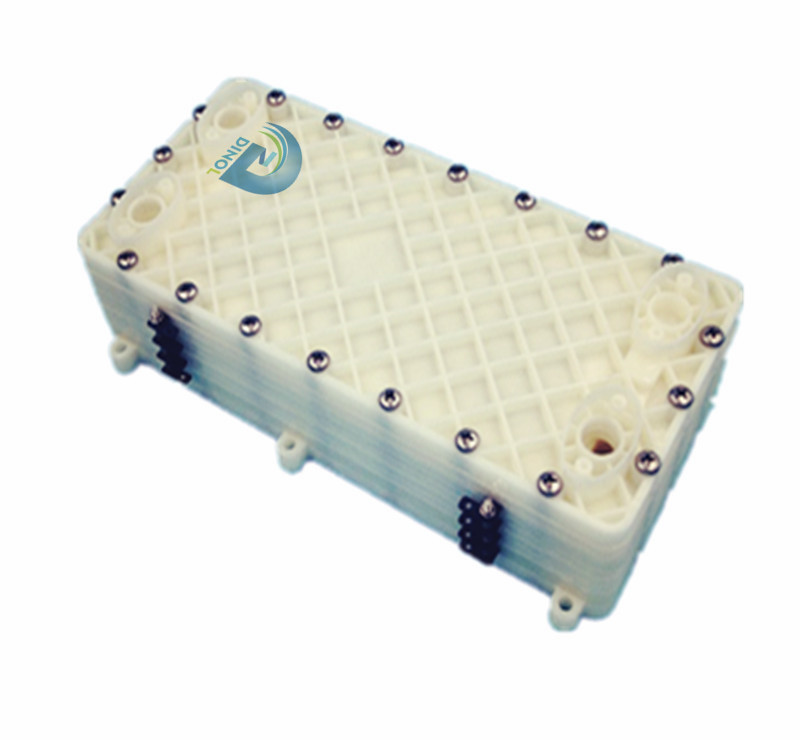
Understanding Output Capacity in Alkaline Water Generators
Output capacity is more than just a speed number; it tells you if a unit can really handle your needs without affecting the quality of the water.
What "Output Capacity" Actually Measures?
How much ionized water the machine continuously sends out is shown by the flow rate, which is given in liters per minute (L/min) or liters per hour (L/hr). Tianyi's models can handle between 1 and 5 liters per minute, which is equal to 60 to 300 liters per hour when they are continuously running. This range is perfect for places like a busy fitness center or an office with four people.
Why pH Stability at Volume Matters?
When a unit gives out 1 L/min of pH 10.5 but drops to 8.2 L/min, it is not performing; it is just making up for it. The quality of the electrodes determines how consistently electrolysis works. Tianyi uses titanium electrodes that are coated with platinum or mixed metal oxide (MMO). This keeps the ORP levels fixed between -300 and -500 mV, even when demand changes. The electrodes can last up to 5,000 hours, which directly saves the output over time.
The Link Between Flow Rate and Operational Throughput
Operational throughput determines stocking cycles and after-sales exposure for B2B buyers, especially OEM procurement managers looking for alkaline water generator goods to sell in the Middle East or Southeast Asia. People complain when a unit doesn't work well during peak demand. At 70–250 W, a unit that is too big for the deployment wastes energy. Procurement intelligence tells the difference between average orders and well-structured ones by matching capacity exactly to demand.
Key Criteria for Selecting Based on Output Capacity
The first thing to look at is output ability; it's not the whole story. Several helping factors decide whether or not a machine actually works as well as it says it will in the field.
Calculate Real Daily Demand Before Specifying
The procurement team should figure out how much is used by each user, each shift, or each service point. As a general rule, an adult should drink two to three liters of water every day. So, an office with 20 people needs at least 40–60 liters of water every day, which is well within the capacity of a 1 L/min unit. Restaurants or clubs with 80 or more daily users need a unit that can regularly pump 3 to 5 L/min and whose output doesn't drop after two hours of use.
Filter Efficiency Directly Limits Effective Output
Even if a machine says it can do 5 L/min, a clogged or low-quality filter will limit the quality and volume of the ionization. Every 6 to 12 months, the filters in Tianyi units need to be replaced. The units have a multistage filtration system that gets rid of contaminants before electrolysis. The most common reason for capacity drops in the field is skipping upkeep on filters. This is something that procurement managers should make sure their distribution partners understand.
Energy Consumption and Long-Term Cost Structure
The total cost of ownership is affected by the power draw between 70 W and 250 W across all alkaline water generator model levels. This is especially true in places where energy costs are high. If an OEM buyer wants to make a competitive product, they need to make sure that the bill of materials is as low as possible without losing output. Tianyi can work with both 110V and 220V, 50/60 Hz, which means it doesn't have to pay extra to change to different voltages for Middle East (220V/60Hz) operations.
Segmenting by Output Capacity and Application
When you connect capacity tiers to real-world situations, the choice to buy something is easier to understand. This is how Tianyi's range of flow rates is broken down by use:
- Low output (1–2 L/min / under 120 L/hr): Suitable for home use, personal offices, or hotel room installations. Compact footprint, lower power draw, and simplified filter maintenance. Ideal for OEM brands entering the entry-level health appliance segment with first-order MOQs of 100–200 units.
- Mid output (2–3 L/min / 120–180 L/hr): Covers clinics, small restaurants, or corporate meeting rooms. This tier balances pH range (8.0–11.0), ORP performance, and continuous operation without thermal stress on electrodes. Most commercially active segment for Middle East e-commerce and TV shopping channels.
- High output (3–5 L/min / 180–300 L/hr): Built for gyms, large offices, or multi-point distribution setups. At this tier, electrode durability is the critical variable. Titanium MMO-coated electrodes rated for 5,000 hours maintain ionization efficiency where cheaper zinc or plain stainless steel alternatives fail within 1,200 hours.
These three tiers cover most B2B use cases without having to do unique engineering for each SKU. When quoting wholesalers or setting store prices, procurement managers need a clear frame of reference.
Comparing Options: What OEM Buyers Should Evaluate?
When making a B2B purchase decision, it's better to compare specifications to deployment requirements than to compare consumer brand names.
Electrode Material Is the Core Differentiator
Electrodes in consumer-level ionizers are often not covered or only lightly plated. Tianyi's titanium electrodes with platinum or MMO surfaces have a smaller oxygen evolution overpotential that can be measured. This means that ORP values are higher at a lower energy cost. This has a direct effect on the marketing claims about the product's performance, and those claims need to hold up in the buyer's market.
Certification Coverage Determines Market Access
In Saudi Arabia, you are required by law to have SASO/SABER license. ECAS/ESMA is used for the UAE. The units from Tianyi already have ISO, CE, and RoHS certifications. When buyers are looking for certified markets, they should make sure that they know which certifications apply to each SKU before placing their first order, because the costs of certifying each SKU individually can add several thousand dollars to the launch budget.
After-Sales Infrastructure Protects Brand Equity
In review-based e-commerce markets, reports about leaks or circuit failures hurt a brand's image for an alkaline water generator. Every unit that Tianyi makes goes through full-unit inspection and age tests before it is shipped. The water flow rate, pH change accuracy, and ORP range are all checked. This quality check lowers the number of failures in the field and safeguards the OEM brand further down the line.
Practical Procurement and Maintenance Guidance
Once the right capacity tier is identified, the procurement process itself needs structure.
Align Order Timing to Market Demand Cycles
For Middle East OEM buyers, Ramadan and Eid promotions drive the majority of health appliance sales. Locking production orders three months before peak season is standard practice. Tianyi's production lead time runs 2–4 weeks, with sea freight adding 2–4 weeks depending on destination port. Building this into procurement planning avoids the costly rush shipping that erodes margins.
Maintenance Planning Extends Product Life
Filter replacements every 6–12 months and periodic electrode cleaning are the two maintenance actions that most affect long-term output stability. OEM brands that bundle replacement filters as a subscription or repurchase model create recurring revenue while reinforcing the product's health positioning. Electrode lifespan of up to 5,000 hours means most residential users will not need electrode replacement within the standard product warranty window.
Supplier Stability Matters More Than Unit Price
Consumables — filters, electrode assemblies — are where brand profitability compounds over time. A supplier that can guarantee consistent component specifications across repeat orders protects product consistency. Buyers should evaluate minimum reorder quantities, lead times for spare parts, and whether the supplier offers region-exclusive arrangements before finalizing OEM agreements.
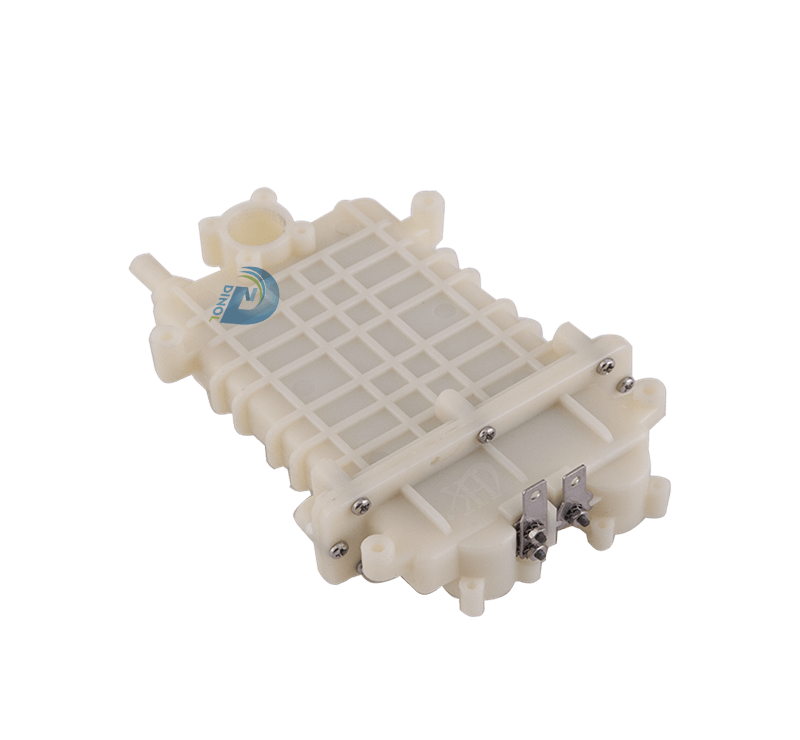
Conclusion
Picking an alkaline water generator based on its output ability is a planned process, not a game of chance. Make sure that the flow rate matches the daily demand, that the pH and ORP levels stay stable at full output, and that the certifications cover the people you want to sell to. What makes a product reliable and what makes it fail in the field are the electrode material, the quality of the filter, and the infrastructure for support after the sale. With the right capacity specification, an OEM purchase order turns into a line of products that can be used again and again and can be scaled up or down.
FAQ
How often should pH levels be tested in a commercial deployment?
For installations in an office or clinic, testing once a month is a good starting point. In places with a lot of activity, like clubs, spot checks once a week are better. Most of the time, pH drift is the first sign that an electrode has started to scale or that a filter needs to be replaced. Having a simple pH test kit on hand doesn't cost much and keeps customers from complaining.
Can a low-capacity unit be upgraded as business needs grow?
When it comes to output capacity, most tabletop or under-sink ionizer types can't be upgraded in the field. If you think that your number will grow in the next 12 to 18 months, it is cheaper to set the next level of capacity from the start than to replace units early. Scalability shouldn't be an afterthought for OEM buyers; it should be a part of the initial SKU choice.
What causes output capacity to drop over time?
The three most common reasons are a clogged filter, mineral buildup on the electrodes, and changes in the voltage supply. The first two are taken care of by replacing the filter every 6 to 12 months and cleaning the electrolysis chamber with citric acid every so often. The third problem is with the placement; making sure the input voltage stays stable saves electrode performance and increases operating lifetime.
Partner with Tianyi for Your Alkaline Water Generator Supply
Tianyi has a wide selection of ionized water systems, from small home models to large commercial ones with a lot of output. All of their systems are certified by ISO, CE, and RoHS. Our OEM and ODM services include changing the way something looks, localizing the interface, and retail packing. We have low first-order minimums so that you can test the market. Our company has been making alkaline water generators for a long time, and we back up every shipment with full-unit inspections and age tests. You can email our team at info@di-nol.comto get product specs, certification paperwork, or a sample order.
References
1.Burda, C., & Chen, X. (2020). Electrochemical Water Treatment and Ionization Technologies. Journal of Environmental Electrochemistry.
2.Alkaline Water Market — Global Industry Analysis and Forecast 2023–2030. Grand View Research, 2023.
3.ISO 9001:2015 — Quality Management Systems: Requirements. International Organization for Standardization, 2015.
4.Al-Amin, M., & Rahman, M. (2021). Consumer adoption of health appliances in GCC markets. International Journal of Consumer Studies, 45(3), 412–428.
5.Xu, J., & Li, Y. (2022). Titanium MMO electrode performance in low-temperature electrolysis applications. Electrochimica Acta, 409, 139952.
6.Water Quality Association. (2023). Residential and Commercial Water Treatment Products: Performance Standards and Testing Protocols. WQA Technical Publications.
