




How Do I Compare Diaphragmless Electrolyzer Suppliers and Models?
Comparisons of vendors and models for diaphragmless electrolyzer should include effective chlorine production capacity, electrode coating durability, energy consumption per gram of chlorine, control system compatibility, and after-sales service. A diaphragmless electrolyzer electrolyzes saline solution to produce sodium hypochlorite on-site without liquid chlorine storage. The proper model relies on application size, water supply salinity, operational environment, and certification. This guide leads you through each comparative consideration so you can make a confident, educated purchase.
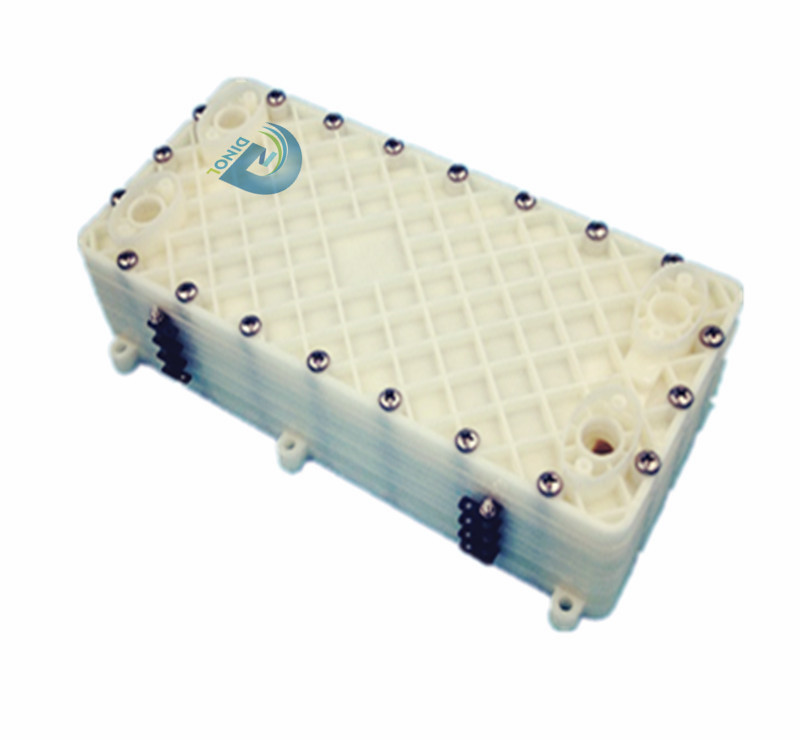
Understanding Diaphragmless Electrolyzers and Their Market Landscape
How the Electrochemical Process Works
MMO-coated titanium electrodes carry a 2% to 5% salt solution through an electrolytic cell. A diaphragmless electrolyser has no diaphragm. Chlorine gas is released from the anode reaction (2Cl⁻ → 2e⁻ → Cl₂↑) and hydrogen from the cathode reaction (2H⁺ + 2e⁻ → H₂↑). Mixing NaCl and H₂O creates sodium hypochlorite solution as required. These cells' ionic resistance is reduced since there's no membrane between the metal pieces. The response goes deeper than in normal diaphragm cells.
How It Differs from Diaphragm and PEM Systems
Traditional diaphragm electrolysers have porous walls behind the anode and cathode. This reduces hydraulic efficiency and requires frequent replacement. Solid polymer electrolytes are employed in PEM systems. Such systems convert clean water into hydrogen, but they are costly to install. This barrier is removed without a diaphragm, lowering internal resistance and mechanical complexity. This strategy strikes a decent balance between efficiency and cost. Produces 50–2,000 g/h sodium hypochlorite.
Current Market Trends
The need to synthesise sodium hypochlorite on-site rises worldwide as cities and food industries eliminate liquid chlorine for legal and safety concerns. Grand View Research forecast 8.4% annual growth in the electrochlorination market through 2030 in 2023. Treatment of city and ship ballast water will drive much of this expansion. Manufacturers in China, Europe, and North America compete on electrode durability and remote tracking.
Key Criteria for Comparing Diaphragmless Electrolyzer Models
Effective Chlorine Output and Scalability
First, you need to confirm the effective chlorine output rate measured in grams per hour when selecting diaphragmless electrolyzer. The Tianyi TY-WL series has nine standard model specifications, ranging from WL50B (50 g/h) up to 2,000 g/h. This allows engineers to select an accurate capacity without guesswork. The electrolytic cell body length ranges from 310 mm (WL50B) to 1,200 mm (WL2000B), so the equipment footprint increases accordingly. Matching the output to actual demand prevents premature electrode wear and unnecessary energy waste.
Electrode Coating Durability and Energy Consumption
Electrode life is the biggest factor in electrochlorination system ownership costs. Ru-Ir nanocoating should cover TiO2. This protects against chlorine erosion better than titanium or graphite. All TY-WL versions have a cell pressure of ≤0.2 MPa and a current range of 60 A (WL50B) to 460 A (WL1500B/WL2000B). When cell voltage is reduced at the same current, electrode coverage improves. Monitor this figure to determine when the coating wears off.
Safety Compliance and Certification Requirements
Certificates are required for municipal water treatment and maritime applications. Make sure the seller can prove their products are safe for electrical use by European standards, approved by the China Classification Group (CCS) for ships, and that the paperwork meets U.S. NSF/ANSI 61 standards for drinking water-contact materials. Hypochlorite doesn't modify the TY-WL series' PMMA/PVC cell housings, which fulfil all material safety regulations. Always request test results photos, not simply be assured you will get them.
How to Evaluate Diaphragmless Electrolyzer Suppliers
Assessing Supplier Credibility and Track Record
Past work might tell you more about a source than brochures. Request examples of your field's initiatives, such as treating ship ballast water, constructing food-grade CIP systems, or making pool water drinkable. Checked case studies should provide the system's size, duration, and reference contact information. Deliveries from suppliers without field installations are risky. Especially for government projects, inability to deliver might lead to legal issues.
Technical Support, Installation, and Maintenance Programs
Business buyers with 50 to 1,000 employees often lack electrochemistry knowledge when sourcing diaphragmless electrolyzer. A reputable provider should provide factory acceptance test (FAT), on-site commission support (SAT), 30 days of trial runs, and formal operator training before delivery.
The TY-WL series supports unattended operation, while alarm outputs, flow fault detection and current monitoring are available for remote supervision to cut unplanned downtime. Verify whether the control cabinet uses standard PLC components repairable by local electricians or proprietary hardware that can only be serviced by the supplier.
Supply Chain Reliability and Lead Time
For projects that acquire capital equipment every three to nine months, lead time and unit pricing are equally significant. Request documented confirmation of standard and unique wait periods, spare part availability (particularly electrode replacement modules), and port-specific shipping documents. Quality management systems of ISO 9001-certified vendors are more consistent than those without documentation.
Diaphragmless Electrolyzer Models: Comparative Analysis and Decision Factors
TY-WL Series Model Breakdown
In the WL series, there are nine models that make it easy to see the different levels of space. Here are the most important things about the range:
- WL50B: 50 g/h, 60 A, -5 V, and 6–8 L/h; a good choice for small pool systems or pilot installations.
- WL300B: 300 g/h, 84 A, ≤20 V, 36–50 L/h flow; works with most food plants or country water pumps.
- WL1000B: 1,000 g/h, 156 A, -40 V, and 125 to 170 L/h of flow; ideal for large pre-treatment systems in cities or ship ballast water systems.
- WL2000B: 2,000 g/h, 460 A, -40 V, flow 250–400 L/h; made for large-scale uses in factories or cities.
All of the models can handle a saline feed of 2% to 5% at 5–15°C. They can also handle acid cleaning with 15% to 18% hydrochloric acid to get rid of scale. The PMMA/PVC design makes the cell light and stops metal from getting inside.
Buyers can use these specs to make sure that their energy budgets are correct and that the power supply can handle the load before they choose a model.
Total Cost of Ownership Analysis
There is only one line item for the price you paid. A good TCO model for an electrolytic sodium hypochlorite generator should show how much salt is needed to make one kilogram of chlorine, how much electricity costs per gram of output, how often and how much it costs to replace the electrodes, and how often and how much it costs to keep the control system in good shape.
The stray-current-reduction design of the TY-WL series cuts down on energy loss across the electrode stack of diaphragmless electrolyzer. This lowers the cost of running the plant per unit of chlorine produced. Tianyi offers a five-year warranty on the electrode coating. Over this period, the operational savings usually offset the higher upfront cost of this certified premium solution compared with uncertified alternatives.
Making the Purchase: Practical Tips and Considerations
Aligning Specifications with Project Requirements
Before you ask for quotes, write down how much high chlorine you need (in grams per hour), how much salt you can use, how hot the water is coming in, and the voltage and phase of the power source in your area. There are only one or two options for the model to choose from with these four sources. Ask at least three sources to fill out this sheet of information and write down guarantyd success numbers instead of estimated amounts.
Negotiation and Value-Added Terms
The price of industrial electrochemical equipment shouldn't just be based on the unit itself. It should also take into account the guarantee length, the cost of changing the electrodes, and the spare parts kit that comes with the machine. The whole cell assembly should come with a warranty that lasts at least two years.
You should also find out if there is a service for coating remanufacturing. In other words, worn electrode plates can be re-coated instead of having the whole section changed. If you use this service instead of changing all the electrodes, you can save 40 to 60 percent on long-term repair costs.
Installation Planning and Ongoing Maintenance
The cathode reaction always gives off H₂ gas, so make sure there is space for it to escape above the electrolytic cell. Make sure the control box is rated for the room it will be placed in terms of humidity class and whether it will be indoors or outdoors. Plan when to use acid wash to get rid of scale based on how hard the water is where you live. The electrodes need to be cleaned more often because deposits form faster in harder feed water.
Conclusion
When comparing on-site sodium hypochlorite generators, check output capacity, electrode life, control system serviceability, and supplier support. Tianyi's TY-WL diaphragmless electrolyzer line features a stable design basis, Ru-Ir nano-coated electrodes, and a five-year service life. It covers the range of 50–2,000 g/h. Certifications, project references, and total cost of ownership (TCO), rather than just unit price, help you select a long-lasting, reliable system with minimal downtime.
FAQ
What makes a diaphragmless electrolyzer work well or not?
The working current density, the temperature (5 to 15°C), and the amount of salt that is fed (best between 2% and 5%) all have a direct effect on how much sodium hypochlorite is made per kilowatt-hour. The most important long-term variable is the state of the electrode layer. When the layer wears away, the cell voltage goes up for the same current. This takes more energy and makes the chlorine output less useful. The best way to keep an eye on the health of the coating is to regularly compare readings of cell voltage to baseline readings.
How do I see if a supplier has the right licenses?
Do not ask for scanned copies of the certificates; instead, ask to see the real ones. Both the EU NANDO database and the CE declaration have a number for the notified body that you can compare. Check out the China Classification Society's website to see a list of goods that can be used at sea. The name of the certification group, the project's purpose, and a due date should all be on ISO 9001 certificates.
If no one is around, is it safe to use a device without a diaphragm?
If the control system has alarms for flow faults, overcurrents, and high hydrogen levels, then the answer is yes. The TY-WL series is designed to run all the time without being watched. However, there needs to be enough air flow at the installation site to keep hydrogen from building up above 4% by volume, which is the lower limit for explosives.
What kind of care does a diaphragmless cell require?
As part of regular maintenance, the electrode plate surfaces need to be visually checked, 15–18% hydrochloric acid needs to be used to remove calcium and magnesium deposits, and flow rates and cell voltage need to be checked. The feed water hardness determines how often it needs to be cleaned. Water that is harder should be cleaned more often.
Contact Tianyi for Your Diaphragmless Electrolyzer Supply
These diaphragmless electrolyzers are made by Tianyi. They range from small units that can handle 50 g/h to big industrial cells that can handle 2,000 g/h. These have Ru-Ir nano-coated titanium electrodes behind them, and they have been tested and shown to work in the field. You can trust Tianyi as a diaphragmless electrolyzer source, and they can do both OEM and ODM work. They can help you with your project from the beginning stages of planning to the end when it is fully operational. Email your application data and capacity needs to info@di-nol.com or visit dsa-anodes.com right away to get a written quote.
References
1. Grand View Research. Electrochlorination Market Size, Share & Trends Analysis Report. 2023.
2. International Water Association. Water Treatment Technologies: Electrochemical Methods in Municipal Applications. 2022.
3. Kirk-Othmer Encyclopedia of Chemical Technology. Chlorine and Sodium Hypochlorite Production. Wiley, 2021.
4. Kraft, A. "Electrochemical Water Disinfection: A Short Review." Platinum Metals Review, 2008.
5. Bergmann, M.E.H. "Electrochemical Disinfection of Drinking Water — State of the Art." Science of the Total Environment, 2011.
6. DNV GL. Ballast Water Treatment Technology: Current Status of Systems and Approvals. 2020.