




Where to Buy Lead Oxide Anodes: Quality, Supply, and Import Tips
If you're sourcing lead oxide anodes for industrial electrochemical applications, this guide gives you a direct answer: the most reliable path is working with a verified manufacturer that holds ISO certification, offers OEM customization, and ships in bulk to North American and European markets. A titanium-based lead oxide anode — coated with high-purity PbO₂ through advanced electrochemical deposition — delivers strong conductivity, corrosion resistance, and long service life. This guide walks procurement managers, process engineers, and supply chain teams through quality standards, supplier vetting, import logistics, and maintenance best practices.
Understanding Lead Oxide Anodes: Quality and Characteristics
What Is a Lead Oxide Anode?
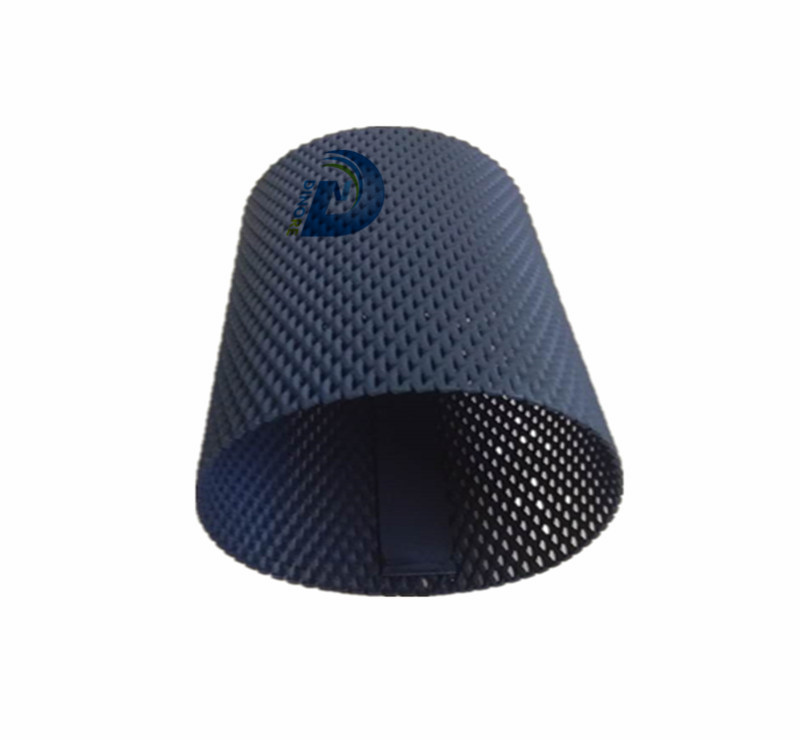
A lead oxide anode is an electrochemical electrode that has a titanium base and pure lead oxide (PbO₂) on top. When harsh electrolytes hit the titanium base, it doesn't rust. The oxide coating gives the anodic reactions the electroactive surface they need to work well. Since the electrode is built in a certain way, it lasts longer than pure-lead anodes, which weaken, warp, and contaminate the solution over time.
Key Performance Indicators to Evaluate
When buying something, the three most important things for buying teams to check are the coating uniformity (measured in g/m² loading), the working current density range, and the service lifetime under goal conditions. A good lead oxide electrode should work well in sulfuric acid baths for electroplating and making copper through electrolysis. It shouldn't lose its coating more quickly. QA/QC managers who are in charge of ISO-controlled production lines need to know how consistent the finish is from one batch to the next.
Manufacturing Methods and Their Impact
What makes lead oxide anode perform reliably is its manufacturing process. Thermal treatment and electrodeposition are the two primary coating preparation routes. Proper electrochemical deposition on a titanium substrate produces a dense, well-adhered PbO₂ coating with low internal resistance. Skipping key coating steps usually leads to premature coating delamination. Before approving a supplier, confirm they can provide cross-section SEM images and coating adhesion test reports.
Comparing Lead Oxide Anodes with Alternative Anode Types
Lead Oxide vs. Lead Dioxide Anodes
Some of the chemistry in lead dioxide (PbO₂) and lead oxide (PbO-based) anodes is the same. However, their oxidation state, how reactive their surfaces are, and how well they work are all different. When there is a lot of oxygen around, like when organic matter is being made or COD is being taken out of trash, lead dioxide anodes work really well. Lead oxide anodes, on the other hand, perform well in electrolytic deposition and sodium hypochlorite production. This is because their cycle life is greater and their oxidation potential is modest. These are more important than their peak reactivity.
Lead Oxide vs. MMO Titanium Anodes
Different types of mixed metal oxide (MMO) anodes work better in chlorine evolution and oxygen evolution reactions and last longer. Titanium coated with Ru-Ir and Ir-Ta is one example. You can tell that MMO anodes are better when you need to keep contamination to a minimum in hydrometallurgy or electroplating lines. Lead oxide anodes, on the other hand, are still a good choice for applications where minimal metal waste is acceptable and low unit costs are wanted.
Selecting the Right Anode for Your Application
If you need to make a choice based on the type of application, here is a useful structure:
- Electroplating and electrolytic deposition: Lead oxide anodes offer a solid cost-performance balance; verify acid concentration tolerance with the supplier.
- Hydrogen production and electrolysis: MMO or specialized DSA (Dimensionally Stable Anode) electrodes are generally preferred for efficiency.
- Wastewater treatment and sodium hypochlorite generation: Both lead oxide and Ru-Ir MMO options are viable; compare coating load specs and lifespan data side by side.
When you match the chemistry of the electrode of lead oxide anode to the working temperature, liquid environment, and current density, the electrode lasts longer and costs less to own overall.
Where to Buy Lead Oxide Anodes: Supply Options and Procurement Tips
Identifying Verified Manufacturers
More importantly, when looking for a company to supply lead oxide anodes, choose ones that have quality records that can be tracked. These might include ISO 9001 certification, coating load test reports, and RoHS/REACH compliance declarations. There are a lot of sellers on global sourcing platforms.
The most important thing is to check if the supplier can show consistency at the batch level across large orders. Some electrode suppliers, like those that make new energy batteries and Tier 1 automakers, need to have quality systems that are in line with IATF 16949.
Negotiating MOQ, Lead Time, and Pricing
Deals that come once a year and include packages of a few items are how most companies sell to people in North America and Europe. Before you sign a deal, make sure you understand these things:
- Minimum order quantity (MOQ) per coating type and substrate dimension
- Lead time for standard orders vs. custom geometry orders
- Unit price breaks at volume thresholds (typically 500, 1,000, and 5,000+ units)
- Warranty terms covering delamination or early coating failure
Importing Lead Oxide Anodes: Tips for Smooth Global Transactions
Documentation and Customs Requirements
Before electrochemical electrodes can be brought into the U.S., they need to be properly labeled with the HS code. Depending on what they are made of, they are usually Class 85 for electrical tools or Class 81 for titanium items. Get a full business invoice, packing list, proof of origin, and material safety data sheet (MSDS) from your supplier before you ship. When the materials that are declared are different, customs holds can happen. This can slow down production schedules.
Regulatory Compliance Checks
The EPA and state environmental laws closely check products that have lead in them, including lead oxide anode. Make sure that the coating supplied by your vendor complies with RoHS Directive requirements and contains no prohibited cadmium, hexavalent chromium or other restricted substances. For shipments into Europe, the manufacturer must provide a formal REACH compliance statement. This requirement is also increasingly expected by US buyers with sustainability-audited supply chains.
Logistics and Risk Mitigation
Titanium-based electrodes are heavy, and they need to be packed correctly before they are sent abroad so that the covering doesn't get damaged. When you place your order, let them know if you want foam-lined wooden crates or custom-molded boxes. Freight forwarder portals from suppliers can help you keep track of shipments. Also, plan for international shipments that need to go through customs, which can add two to three weeks to your production schedule. It is less likely that production will stop if the first shipment is late if there is a second approved supplier.
Maintenance and Lifespan Optimization of Lead Oxide Anodes
Routine Inspection Protocols
To make wires last longer, they should be inspected visually every 500 to 800 hours of use. Check for cracks in the surface, edges that come apart, or layers that have changed color. Before it leads to a loss in current efficiency that can be measured, a quick test of the anode's conductivity can show if the coating is wearing off. When problems are found early, the anodes can be rotated instead of being replaced all at once. This saves money.
Common Failure Causes and Fixes
Most of the time, they break when fluoride ions (F⁻ concentrations above 50 ppm) attack the titanium substrate, when the current density is too high, or when scale buildup (mainly CaCO₂) gets in the way of the active surface. It was possible to avoid all of these mistakes. Keep an eye on the electrolyte, don't go over the manufacturer's suggested current density, and plan descaling treatments to keep the electrode surface working.
Recoating as a Cost-Saving Option
One that is worn out can be fixed up since the titanium base can't be used up. The steps are grinding, soaking in acid, and putting on the oxide coat again. Most of the time, this costs 60% to 70% less than buying a new anode. If you do a lot of work that needs a lot of electrodes per cell, get your supplier to set up a coating cycle. This will save you a lot of money on electrodes every year.
Conclusion
To find the right electrode such as lead oxide anode for your electrochemical process, you need to do more than just look at price sheets. When making a purchase decision, it is important to think about things like performance data, coating specs, source certifications, and how hard it is to import.
TiO₂ anodes will last a long time and give you steady electrochemical output in electroplating, electrolysis, and water treatment if you choose the right one and take good care of it. For a long time, your company will have a steady supply of electrodes at a low cost if you check the quality documentation, batch capacity, and support for recoating of your supplier.
FAQ
How long does a lead oxide anode typically last?
There is less range when there is a lot of acid or current. Always ask your provider for specific information about how long your app will work, not just general specs.
What is the difference between lead oxide and graphite anodes?
Graphite anodes wear away during use, letting carbon particles into the fluid. These tiny things can get into the metal that is being placed and make it dirty. Lead oxide anodes on a titanium base don't break down as quickly and create layers with better contrast.
Can lead oxide anodes be customized for specific cell geometries?
Yes. Suppliers like Tianyi can make substrates in any size, coating thickness, or connector design you need. If you give the supplier's engineering team your electrolytic cell drawings or internal specs early on in the buying process, they can make samples faster and there's less chance that the first batch of products will not have the right sizes.
Is recoating a viable long-term strategy?
For most business users, yes. The structure of the titanium substrate doesn't change when it is recoated more than once. Because it saves time and money, coating again is a good idea as long as the base doesn't have any rust or mechanical damage.
Partner with Tianyi for Reliable Lead Oxide Anode Supply
Small to large businesses can buy high-performance titanium-based electrodes, like lead oxide anode goods, from Tianyi. They offer full OEM support, quality rules that are in line with ISO standards, and uniform quality at the batch level. No matter if you need standard or custom shapes, our engineering team can help you make models and set up long-term supply deals for your electrolytic cell. Feel free to email us at info@di-nol.com or visit dsa-anodes.com to get a quote from a reputable lead oxide anode maker.
References
1. Trasatti, S. — Electrochimica Acta, 2000. "The Absolute Electrode Potential: An Explanatory Note."
2. Comninellis, C. & Chen, G. — Electrochemistry for the Environment, Springer, 2010.
3. Pletcher, D. & Walsh, F.C. — Industrial Electrochemistry, 2nd ed., Springer, 1993.
4. Chen, G. — Separation and Purification Technology, 2004. "Electrochemical technologies in wastewater treatment."
5. Kirk-Othmer — Encyclopedia of Chemical Technology, Wiley, 2007. "Electrodes, Industrial."
6. Shao, M. (Ed.) — Electrocatalysis in Fuel Cells, Springer, 2013. "Anode materials and coating stability in electrochemical cells."