




How do ICCP MMO canister anodes work in impressed current CP?
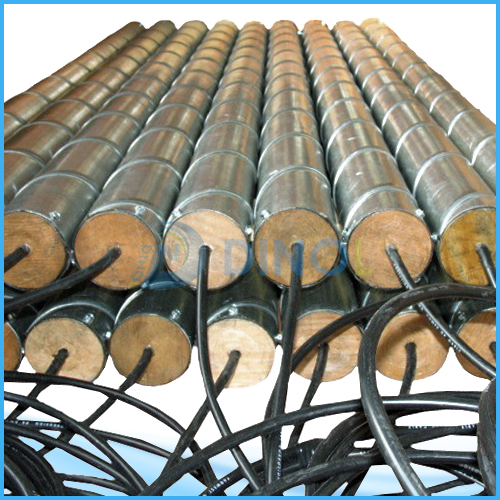
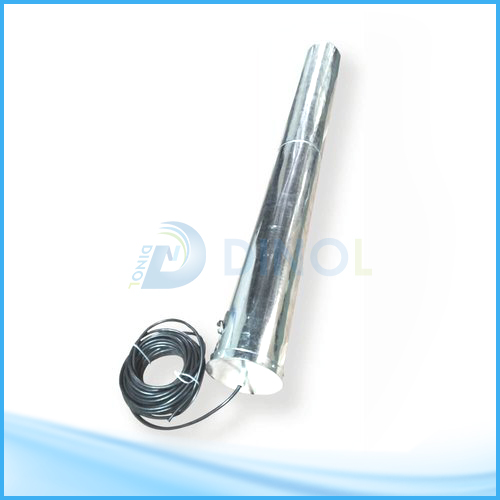
An ICCP MMO canister anode for cathodic protection is a pre-engineered groundbed component that combines a Mixed Metal Oxide-coated titanium anode with compacted carbonaceous backfill inside a galvanized steel canister. When connected to a DC power source (rectifier), it injects protective current into the surrounding soil or electrolyte, shifting the pipeline's electrochemical potential to a range where corrosion reactions halt. The factory-assembled design eliminates field backfill inconsistencies, ensures low ground resistance from day one, and delivers a stable current output across a 20–50 year service life under NACE SP0169 standards.
Understanding ICCP MMO Canister Anodes: Working Principle and Technical Insights
What Makes MMO Different from Zinc or Graphite?
Zinc, magnesium, or graphite are the most common types of traditional sacrificial anodes. The way MMO anodes work is different. The ASTM B338 Grade 1 or Grade 2 titanium substrate has a coating of Iridium-Tantalum (Ir-Ta) or Ruthenium-Iridium (Ru-Ir) oxide that speeds up the oxidation reaction without wearing away. Zinc consumption rates are about 9,000 mg/Amp-year, while copper consumption rates are less than 1 mg/Amp-year. That gap directly leads to a system that doesn't need to replace the anode on a pipeline in the middle of the desert or at sea.
Electrochemical Mechanism Inside the Canister
When DC voltage is applied by the rectifier, the MMO anode changes to the positive end (oxidation site) and the insulated pipeline changes to the cathode (reduction site). The current moves through the calcined petroleum coke breeze backfill (fixed carbon >98%, resistance <0.1 ohm-cm), the earth around it, along the coating flaws in the pipeline, and then back to the rectifier. As an ionic bridge, the coke breeze spreads the current out evenly and lowers the resistance at the contact. Gasses made at the ICCP MMO canister anode for cathodic protection (oxygen in soil, chlorine in salty water) escape through the holes in the canister, keeping the pressure from building up.
Technical Specifications That Matter
Commercially pure titanium grades Gr1/Gr2 is used to make Tianyi's canister anodes. These come in standard lengths of 1 m, 1.5 m, and 2 m, with outside diameters of 80 mm, 100 mm, and 150 mm. The end of the cable is made of HMWPE or dual-insulated Kynar/HMWPE wire, which can handle the acidic gas environment at the anode joint. Depending on the current density needs, the coating configuration (single-sided or double-sided) is chosen. Each unit goes through XRF testing to make sure the coating is the right weight and micro-ohm resistance testing at the wire link. These are both very important checks for deep-well deployments where retrieval is not possible.
Benefits and Applications of MMO Canister Anodes in Cathodic Protection
Why Engineers Specify MMO Over Conventional Options?
It is possible to measure the difference in performance between MMO canister systems and older types of anodes. There are a few main technical benefits that determine which specifications are chosen:
- Minimal consumption rate: At less than 1 mg/Amp-year, the anode body retains dimensional integrity for decades, maintaining predictable current output throughout the design life without field intervention.
- Consistent current distribution: Factory-compacted coke breeze eliminates the air voids that cause localized overheating and premature failure—a documented root cause of early groundbed loss in high-resistivity soils.
- Dual-environment coating stability: Ir-Ta coating remains electrochemically stable in both oxygen-evolving soil environments and chlorine-evolving brackish or saline conditions, making the same product specification work across geographies.
These traits stop the two most expensive types of failure in deep-well groundbeds: cable seal failure and anode burnout. Both of these problems require redrilling, which can cost up to tens of thousands of dollars per well, especially when an ICCP MMO canister anode for cathodic protection is not properly specified or sealed.
Real-World Application Sectors
There are three main B2B settings where MMO container anodes are used. They are the usual deep-well groundbed design for cross-country oil and gas pipelines. They spread current widely in dry areas where surface resistivity is too high. They are put in above-ground storage tank (AST) farms either vertically or horizontally under the tank floor. The pre-packaged design stops backfill from moving and protects against corrosion on the bottom. In utility lanes in cities, their compact canister shape means that less digging is needed and there is less interference with underground buildings next to them, which is helpful in areas where there are a lot of people using the roads.
Comparing MMO Canister Anodes with Alternative Anode Materials
MMO vs. Graphite in Soil Environments
Even though graphite anodes have been used for a long time, they are slowly losing their shape, their output decreasing, and their resistance rising over time (about 1,000 mg/Amp-year). In deserts with a lot of resistance, like those in Saudi Arabia, Oman, and northern India, this wear and tear speeds up. MMO on titanium keeps its shape, which means that ground resistance stays the same for the full 20–30 year design life of the project. The higher original unit cost of MMO is made up for in the first maintenance cycle, which graphite needs but MMO doesn't.
MMO vs. Silicon Iron in High-Current Density Applications
High-silicon cast iron (HSCI) anodes can handle a lot of power in the ground, but they are fragile, heavy, and easily broken when they are moved to faraway places. It costs more to ship by air or car to mountainous or desert areas because a 1.5 m HSCI anode weighs a lot more than an MMO titanium equivalent of the same size. The current output of MMO canister anodes is the same as or higher than that of HSCI. They are lighter and come with backfill that is already packed, so there is no need for field compaction work.
Selecting the Right Coating for Your Environment
The two main types of MMO covering are made for different types of situations. Ru-Ir coatings work better and cost less in areas with freshwater and low-chloride dirt and mild current needs. Because they don't change when chlorine is present, Ir-Ta coatings are the best choice for high-chloride soils, brackish groundwater, and installations that are close to the ocean. Before deciding on a coating, procurement experts in India, the Middle East, and Central Asia should check the groundwater chloride percentage. This is the most important factor that affects how long the coating lasts.
Procurement Strategies and Supplier Selection for MMO Canister Anodes
Quality Standards and Documentation Requirements
For projects that need to be on the Approved Vendor List (AVL), the minimum set of paperwork should include ASTM B338 mill certificates for the titanium substrate, XRF coating analysis reports, accelerated life test data per NACE TM0108, micro-ohm resistance test results for cable connections, and an inspection report from a third party, such as SGS or Bureau Veritas. These papers help with both the import clearance process and the owner's PMC approval. No matter how much the unit costs, suppliers who can't provide this paperwork during the inquiry stage are a buying risk.
Evaluating Batch Delivery Capability
An ICCP station for a single pipeline usually needs between 50 and 300 canister anodes that all meet the same standards. The delivery plan must match the schedule of the drilling provider, so the anodes can be dropped into a finished well right after drilling. A seller who doesn't have proven production capacity, certified raw material inventory, or the ability to handle export logistics causes scheduling risk that costs more than any difference in price. If you are looking for an ICCP MMO canister anode for cathodic protection supplier, don't just get an estimate; ask for a confirmed lead time with milestone dates.
Total Cost of Ownership vs. Unit Price
The maximum price per unit set by the owner in the material schedule is the procurement ceiling. However, over the 25-year life of the project, the total cost of ownership is what matters. If an anode breaks in a deep well after 8 years, the well has to be redrill, new material has to be put in, machinery has to be moved, and production has to stop. It is not more expensive to choose a product with a design life of 20 years or more and recorded data on the stability of the cable seal. In fact, it is the cheaper option when looking at the whole span of an asset.
Installation, Maintenance, and Optimization of ICCP MMO Canister Anodes
Site Assessment and Pre-Installation Checks
The digging team should check the well's depth, width clearance, and water table level before lowering the canister anodes. Before deployment, the cable connection seal must be pressure-tested with helium or hydraulic fluid. The most common field failure is water getting into the joint between the anode and the cable. The factory certificate should be compared to the backfill compaction density inside the canister. Any canister that shows signs of deformation from transport should be marked and replaced.
Electrical Connection Best Practices
Heat-shrink, resin-encased terminations that are rated for the burial environment must be used on all cable splices that are above ground. Though HMWPE cable is good at insulate most types of soil, dual-insulated Kynar/HMWPE cable is recommended for soils that are high in salt or acidity. At installation, the connection resistance at the anode terminal should be written down so that it can be used as a starting point for future status tracking.
Routine Monitoring and Long-Term Optimization
Closed-interval potential studies (CIPS) are done once a year to make sure that the pipeline is meeting the –850 mV (CSE) standard set by NACE SP0169. If potential readings change, the rectifier output should be changed before blaming the change on the anode wearing down. Most early-life changes are caused by changes in seasonal soil moisture levels, not the anode itself. Real-time remote tracking units at the rectifier record current and voltage all the time, so engineers can find problems without sending field workers to faraway places.
Conclusion
MMO canister anodes solve a specific technical problem: they send a steady, long-lasting protected current from the ground to a deep-well without letting maintenance workers get to it. A catalytic MMO-coated titanium anode, factory-compacted coke breeze backfill, and a sealed cable assembly work together to fix every major problem that has been seen in long-distance pipeline ICCP systems. When purchasing goods in the Middle East, India, Central Asia, and Africa, the best choice is to choose an ICCP MMO canister anode for cathodic protection with confirmed coating data, confirmed batch shipping capacity, and third-party inspection support. This protects both the pipeline and the project timeline.
FAQ
What is the typical design life of an MMO canister anode?
Depending on the width of the coating and the working current density, the industry standard is 20, 25, or 30 years. The titanium base keeps its full structural integrity well past its design points when it is used normally, with an MMO consumption rate below 1 mg/Amp-year.
Can these anodes be used in high-chloride desert soils?
Yes, the Ir-Ta MMO coating is designed to stay stable in both oxygen-evolving and chlorine-evolving environments. When there are more than 500 parts per million of chloride in groundwater, Ir-Ta is the usual engineering rule.
Why use a pre-packaged canister instead of a bare anode with field-placed backfill?
Factory compaction gets rid of air gaps that lead to overheating and concentrated currents in one area. The canister also makes installation easier in remote areas where there isn't regular field compaction labor.
What cable type should be specified?
For most types of soil, HMWPE is the usual norm. When the anode environment has high chloride levels or an acidic pH, which both speed up insulation degradation, dual-insulated Kynar/HMWPE cable is recommended.
How does the galvanized steel canister affect long-term performance?
The canister protects things while they are being moved or installed. Over time, it rusts and is replaced by the compacted coke breeze column as the permanent ionic route. This is meant to happen and doesn't change the output from the anode.
Partner with Tianyi for Your Next ICCP Groundbed Project
Tianyi makes ICCP MMO cylinder anode for cathodic protection systems in accordance with ASTM B338 and NACE TM0108 standards. SGS and Bureau Veritas provide full third-party testing support. For projects in more than 30 countries, Tianyi helps with AVL qualification packages, FAT planning, and export paperwork as a qualified ICCP MMO canister anode for cathodic protection maker. Contact our technical team at info@di-nol.comto get a quote that is tailored to your project, whether you need 50 or 300 units with the same specs.
References
1.NACE International. NACE SP0169: Control of External Corrosion on Underground or Submerged Metallic Piping Systems. 2013.
2.NACE International. NACE TM0108: Evaluation of Internal Plastic Coatings for Corrosion Control of Tubular Goods in an Aqueous Flowing Environment. 2008.
3.ASTM International. ASTM B338: Standard Specification for Seamless and Welded Titanium and Titanium Alloy Tubes for Condensers and Heat Exchangers. 2021.
4.Peabody, A.W. Control of Pipeline Corrosion. 2nd ed. NACE International, 2001.
5.Baeckmann, W. von, Schwenk, W., and Prinz, W. Handbook of Cathodic Corrosion Protection. 3rd ed. Gulf Professional Publishing, 1997.
6.Gummow, R.A. "Cathodic Protection Criteria — A Critical Review of NACE Standard SP0169." Corrosion Journal, NACE International, 2010.