




How Does a Canister Anode Protect Pipelines from Cathodic Corrosion?
A canister anode for cathodic protection works by introducing a controlled electrochemical current into the surrounding soil or electrolyte, which shifts the pipeline's electrical potential to a range where metal dissolution stops. In an impressed current cathodic protection (ICCP) system, the canister anode acts as the current output point, oxidizing the backfill material rather than the pipeline steel. The pre-packaged steel casing holds MMO tubular anodes, carbonaceous backfill, and a gas vent pipe together, delivering stable current output at depths exceeding 20 meters while keeping ground resistance low throughout the system's service life.
Understanding Canister Anodes and Their Role in Cathodic Protection
What Is a Canister Anode?
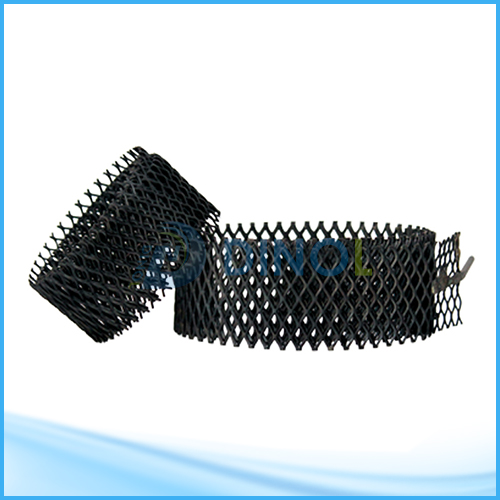
A canister anode is a deep-well anode ground bed that is already put together at the factory. It comes with MMO (Mixed Metal Oxide) cylindrical titanium anodes, carbonaceous backfill, a galvanized steel case, and a wire that is already connected, all in one ready-to-install package. Engineers don't have to put together parts on-site anymore, which gets rid of the factors that can cause systems to fail early in hidden or difficult-to-reach places.
How the Electrochemical Process Works
The rectifier turns on the system, and current flows through the soil from the anode in the canister to the surface of the pipeline. The pipe turns into the cathode. It gets more electrons, which stops the electrochemical process that would usually break down the steel pipe. Most of the oxidation process is absorbed by the carbonaceous backfill around the MMO anode. This protects the titanium base and increases the system's life to 30–50 years.
Types of Canister Anodes for Different Environments
You can get MMO canister anodes with coatings made of Ru-Ir, Ir-Ta, or platinum. Each type works best in a certain type of electrolyte. Ir-Ta coatings work well in places where oxygen changes quickly, like freshwater or soil with little chlorine. Coatings made of Ru-Ir work well on chloride-rich or marine-adjacent soils. The titanium substrate meets ASTM B338 Gr. 1 or Gr. 2, which means that all three coating types will stay stable in size at high anodic potentials.
Benefits of Using Canister Anodes for Pipeline Corrosion Protection
In the oil and gas, municipal, and port engineering fields, the switch from high-silicon cast iron or graphite anodes to canister anode for cathodic protection (MMO titanium canister anodes) has been a big deal. This trend is being driven by the following performance benefits:
- Long service life with verified design data. MMO canister anodes carry a rated service life of 30–50 years and a 5-year warranty. Traditional ferrosilicon deep-well anodes typically last 10–15 years under comparable current densities, requiring more frequent replacement cycles.
- Compact footprint with wide protection coverage. At 100 × 1500 mm or 80 × 1000 mm, the tubular anode string fits into narrow boreholes. Vertical installation at depths beyond 20 meters allows a single anode bed to protect a larger surface area of pipeline than a surface-distributed system of equivalent current output.
- Pre-attached cables with rated insulation. PVDF, HMWPE, HALAR, XLPE, or KYNAR cable insulation options resist chlorine gas attack at the anode interface—the most common failure point in buried ICCP systems.
- Low ground resistance by design. Calcined petroleum coke backfill, packed at uniform density around the anode string, shifts the electrode reaction away from the titanium and keeps anode-to-earth resistance stable over the system's full operating life.
These benefits directly fix the two most expensive problems with buried cathodic protection: anode failure before its time and uneven current distribution. When a system runs at a steady current output for decades without having to be dug up, the total cost of ownership is much lower than with options that last less time.
Installation and Maintenance Best Practices for Canister Anodes
Site Evaluation and Soil Resistivity Testing
Engineers have to measure the soil resistance at the suggested installation site before they can choose the anode depth or count. Low-resistivity zones, which are usually less than 50 ©m, let wells be deeper and have fewer anodes. According to NACE SP0572, the Wenner four-pin method is still the standard for testing in the field. The needed rectifier output voltage and current capacity are also found by looking at the resistivity data.
Correct Placement and Backfill Compaction
The anode from the cylinder is dropped vertically into the hole. To keep the backfill thickness the same on all sides, it's important to keep things centered inside the hole. Before grouting the top part, petroleum coke backfill that has been heated to high temperatures to make it more conductive is packed around the frame. Along the anode string, the gas vent pipe lets chlorine and oxygen gasses leave without stopping the flow of electricity.
Performance Monitoring and Troubleshooting
Every year, copper/copper sulfate reference electrodes are used to check the pipe-to-soil potential and make sure that the structure stays within the –850 mV limit set by NACE SP0169. As the years go by, a reading of higher ground bed resistance means that the backfill isn't compacting as well or the cable joints are breaking down. These changes are caught early by routine checks of the rectifier output current and voltage, which keeps expensive emergency work on buried infrastructure from having to be done.
Comparing Canister Anodes with Other Cathodic Protection Solutions
Canister Anodes vs. Ribbon Anodes
Ribbon anodes are laid out flat next to the pipeline and are only a short distance deep. They work well for new building where the ground is already being dug up. On the other hand, canister anode for cathodic protection can be installed at any time through a drilled hole that does not occupy the pipeline's right-of-way. The canister style is certainly the less-disruptive choice for retrofit jobs on pipes that are already in use.
Canister Anodes vs. High-Silicon Cast Iron Anodes
Depending on the electrolyte, high-silicon cast iron anodes use between 0.25 kg/A·yr and 0.45 kg/A·yr. The MMO titanium anodes use much less than 1 mg/A·yr, which is a huge difference. At high current output, this material advantage directly translates into a service life of 30 to 50 years and gets rid of the need for replacement costs that come with deep-well systems made of cast iron.
Application-Specific Selection Guidance
Because the anode is so far below the structure, deep-well MMO canister systems make the current flow evenly in storage tank bottoms and long-distance transmission pipes. For marine steel pipe piles or offshore wind foundations, it is better to use horizontal or spread out MMO anode strings in the shape of concrete or grout canisters. The choice of coating—Ru-Ir for places with a lot of chloride, Ir-Ta for places with little chloride—should match the electrolyte chemistry of the site that was confirmed by the soil survey.
Procurement Guidance for Canister Anodes in B2B Markets
Supplier Qualification Criteria
When looking for a canister anode for cathodic protection, make sure you get a Certificate of Conformance (CoC) for each batch, as well as XRF coating loading data that shows the amount of precious metal in grams per square meter and adhesion test results that follow ASTM B571. Also, suppliers should give standard alignment documents that include references to EN 12954, NACE SP0169, and GB/T 50934 so that engineers at design institutes can approve the materials without having to do any more tests.
Ordering and Logistics Considerations
For projects that need to be built between 6 and 18 months, staged delivery schedules (batch deliveries every month or three months) free up capital that would otherwise be held in inventory on-site. Pearl cotton and wooden boxes used for exporting protect the wire connections and coating surface during ocean freight. Make sure the seller can ship from any major Chinese port that meets the incoterms and customs paperwork needs of your project.
Budgeting and Lead Times
How much an anode costs depends on how much precious metal is loaded (8–15 g coating weight), how big the titanium substrate is, and what kind of cable it is. Volume price is usually available for projects that buy 50 to 800 units per order. Standard wait times are 4–8 weeks from the time the order is confirmed. wait times for custom sizes or finishes may be 10–12 weeks. Include these times in the project's buying plan when the bids are being considered.
Conclusion
MMO canister anodes are a long-lasting and easy-to-maintain way to protect buried pipes, storage tanks, marine structures, and city water networks from impressed current cathodic damage. Their format is already put together in the factory, they have calcined petroleum coke backfill, and they are coated with precious metal oxides. These materials give them steady current output for 30 to 50 years.
Compared to high-silicon cast iron or graphite options, canister anode for cathodic protection helps meet EN 12954, NACE SP0169, and GB/T 50934 more easily, causes less ground disturbance, and consumes almost no anode material. The two steps that directly affect long-term system performance are selecting the correct coating formulation and completing a thorough soil resistivity survey before installation.
FAQ
How long does an MMO canister anode last in buried service?
Under standard operating conditions and at recommended current density, MMO titanium canister anodes achieve a rated service life of 30–50 years. Actual life depends on operating current density, soil chemistry, and backfill quality. The precious metal oxide coating consumes at less than 1 mg/A·yr, which is the primary reason the lifespan far exceeds cast iron alternatives.
What cable insulation should I specify for a deep-well canister anode?
PVDF and HMWPE are the most common choices because both resist chemical attack from chlorine gas generated at the anode surface. For high-temperature or aggressive-chemistry environments, HALAR or KYNAR provide additional chemical resistance. Confirm the cable rating matches the maximum rectifier output voltage before ordering.
Can canister anodes be customized to fit project-specific borehole dimensions?
Yes. Anode string length, casing diameter, backfill density, and cable type are all configurable. Standard tubular dimensions are 80 × 1000 mm and 100 × 1500 mm, but lengths of 1 m, 2 m, 3 m, 5 m, and 6 m are available. Custom configurations require soil resistivity data and design current values to calculate the correct anode count and spacing.
Does soil resistivity affect how many canister anodes a project needs?
Directly. Higher soil resistivity increases anode-to-earth resistance, which raises the required rectifier driving voltage and may require additional anode wells to distribute current uniformly. Sites with resistivity above 100 Ω·m typically need greater borehole depth or more anode points to meet the –850 mV protection criterion.
Request a Canister Anode Quote from Tianyi — Trusted Manufacturer for ICCP Projects
The MMO titanium canister anodes that Shaanxi Tianyi makes are built to ASTM B338 standards and have Ru-Ir, Ir-Ta, or platinum coatings that are said to last 20 to 70 years. We offer CoC documentation, standard alignment files that need to be approved by the design institute, and flexible batch delivery that can be adjusted to fit your project's schedule. For your next cathodic protection project, you can email our technical team at info@di-nol.com or go to dsa-anodes.com to get pricing information, specifications, or a custom selection proposal.
References
1. NACE International. Cathodic Protection of Underground Storage Tank Systems and Vent Pipes (NACE SP0285). NACE International, 2011.
2. NACE International. Control of External Corrosion on Underground or Submerged Metallic Piping Systems (NACE SP0169). NACE International, 2013.
3. British Standards Institution. Cathodic Protection of Buried or Immersed Metallic Structures — General Principles and Application for Pipelines (EN 12954). BSI, 2019.
4. Peabody, A. W. Control of Pipeline Corrosion, 2nd ed. NACE International, 2001.
5. Shreir, L. L., Jarman, R. A., and Burstein, G. T. Corrosion: Metal/Environment Reactions, 3rd ed. Butterworth-Heinemann, 1994.
6. GB/T 50934-2013. Code for Anticorrosion Engineering Design of Petrochemical Equipment and Piping. China National Standards, 2013.