




How Does a Water Heater Power Anode Rod Protect Your Tank Long-Term?
A water heater power anode rod protects your tank by using impressed current cathodic protection (ICCP) technology. Instead of dissolving like traditional magnesium or aluminum rods, it sends a low-voltage DC current through a Mixed Metal Oxide (MMO) coated titanium electrode. This current counteracts the electrochemical reactions that cause rust inside the tank. The result is consistent, long-term corrosion control without the byproduct buildup or odor problems that come with sacrificial rods. For commercial and industrial systems running 24/7, this translates directly into fewer failures and lower total ownership cost.
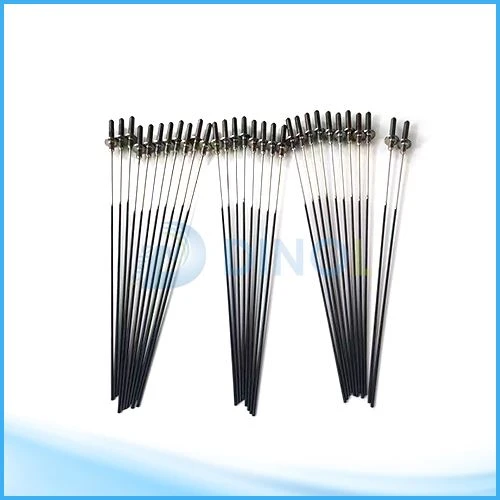
Understanding Water Heater Power Anode Rods
Before comparing options or writing a purchase order, it helps to understand exactly what separates a powered anode rod from the traditional kind — and why that difference matters at scale.
What Is Impressed Current Cathodic Protection?
ICCP works by applying a controlled electrical current to the tank's interior surface, reversing the natural oxidation process. The powered rod acts as a permanent electrode rather than a consumable one. This approach is the same principle used to protect ship hulls, pipelines, and storage tanks in heavy industry — just scaled down for water heaters.
Materials: Why Titanium and MMO Coating Matter
The electrode substrate is typically Grade 1 or Grade 2 titanium, prized for its resistance to corrosion and mechanical stability. Over this substrate, a Mixed Metal Oxide coating — often a ruthenium-iridium or iridium-tantalum blend — is applied and sintered to bond it permanently. The MMO layer drives the electrochemical reaction efficiently while resisting wear. This material combination routinely delivers service lives exceeding 20 years in field installations.
How the Controller Adapts to Water Conditions
A quality system built around water heater power anode rod includes an intelligent controller that adjusts voltage output — typically 1.5V to 24V — based on the water's conductivity and the tank's internal condition. Hard water, softened water, and high-TDS environments all present different corrosion risks. The adaptive controller keeps protection current in the right range regardless of those variables, which is something a fixed sacrificial rod simply cannot do.
Benefits of Using Power Anode Rods in Water Heaters
It's simple to understand how it can assist you in real life. These are the main reasons why powered security is a good idea for business and industry sales teams:
- Odor elimination within 24–48 hours: Sacrificial magnesium reacts with sulfur-reducing bacteria to produce hydrogen sulfide — the "rotten egg" smell. Removing that reactive metal from the equation stops the odor at its source. Most users report the smell disappearing within two days of installation.
- No sediment accumulation: Traditional rods shed dissolved metal particles as they corrode, which settle at the tank bottom and reduce heating efficiency over time. A non-consumable MMO electrode produces no such byproduct, keeping the tank interior cleaner.
- Compatibility with softened water: Softened water is chemically aggressive toward aluminum and magnesium. An ICCP system handles that environment without accelerating its own degradation, making it the preferred choice wherever water softeners are installed.
- Remote monitoring capability: Many powered anode units include LED status indicators or can be integrated into building management systems. For distributed networks of water heaters — hotels, apartment complexes, manufacturing facilities — this dramatically reduces the labor cost of inspection rounds.
Identifying and Testing Power Anode Rod Health
Regular checks need to be done on all protection systems, even ones that aren't used. You can keep your corrosion protection going strong if you know what to check and when to check it.
Visual and Indicator Checks
Most reliable assemblies of water heater power anode rod come with an LED indicator on the controller. A steady green light means active cathodic protection and proper grounding. Any red warning light requires immediate inspection. Each unit only needs a quick visual check of the indicator for less than one minute at least once per year.
Electrical Testing Procedures
For more thorough testing, a multimeter can check the controller's DC output voltage. The numbers should be between 1.5V and 24V, based on the load. If they aren't in that range, the power source or grounding is broken. Keep an eye on these numbers over time, because a slow loss of accuracy often comes before a full failure.
Expected Lifespan and Replacement Triggers
MMO can be put on a titanium electrode and it can last more than 20 years with normal use at home or at work. Depending on how it is used, the power source unit only needs to be fixed every 5 to 10 years. There won't be a quick exposure window that can cause tank pitting if you change the controller before the electrodes wear out. The safety will stay in place.
Comparing Powered Anode Rods With Other Anode Rod Types
Understanding where a powered rod fits relative to traditional options helps procurement teams make a defensible recommendation to their decision-makers.
Sacrificial Rods: Magnesium vs. Aluminum
Magnesium rods offer faster protection response but deplete quickly in aggressive water, requiring replacement every 2–3 years. Aluminum rods last longer but are less effective in low-conductivity water. Both dissolve over time, leaving residue and requiring scheduled pull-and-inspect maintenance. Neither adapts to changing water chemistry.
Power Anode Rods: Higher Initial Cost, Lower Lifecycle Cost
The upfront cost of a powered system is higher than a standard sacrificial rod. However, when you factor in labor for periodic replacements, sediment flushing, and the cost of premature tank failure, the lifecycle math shifts. For tanks with a 10–15 year design life, most operators recover the cost difference within three to five years.
Compatibility With Major Tank Brands
Most water heater power anode rod units adopt a standard 3/4-inch NPT thread, which fits AO Smith, Rheem, Bradford White, and most other North American manufacturers. Adapters are available for non-standard port sizes. Procurement teams should confirm thread specification before ordering, particularly for older or imported tank models.
Procurement and Installation Guidance for Power Anode Rods
Getting the right goods from a reliable source makes a project less risky and helps something last a long time.
What to Verify Before Ordering
If the electrical part has UL or CE certification, the drinking water should be safe, and if it has NSF/ANSI 61 certification, the cathodic protection should work as it should. For the structure to be strong, you should ask for proof that the titanium base is pure. Grade 1 or 2 compliance is important. With these certificates, you can be sure that the company that makes your water heater power anode rods is a good one.
Installation Best Practices
Remove the old anode port plug or sacrificial rod, thread in the new electrode, connect the low-voltage power supply, and make sure the status indicator shows "active protection." It's easy to set up. Setting up most things takes less than 30 minutes. There is no need to connect or use any unique tools.
Bulk Procurement and OEM Considerations
When OEM equipment builders or facility managers have a lot of tanks, ordering them in bulk with the same MMO coating specifications lowers the number of problems that happen across the whole installed base. Shaanxi Tianyi has both standard and custom electrode layouts that can be ordered. They also do OEM/ODM work for users who need certain shapes, coatings, or controller needs.
Conclusion
For water heater corrosion prevention, water heater power anode rod works differently from conventional sacrificial rods and represents an advanced corrosion protection solution. It delivers adjustable protection current matched to water chemistry by maintaining a stable current through an MMO-coated titanium electrode. It produces no sacrificial waste and requires minimal maintenance throughout its service life.
The scientific case is clear for procurement experts and OEM selection teams that want to know how long tanks will last and work well. The most important things are choosing a good supplier, making sure the certifications are followed, and setting up the system correctly. With the right partner, you can handle all of these.
FAQ
Can a powered anode rod eliminate the sulfur smell in my water heater?
Yes. The smell comes from bacteria that break down sulfur reacting with magnesium in a spare stick. When you take out the metal that breaks down and put in an electrode that doesn't, the process stops. After 24 to 48 hours, most people say the smell is gone.
How do I know the powered anode rod is working?
Good units have an LED on the remote that shows the state.
Is it compatible with my existing water heater?
Check the link to the power source first if the light is off or red. Then, check the DC output with a voltmeter.
What happens if the power goes out?
The tank's active weapons are taken away for a short time. Some newer ICCP units restart full protection as soon as the power comes back on, so you don't have to do it by hand.
How often does the electrode itself need replacement?
When MMO is used to treat a titanium anode, it usually lasts longer than 20 years. Every 5 to 10 years, the driver or power supply unit might need to be changed because of how it is used.
Get a Custom Quote From Tianyi — Your Trusted Power Anode Rod Supplier
The MMO-coated titanium anodes that Shaanxi Tianyi New Material Titanium Anode Technology Co., Ltd. makes can be used to heat water in businesses and factories. You can get help from our skilled staff whether you need a standard water heater power anode rod or a unique OEM electrode configuration. They'll do this without being pushed or being asked to do it again. Send your needs or RFQ by email to info@di-nol.com, or visit dsa-anodes.com to get product datasheets and ask for samples.
References
1. NACE International. Corrosion Basics: An Introduction. NACE International, 2010.
2. Fontana, M. G. Corrosion Engineering. McGraw-Hill, 1987.
3. NSF International. NSF/ANSI Standard 61: Drinking Water System Components — Health Effects. NSF International, 2023.
4. Jones, D. A. Principles and Prevention of Corrosion. Prentice Hall, 1996.
5. ASTM International. ASTM D3359: Standard Test Methods for Rating Adhesion by Tape Test. ASTM International, 2017.
6. Brubaker, S. K. "Cathodic Protection of Water Heater Tanks." Materials Performance, NACE International, 2005.