




How Does Titanium Anode Coating Affect Current Output?
Titanium anode coating plays a decisive role in determining how much usable current an electrode delivers to a protected structure. When engineers deploy MMO coated titanium anodes for cathodic protection, the oxide layer — composed of ruthenium, iridium, or tantalum oxides bonded to a high-purity titanium substrate — acts as the primary electrochemical interface. This coating reduces overpotential, stabilizes electron transfer, and sustains high current density over years of continuous operation. Without a properly formulated coating, even a premium titanium substrate cannot deliver consistent, efficient current output in aggressive seawater, soil, or industrial electrolyte environments.
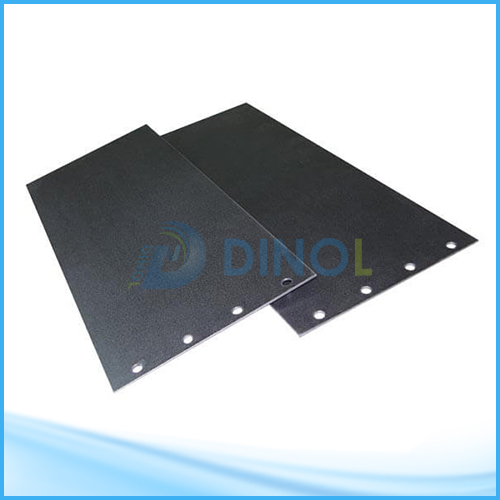
Understanding Titanium Anode Coating and Its Role in Current Output
What MMO Coating Actually Does at the Electrochemical Level?
The MMO layer is more than just a skin that keeps you safe. It works as an electrochemical catalyst. Oxides of noble metals, such as RuO₂ and IrO₂, lower the oxygen evolution overpotential. This means that the anode can make current with less energy. The titanium base below makes the structure strong and protects it from corrosion. The oxide layer, on the other hand, handles the charge-transfer process with the electrolyte around it. Because the substrate and coating work together, dimensionally stable anodes (DSA) are much more solid than past systems that were based on carbon or sacrifice.
How Coating Composition Influences Conductivity
Ruthenium-iridium (Ru-Ir) mixtures work very well in chloride-rich environments, like seawater, because they have low resistivity and great current efficiency. Iridium-tantalum (Ir-Ta) coatings work better in ICCP deployments in fresh water and soil because they are more chemically stable when the pH level changes. If you pick the wrong coating chemical for the job, the ohmic resistance at the coating-electrolyte interface can go up. This lowers current flow and speeds up the degradation of the coating. For MMO coated titanium anodes for cathodic protection, matching the coating chemistry to the operating environment is what determines current efficiency, coating life and long-term system reliability.
Core Factors Affecting Current Output of MMO Coated Titanium Anodes
How well a covered titanium anode works over the course of its useful life is controlled by a number of factors that affect each other. The integrity of the coating, the chemistry of the surroundings, the working current density, and the frequency of upkeep all affect the amount of electricity that is produced.
These are the main things that every QA manager and buying engineer should look at:
- Coating uniformity and thickness: Non-uniform deposition creates localized high-resistance zones. Anode manufacturers typically apply MMO coatings through thermal decomposition at controlled temperatures, with each firing cycle building consistent oxide density. A defect-free coating across the entire electrode surface — whether mesh, ribbon, or disc geometry — ensures uniform current distribution and prevents hotspot formation that prematurely exhausts the active layer.
- Operating current density: Every MMO formulation has a rated current density limit, commonly expressed in A/m². Sustained operation above this threshold accelerates oxide consumption. For ICCP systems in marine applications, Ir-Ta coatings typically support current densities up to 600 A/m² in seawater, but site-specific calculations are essential before finalizing system design.
- Electrolyte chemistry and pH: Chloride concentration, pH fluctuation, and dissolved oxygen levels all affect the electrochemical reactions occurring at the anode surface. Acidic environments below pH 2 can attack the oxide lattice, while highly alkaline conditions may passivate the coating in unexpected ways. Field testing and supplier consultation remain critical steps before deployment.
These variables do not affect each other on their own. Even if a high-quality finish is used in situations that aren't closely watched, it will still not perform up to its rated specifications. Regular proactive inspections, rectifier calibration checks, and joint ring connection audits all work together to keep the anode's current output high for as long as it works. For MMO coated titanium anodes for cathodic protection, this means coating quality alone is not enough — ongoing monitoring and maintenance discipline are what preserve rated performance over the system's full service life.
Comparing MMO Coated Titanium Anodes with Other Anode Types
When engineers are choosing materials for impressed current anodes, they have to deal with a number of rival methods. Graphite anodes are cheap, but they wear out quickly in places with a lot of chloride. Zinc and aluminum substitute anodes don't need any outside power, but they can only handle a small amount of energy and need to be replaced often. Anodes made of platinum-coated titanium work very well as catalysts, but they cost a lot more to make.
Titanium anodes treated with MMO are in a good middle ground. Their almost nonexistent wear rate—often given as less than 1 mg/A·yr for iridium-based coatings—means that they will last for decades without needing to be replaced as often as disposable choices. When compared to platinum-coated versions, MMO anodes offer the same current efficiency at a much lower cost. This makes them the best choice for large-scale ICCP deployments on offshore platforms, buried pipelines, and reinforced concrete bridge decks.
When it comes to marine infrastructure projects, where replacement parts are hard to get and downtime costs a lot of money, the total cost of ownership argument for MMO titanium anodes is very strong.
Practical Guidance on Selecting and Using MMO Coated Titanium Anodes
Matching Coating Type to Application Environment
Ru-Ir MMO coatings work well in salty soil and water where chlorine evolution reactions are common. It is better for fresh water, industrial process fluids, and concrete matrix uses to use Ir-Ta MMO coatings. Choosing the right covering type when buying something keeps you from having to pay a lot of money to repair it in the field later.
Key Procurement and Installation Considerations
Dimensional freedom is just as important as coating chemistry when looking for MMO titanium anodes for a big ICCP job. When Tianyi makes anodes, they can be made in mesh, ribbon, disk, or custom-cut shapes. They use Gr1 and Gr2 commercially pure titanium substrates and can coat them on one or both sides. Dimensions, such as length, width, diameter, and base thickness, can be changed to fit the needs of each project.
For low-resistance electrical contact, the best way to install anodes is to weld them to titanium conductor bars or busbars. For retrofit applications, bolting or clamping can also work. Loose links cause contact resistance, which lowers the flow of current to the covered structure and speeds up rust at the joint.
Before finishing yearly framework agreements, procurement managers should check that suppliers are certified (ISO compliance), ask for tracking documents for the makeup of coating batches, and confirm wait times for large batch orders. For MMO coated titanium anodes for cathodic protection, these checks help ensure that coating chemistry stays consistent, delivery schedules are realistic and the supplier can support long-term ICCP projects without quality or timing surprises.
Real-World Applications and Case Studies
MMO titanium anodes have been shown to work reliably in a wide range of demanding infrastructure areas. Offshore oil rigs in the Gulf of Mexico and the North Sea use ICCP systems with Ir-Ta anodes to protect steel buildings below the water from chloride-driven corrosion. Port officials who protect concrete wharf piles have found that anodes can last for more than 20 years if they are used within the limits of their estimated current density.
In the water treatment industry, ribbon-shaped MMO anodes that are inserted into pipe annuli provide steady current flow to safeguard the inside of steel surfaces without changing the chemical makeup of the process fluid. Cross-country gas transmission network owners use deep groundbed ICCP systems with small-diameter MMO titanium rod anodes. These systems have a high current density and low consumption rates, which reduces the number of times they need to be inspected in remote areas.
The verified deployment records back up what lab electrochemistry says: MMO titanium anodes always outperform all other anode technologies in terms of lifecycle cost when coating quality, installation method, and operating parameters are all right.
Conclusion
In any ICCP system, the current output efficiency is based on the chemistry of the titanium anode layer, the quality of the deposition, and how well it works with the surroundings. A properly made MMO oxide layer lowers overpotential, keeps high current densities, and doesn't break down after decades of use. Systems that reliably and cost-effectively protect critical infrastructure will be put in place by procurement engineers who make sure that the type of coating, the grade of the substrate, and the operating parameters are all in line with what is happening on the site. The most reliable way to ensure long-term ICCP performance is to buy certified, consistently manufactured mmo coated titanium anodes for cathodic protection from a supplier with a lot of experience.
FAQ
How long do MMO coated titanium anodes typically last?
MMO titanium anodes usually last between 20 and 25 years when used in standard ICCP conditions and at the manufacturer's recommended current density. When used in concrete or fresh water, Ir-Ta formulations often hit the upper end of this range. On the other hand, Ru-Ir anodes in high-chloride seawater may show some variation, but only based on how the rectifier is managed and how thick the coating is.
Can a damaged MMO coating be repaired or recoated?
Recoating is technically possible for anodes that have lost some of their oxide, as long as the titanium base stays physically sound and doesn't get any deep pits. Before the MMO layer is applied again using heat, the base needs to be acid-etched to make the surface receptive again. Whether or not recoating is cost-effective rests on the state of the substrate and how long the ICCP system is still supposed to last.
What is the single biggest factor affecting current output?
The most important thing is the integrity of the coating at the interface between the electrode and the electrolyte. The lowest overpotential and highest current efficiency are found in an oxide layer that is uniform, free of flaws, and has the right composition for the operating environment. When coatings are damaged, either by flaws in the manufacturing process, too much current flow, or chemical attack, they increase contact resistance and lower the amount of protected current that gets to the structure.
Partner with Tianyi for Certified MMO Coated Titanium Anodes
For cathodic protection in the marine, industrial, and infrastructure sectors, Tianyi engineers created custom Mmo coated titanium anodes. As a reliable provider of MMO-coated titanium anodes, we can provide Gr1/Gr2 substrates with Ru-Ir and Ir-Ta coatings in any shape your ICCP system needs. We also offer strict batch quality control and full tracking. To get a custom quote right away, email our technical team at info@di-nol.com.
References
1.Lide, D. R. (Ed.). CRC Handbook of Chemistry and Physics. CRC Press, 2005.
2.Shreir, L. L., Jarman, R. A., & Burstein, G. T. Corrosion: Metal/Environment Reactions. Butterworth-Heinemann, 1994.
3.NACE International. Impressed Current Cathodic Protection Design and Installation. NACE SP0169, 2013.
4.Trasatti, S. "Electrocatalysis: Understanding the Success of DSA." Electrochimica Acta, 2000.
5.Baeckmann, W. von, Schwenk, W., & Prinz, W. Handbook of Cathodic Corrosion Protection. Gulf Professional Publishing, 1997.
6.BS EN ISO 15589-2. Petroleum and Natural Gas Industries — Cathodic Protection of Pipeline Systems — Part 2: Offshore Pipelines. ISO, 2012.