




How to Choose a Cathodic Protection Anode Supplier for Oil Pipelines
Choosing the right cathodic protection anode supplier for oil pipelines is one of the most consequential procurement decisions a corrosion engineer or project manager will make. The wrong choice can result in premature anode failure, costly excavation, and pipeline integrity breaches. When evaluating suppliers, prioritize verified technical parameters, ISO9001 certification, ASTM-compliant manufacturing, and proven customization capability. A polymer flexible anode for cathodic protection—designed for buried pipelines and tank bottoms—must deliver consistent output current, carbon content ≥99.5%, and contact resistance ≤0.0009Ω. Suppliers who back these numbers with third-party test reports and English-language technical documentation deserve serious consideration.
Understanding Cathodic Protection Anodes for Oil Pipelines
What Makes Flexible Anodes Different from Conventional Options?
Linear MMO anodes are being used more and more in modern ICCP systems instead of traditional sacrificial materials like zinc or magnesium. The change is due to a basic fact in engineering: buried pipes in high-resistance soils, coating systems that are getting old, and complicated tank-bottom shapes need an anode that fits the structure, not the other way around.
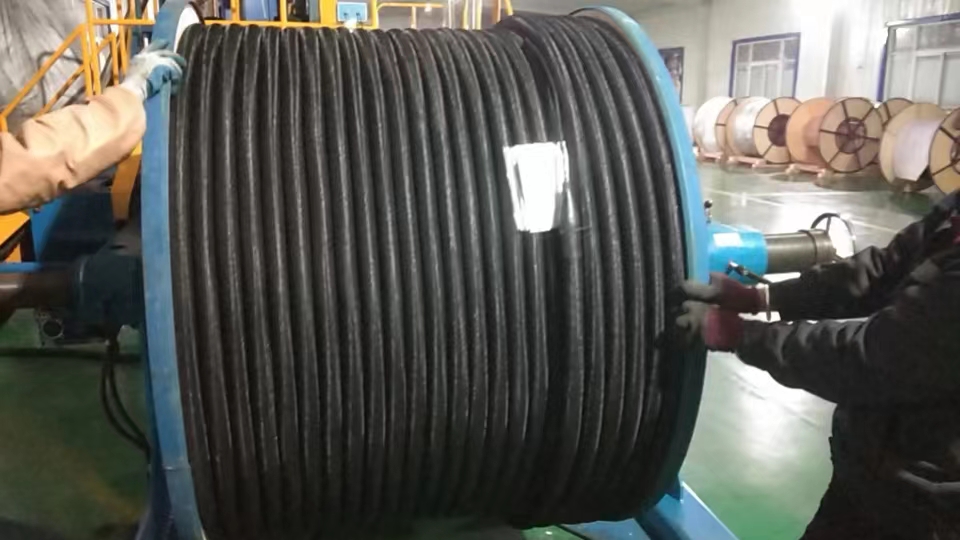
This problem can be solved with a conductive polymer flexible anode. Its copper core has low longitudinal resistance and a conductive polymer layer around it has high transverse resistance. This lets the protective current flow slowly and evenly along the whole length of the anode. Backfilling the anode bed with coke breeze lowers grounding resistance even more and, if installed correctly, makes the service life last longer than 40 years.
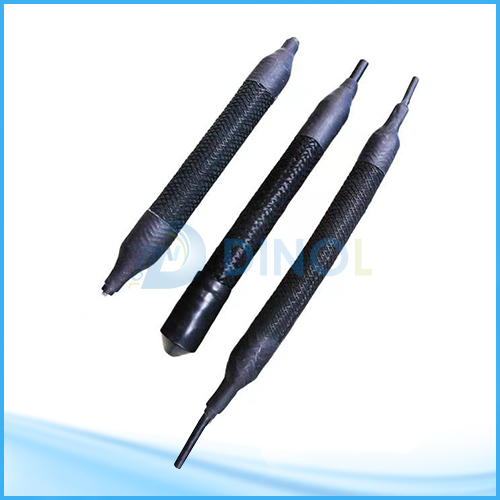
Tianyi's MMO linear anodes have a titanium substrate that is 99.6% Ti and has been processed by sandblasting, pickling, and applying an MMO coating. The outside diameter is ¥39.5 ± 0.5 mm, and the MMO/Ti wire sizes are ¦1.0 mm, ¦1.5 mm, and ¦3.0 mm. They can handle output currents ranging from 328 mA/m (DN-15, φ1.5 mm wire) to 656 mA/m (DN-30, φ3.0 mm wire), so they can be used for a lot of different types of projects.
Core Criteria for Selecting a Cathodic Protection Anode Supplier
Certifications, Technical Documentation, and Quality Systems
Without proven ISO9001 certification and production standards that meet ASTM, no real buying process should move past the qualification stage. The seller must also give English-language Technical Data Sheets (TDS), a Certificate of Conformance (COC), and plant inspection records that talk about specific parameters, not just general product brochures. Forpolymer flexible anode for cathodic protection, this documentation is essential to verify substrate quality, coating performance and compliance before the material is installed in buried or immersed pipeline systems.
When it comes to MMO flexible cable anodes, these are the main technical requirements that every approved provider should meet:
- MMO/Ti wire diameter: Φ1.5 mm or Φ3.0 mm (project-specific); custom options including Φ1.0 mm and Φ2.0 mm available
- Output current: 300–1000 mA/m depending on wire diameter and installation environment
- Carbon content: ≥99.5% in the carbonaceous backfill matrix
- Contact resistance (MMO/Ti wire to cable): ≤0.0009 Ω
- Design service life: ≥40 years under standard ICCP operating conditions
- Cable type: 1×10 mm² XLPE/PVC standard; PVDF/HMWPE and EPR/CSPE available for aggressive environments
- Anode weight: 1.5 kg/m; reel lengths of 500 m or 1000 m with cut-to-length capability
These requirements are exactly the same as the NACE/AMPP review checklists. Share these numbers with your owner-side rust experts. This will make the approval process go a lot more smoothly.
Supply Chain Reliability and Lead Time
Project schedules don't leave much room for materials to be late. A good supplier should be able to keep up with orders for up to 10,000 meters within 30 days, and bigger amounts should be discussed on an individual basis. Shipping usually happens 15–20 days after payment is confirmed, and you shouldn't have to pay extra for standard export packing or project-specific custom packaging.
Comparing Polymer Flexible Anodes with Traditional Anodes
Magnesium, zinc, and aluminum, which are common substitute anodes, burn up to protect. Their rate of consumption speeds up in soils with a high resistance, and their set shape limits where they can be used, especially around the outside bottoms of tanks or in pipeline areas that are already crowded. In harsh settings, replacement cycles can be as short as 8–12 years, which makes lifecycle costs go up by a lot.
For cathodic protection, a polymer flexible anode functions differently. The MMO layer on the titanium wire doesn't get used up very quickly because the electrochemical reaction is catalytic instead of sacrificial. Checked chemical immersion weight loss rates stay below 1% as required by ASTM D-543. This directly leads to fewer interventions, lower excavation costs, and less downtime for operations. Forpolymer flexible anode for cathodic protection, this catalytic MMO mechanism is what delivers long service life and lower total cost of ownership compared with conventional sacrificial anodes.
The benefit of placement layout is also clear. You don't need any special tools to lay flexible anodes parallel to a pipeline or under the bottom of a tank. The steps are similar to installing cables: digging a trench, placing a coke breeze bed, setting an anode, covering it with coke, compacting the dirt, and finally filling it back in. This makes it easier to install and takes less time, which means there is less chance of mistakes that could damage the long-term contact between the anode and the soil.
Practical Steps to Evaluate and Choose Your Anode Supplier
Build a Structured Qualification Process
When you buy underground anode devices, your choices will have long-lasting effects. A material that doesn't work well underground can't be checked out, fixed, or replaced without spending a lot of money. So, the process of evaluating should be planned and based on facts.
This is usually what happens in an organized seller qualification process:
- Define project requirements precisely: Output current demand, soil resistivity data, pipeline length, tank diameter, and design life expectations must be fixed before any RFQ is issued.
- Request documented technical evidence: Ask specifically for factory test reports covering contact resistance, carbon content, and dimensional tolerances—not just certificates.
- Order a first-article inspection sample: Tianyi offers free samples. Use them. Measure the outer diameter, verify the MMO/Ti wire diameter, and confirm joint sealing quality before committing to a 500 m or 1000 m reel order.
- Confirm English-language technical support: Your installation team and the owner's corrosion engineer need to communicate clearly with the manufacturer. Verify that the supplier's technical team can review project drawings and respond to specification queries in English.
- Clarify payment and logistics terms: Standard terms of 30% advance payment with 70% against bill of lading copy are widely accepted by established manufacturers.
These steps keep the project on track and make sure the ICCP system works correctly.
Case Studies and Success Stories
As contractors work in the Middle East and Southeast Asia, they have consistently shown that MMO linear anodes work better in storage tanks and long-distance pipelines. In a known case of old pipeline infrastructure with worn-out covering, a contractor switched out a zinc ribbon anode system for an MMO/Ti linear anode (DN-15 spec, φ1.5 mm wire) put in a coke breeze bed. Readings of the pipe's potential to the earth after installation showed that it met all the safety requirements set by NACE SP0169. The worker said that the cost of the materials was 35% less than a similar European-branded product, but that the measured output current or uniformity did not change. Forpolymer flexible anode for cathodic protection, this kind of field result shows that a properly specified MMO/Ti linear anode can match established performance standards at a lower material cost.
Spread out flexible anode systems have shown to have more even potential profiles when used on the outside of a tank, where deep anode groundbeds have trouble distributing current below the tank plate. This was confirmed in the project acceptance documentation by owner-side inspectors who looked at close-interval potential surveys on protected tanks.
The results here are not unusual. They show what happens when buying teams find the right anode technology for the job and buy from companies with quality processes that can be checked.
Conclusion
It takes more than just comparing prices to find the right cathodic protection anode supplier for oil pipelines. It needs to be done with a high level of technical skill, with accurate documentation, and with a supplier that can make products that fit the exact needs of the project. The best performance for ICCP linear anode uses right now is the MMO flexible cable anode, which comes in DN-15 and DN-30 sizes, has output currents ranging from 328 to 656 mA/m, and has been tested to last more than 40 years.
Free samples, ISO9001 certification, ASTM compliance, and English expert help are all things that you should expect and not expect as extras. Forpolymer flexible anode for cathodic protection, these should be treated as baseline supplier qualifications — not optional add-ons — because they directly affect product reliability, installation performance and long-term project compliance.
FAQ
What output current should I specify for a buried pipeline application?
Demand right now depends on how resistive the soil is, how good the coating is, and how big the pipeline is. The DN-15 anode from Tianyi (φ1.5 mm MMO/Ti wire) gives 328 mA/m, and the DN-30 (φ3.0 mm wire) gives 656 mA/m. The DN-30 standard is usually better for soils with a high resistance or coatings that have been badly worn down. Before sending out an RFQ, your ICCP design engineer should figure out what output is needed.
How do I verify batch consistency from a Chinese manufacturer?
Before placing a full order, ask for a first-article inspection sample. The outer diameter should be Φ39.5 ± 0.5 mm, the carbon content should be ≥99.5%, and the contact resistance should be ≤0.0009 Ω. Compare these numbers to the factory test results. For big orders, make it a condition of the contract that testing by a third party will happen at the factory.
Can the anode length be customized per project?
Yes. Reels come in 500 m and 1000 m lengths and can be cut to any length. Specifications for the cable can be changed to meet project plans. These can include the cross-section of the conductor and the jacket material (XLPE/PVC, PVDF/HMWPE, EPR/CSPE).
What documentation supports owner approval of these materials?
Suppliers must give an English-language TDS, COC, plant inspection report that includes all important details, and ISO9001 certification. The results of the ASTM D-543 weight loss test should also be looked at by the owner corrosion engineer.
Partner with Tianyi — Your Trusted Polymer Flexible Anode Supplier
Tianyi makes MMO linear anodes with great care that meet ASTM and NACE standards for underground pipeline and storage tank ICCP systems. Tianyi is a maker of a polymer flexible anode for cathodic protection that is ISO9001 certified and can do full OEM work. They offer free samples, English technical paperwork, and wait times of 15 to 20 days. You can send your project details to our technical team at info@di-nol.comto get a detailed quote.
References
1.NACE International. Cathodic Protection of Underground Storage Tank Systems and Appurtenances. NACE SP0285. NACE International, 2011.
2.NACE International. Control of External Corrosion on Underground or Submerged Metallic Piping Systems. NACE SP0169. NACE International, 2013.
3.ISO. ISO 15589-1: Petroleum, Petrochemical and Natural Gas Industries — Cathodic Protection of Pipeline Systems — Part 1: On-Land Pipelines. International Organization for Standardization, 2015.
4.Peabody, A.W. Control of Pipeline Corrosion. 2nd ed. NACE International, 2001.
5.Brondel, D., et al. "Corrosion in the Oil Industry." Oilfield Review, Schlumberger, 1994.
6.ASTM International. ASTM D543: Standard Practices for Evaluating the Resistance of Plastics to Chemical Reagents. ASTM International, 2014.