




How to Select Anode Coating for Long-Life Cathodic Protection
Selecting the right anode coating is one of the most consequential decisions in designing an impressed current cathodic protection (ICCP) system. The coating material directly governs how long your system operates, how uniformly current distributes across the protected structure, and how much maintenance you face over the asset's lifetime. Among available technologies, the MMO/Ti linear anode for cathodic protection has emerged as the dominant choice for buried pipelines, storage tank floors, and congested utility corridors — delivering rated service lives exceeding 40 years while maintaining output currents of 328 mA/m (DN-15) to 656 mA/m (DN-30) under real operating conditions.
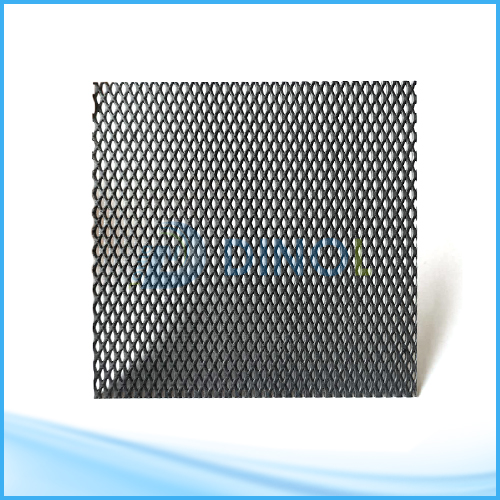
Understanding MMO/Ti Linear Anodes and Their Role in Cathodic Protection
What Makes the MMO Coating Technically Superior?
Putting an iridium-tantalum or ruthenium-iridium oxide mix on Grade 1 or Grade 2 pure titanium and covering it with a mixed metal oxide (MMO) coating can get a consumption rate as low as 1–6 mg/A·yr. That number is very important; graphite anodes use 200–1,000 g/A·yr, and cast iron anodes work even worse. The titanium substrate (Ti content ≥ 99.6%) can stand up to chemical attack on its own, and the 6–10 µm oxide layer can handle catalytic current discharge. The mix makes an anode that doesn't rust quickly or become inactive in dirt with a high resistance.
How Linear Configuration Changes Protection Geometry?
Traditional point anodes focus the current near the ground, which doesn't protect areas that are farther away. A straight anode is placed close to the structure in a coke breeze backfill hole. It runs parallel to the structure so that every meter of pipe or tank floor gets the same amount of steady current. This type of delivery gets rid of the shielding gaps that are a problem with deep-well designs that are used in urban pipeline lines or below the floors of aboveground holding tanks, where the installation depth is usually less than one meter. ForMMO/Ti linear anode for cathodic protection, this distributed current delivery is what ensures uniform protection along the entire structure, even in congested urban corridors or shallow tank-bottom installations.
Critical Factors in Selecting Anode Coating for Long-Life Cathodic Protection
Choosing a coating is never based on a single factor. Long-term success is controlled by three factors that affect each other.
The climate vs. coating chemistry. Iridium-tantalum mixes work well in places where oxygen is changing (like buried soil and freshwater), while ruthenium-iridium mixes work well in places where chlorine is changing (like seawater and saline mud). Using the wrong composition speeds up the breakdown of the covering and cuts its useful life by a large amount. Before choosing an MMO blend, you should always check to see what the main anodic reaction is in your specific electrolyte.
How thick and even the coating is. A 6–10 µm thermal breakdown layer may sound thin, but the pyrolytic formation process actually bonds oxide crystals directly into the titanium grain structure. During quality control, X-ray fluorescence (XRF) analysis checks the amount of precious metals per unit area. This is a key acceptance criterion that tells the difference between factory-certified products and unconfirmed commodity supplies.
Consistency of substrate preparation. The sanding and pickling steps remove oxides from the surface and make it micro-rough, which makes it much easier for coatings to stick. When an MMO layer is put on top of a titanium surface that wasn't properly prepared, it separates under bending stress during installation. This is a type of field failure that leads to expensive repair projects and tough liability fights.
These three things are always affecting each other. Even if the coating is chemically correct, it will still fail early if it is applied too thinly over a poorly prepared substrate. Making decisions about purchases based only on price, without checking all three factors, adds a lot of project risk.
Installation and Maintenance Guidelines for MMO/Ti Linear Anodes
Pre-Installation Checks That Prevent Costly Failures
Check the anode reel for fabric sleeve continuity, make sure the header cable insulation is correct (XLPE/PVC or PVDF/HMWPE, based on the soil chemistry), and make sure the contact resistance between the MMO/Ti wire and the cable is less than or equal to 0.0009 Ω. Any reading above this one means that the node's link has been hacked and will cause hotspots to appear when it is turned on. ForMMO/Ti linear anode for cathodic protection, these incoming inspection checks are essential to prevent premature failure, ensure even current distribution and protect the long-term integrity of the cathodic protection system.
Correct Burial Procedure
Dig a trench next to the building that is being defended. Spread half of the coke breeze volume (with a carbon content of at least 99.5%) across the trench floor. Place the anode in the middle and cover it with the rest of the coke breeze. Pack down the native soil on top of the backfill layer and finish the burial. The coke column lowers the resistance to grounding and stops the passivation of the titanium surface. Without it, the substrate would form an oxide film that is not conductive and stops all current discharge.
Ongoing Monitoring Practices
At test sites, you should check the pipe-to-soil potential values at least once a year after the system is up and running. A polarized potential at or more negative than −850 mV CSE (as required by NACE SP0169) shows that the safety measures are working properly. If the numbers start to move toward less negative ones, the anode link and rectifier output need to be checked right away. Finding problems early on keeps cleanup costs low and avoids the much more expensive tasks of fixing pipelines or replacing tank floors.
Making the Right Procurement Decision: Choosing Reliable MMO/Ti Linear Anode Suppliers
Technical specifications should be followed with the same level of care as supplier review. The following factors consistently separate trustworthy manufacturers from shady resellers.
Before putting in a framework order, skilled CP integrators use these core seller qualification standards:
- ISO 9001 certification with traceable batch records — makes sure that the details of the coating process are written down and can be used in different production runs. This is very important for projects that last for 12 to 24 months and involve multiple batches.
- Compliance with ASTM standards and NACE TM0108 accelerated life testing — proves that its 40-year service life is based on electrochemical evidence and not just marketing speak.
- OEM/white-label packaging capability — is very important for system integrators who sell their own brand. Reliable companies offer neutral packaging or reels with your own logo that don't have minimum order requirements for standard sizes.
- Flexible MOQ with tiered pricing — small integrators who put together ICCP systems for regional pipeline or municipal clients need to be able to order 500 m reels to keep their stock up without having to pay full-container minimums.
- Export documentation competency — HS code accuracy (81089090), certificates of origin, and packing lists all have a direct effect on how quickly goods can clear customs in South American and Middle Eastern markets, where delays of 4–8 weeks are typical.
These standards work with each other. System installers count on suppliers who meet all five criteria to regularly deliver the uniform coating from batch to batch and on-time logistics that they need to keep their projects on schedule and their relationships with clients safe. ForMMO/Ti linear anode for cathodic protection, this combination of consistent coating quality, verified substrate and reliable delivery is what keeps installation schedules intact and protects the contractor's reputation in the field.
Case Studies and Practical Insights: Successful Applications of MMO/Ti Linear Anode Systems
What the lab data says is supported by evidence from the field. In projects to protect aboveground storage tanks (ASTs), MMO/Ti linear anodes laid out in a grid pattern below the tank floor have been shown to keep their protective potentials for over 15 years without needing to be replaced. These projects have been used in the Middle East and South America. The pre-packaged coke breeze sheath kept the low grounding resistance stable even in sandy, high-resistance soils where silicon iron anodes normally needed to be replaced every five years.
Linear anode systems got rid of the stray current problems that deep-well installations caused on nearby water mains in crowded urban pipeline routes, which is a regular problem in Eastern European city gas distribution networks. Engineers were able to precisely target current, meeting NACE SP0169 protection criteria without over-polarizing nearby structures thanks to the close linear geometry.
These results show that the coating chemistry, the quality of the base, and the skill with which it is installed all play a part in determining whether a cathodic protection system lasts as long as it was meant to or needs extra upkeep within ten years.
Conclusion
Choosing the right anode layer is a technical and business choice that will have effects for decades. MMO over Grade 1/2 titanium, which is heated until it breaks down to 6–10 µm, prepared by sandblasting and pickling, and delivered in a straight line with coke breeze backfill, is still the best way to cover pipelines, storage tank floors, and complicated underground infrastructure. Before agreeing to a supplier, check the coating chemistry, substrate preparation quality, batch consistency, and supplier certification. This will protect both your project's profit margins and your clients' assets. ForMMO/Ti linear anode for cathodic protection, these evaluation criteria are what separate a durable, high-performance anode system from one that fails early and drives up long-term maintenance costs.
FAQ
How long does an MMO/Ti linear anode realistically last in buried service?
When units are placed correctly with coke breeze backfill and a working current density below 2,000 A/m³, they show service lives of 40 years or more in accelerated life tests that are in line with NACE TM0108. The low MMO consumption rate (1–6 mg/A·yr) and the titanium substrate's resistance to corrosion make this last a long time.
What wire diameters are available, and how does diameter affect output?
The most common sizes are 1 mm, 1.5 mm, 2 mm, and 3 mm. DN-15 (φ1.5 mm) gives 328 mA/m and DN-30 (φ3.0 mm) gives 656 mA/m. A bigger diameter means that there is more MMO surface area available for current flow. This means that bigger diameters are good for high-resistance soils or buildings that need a lot of protected current.
Can the anode be customized for non-standard project requirements?
You can change the copper core cross-section, the wire type (XLPE/PVC, PVDF/HMWPE, EPR/CSPE), the reel length (500 m or 1,000 m normal; cut-to-length possible), and the output current. Before framework agreements are signed, free samples can be used for electrochemical qualification testing.
What distinguishes linear anodes from conventional ribbon anodes?
Linear anodes send current constantly along their whole length, so there are no breaks in the current flow between point sources like ribbon configurations can do in long-term uses. The pre-packaged coke breeze sheath also takes into account the different backfills that may be used at different sites.
Partner with Tianyi for Proven MMO/Ti Linear Anode Solutions
For cathodic protection, Tianyi makes ICCP-grade MMO/Ti linear anodes that meet ISO 9001 and ASTM standards. These anodes have a Ti content of 99.6% and are coated using approved grinding, pickling, and pyrolytic deposition methods. For reliable MMO/Ti linear anode for cathodic protection, we offer OEM white-label packaging, tiered volume pricing, and flexible MOQs that are made to fit the needs of system integrators. Contact our team at info@di-nol.comright now to get a free sample or a custom quote.
References
1.NACE International. NACE SP0169: Control of External Corrosion on Underground or Submerged Metallic Piping Systems. 2013.
2.NACE International. NACE TM0108: Evaluation of Coating Materials Used with Cathodic Protection. 2012.
3.Warne, M. A., & Hayfield, P. C. S. "Mixed Metal Oxide Anodes for Impressed Current Cathodic Protection." Materials Performance, 1999.
4.von Baeckmann, W., Schwenk, W., & Prinz, W. Handbook of Cathodic Corrosion Protection. Gulf Professional Publishing, 1997.
5.ASTM International. ASTM G8: Standard Test Methods for Cathodic Disbonding of Pipeline Coatings. 2016.
6.Broomfield, J. P. Corrosion of Steel in Concrete: Understanding, Investigation and Repair. Taylor & Francis, 2007.