




ICCP MMO Titanium Anodes vs Graphite: Which Is Best for CP Systems
I usually tell engineers and procurement managers thatMMO-coated titanium anodeswork best in impressed current cathodic protection (ICCP) systems, but it depends on your project's needs.ICCP MMO coated titanium anodes for cathodic protectionare dimensionally stable, low-consumption, and last over 20 years. Although ubiquitous, graphite anodes erode quicker and cost more to maintain. Your team may make an educated specification selection by comparing both technologies.
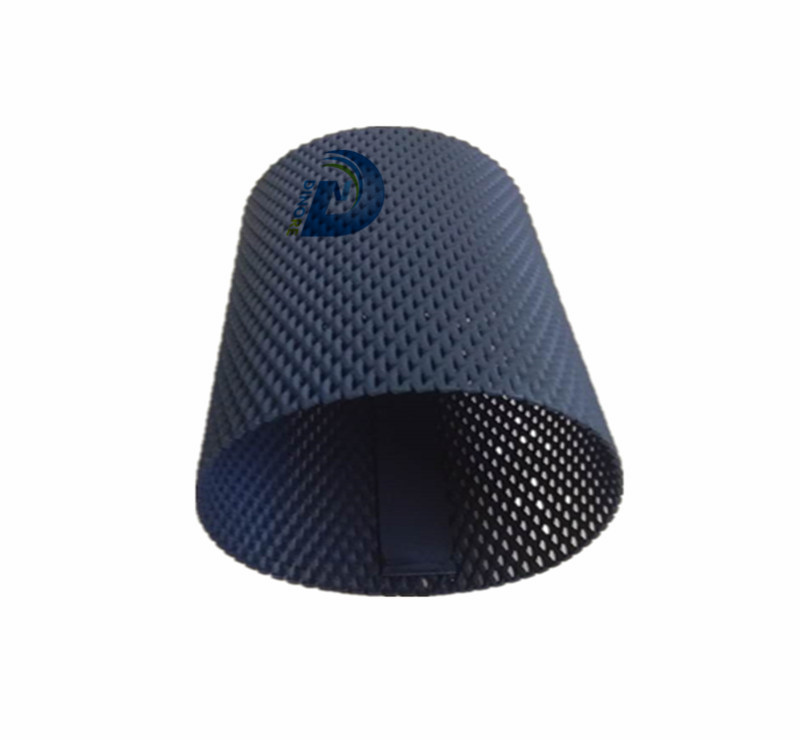
Understanding ICCP MMO Titanium Anodes and Graphite Anodes
What Are MMO Titanium Anodes?
Mixed Metal Oxides are heated and put on top of a commercially pure titanium base (Grade 1 or Grade 2, according to ASTM B265) In MMO titanium anodes. The oxides are usually iridium-tantalum (Ir-Ta) for use in soil and fresh water, and ruthenium-iridium (Ru-Ir) for use in salt water. In other words, the MMO layer can start the oxidation process on the anode's surface without damaging the substrate. The titanium base keeps its form over time because it is a "dimensionally stable anode" (DSA).
What Are Graphite Anodes?
Oil coke or synthetic graphite is used to make graphite anodes. Linseed oil or wax is sometimes added to them to slow the burning process. Since the middle of the 20th century, they've been used to protect against cathodic damage, mostly in tank bottom systems and groundbeds. People are drawn to them because they are cheap at first. In dirt, however, about 0.5 to 1 kg of material is lost every year because graphite is naturally porous and reacts electrochemically at the anode surface.
Functional Differences in a CP Circuit
In an ICCP circuit, the anode needs to send direct current into the electrolyte around it. The electrolyte could be soil, seawater, or the pore solution in concrete. This moves the protected metal into the immunity zone of the Pourbaix diagram. When there is up to 600 A/m³ of current in seawater and 100 A/m³ of current in soil,ICCP MMO coated titanium anodes for cathodic protectionstill work well. On the other hand, graphite anodes can only take 10–20 A/m³ before they start to break down faster. This space between the two parts changes how many anodes a circuit designer needs to type in.
Comparative Analysis: MMO Titanium Anodes vs Graphite Anodes
There is a big difference in how well these two types of anodes work in dangerous places like offshore structures, long-distance pipelines, and the bottoms of storage tanks, where all operations have to stop while a new one is installed.
These are the things that project managers and CP engineers care about the most, side by side:
- Service life: MMO titanium anodes carry a certified design life of 20–50 years depending on coating formulation and operating current density. Graphite anodes typically last 5–10 years in buried service before replacement is needed, which adds repeated mobilization and excavation costs over a project's lifetime.
- Consumption rate: The MMO coating exhibits a wear rate measured in milligrams per ampere-year (mg/A·yr), meaning dimensional change is negligible over decades. Graphite loses mass continuously, which shifts anode resistance upward and reduces system current output over time.
- Current density capability: MMO anodes tolerate sustained high current output without degradation, making them suited for offshore platforms and jetty piles exposed to aggressive chloride-rich seawater. Graphite anodes pushed beyond their rated density oxidize rapidly.
- Installation weight and logistics: A titanium mesh or ribbon anode weighs a fraction of an equivalent graphite rod string. This reduces crane requirements, excavation volume for deep-well groundbeds, and shipping costs — all relevant for large pipeline projects.
Because of these differences, the total cost of ownership is different. An MMO titanium installation will almost always have a lower net cost per ampere-year of protection after 20 years. A graphite anode installation might cost less on the first day.
Key Decision Factors for Selecting ICCP Anodes
Application Environment
Seawater and salty water are good for Ru-Ir MMO films because they give off a lot of chlorine. This type of Ir-Ta MMO is more stable over time when it comes to buried pipeline groundbeds or tank bottom systems in resistive soils. When the pH is expected to change from 5 to 9, you shouldn't use graphite anodes. MMO anodes, on the other hand, can handle these situations without any issues.
Supplier Documentation and Standards Compliance
For jobs that follow NACE SP0169, NACE SP0176, EN 12954, or GB/T 50934, the supplier needs to provide supporting documentation for iccp mmo coated titanium anodes for cathodic protection, including coating adhesion test reports and a Certificate of Conformance (CoC). Some large EPC firms require these documents before adding a vendor to the approved material list. A supplier who cannot provide a complete documentation package brings risks that most project managers cannot accept.
Customization and Technical Support
Projects like offshore wind foundations or storage tank impressed current systems often need anode shapes that aren't the norm. Tianyi makes MMO titanium anodes that can be coated on one or both sides. They come in mesh, ribbon, disk, and other shapes. Sizes like length, width, and covering thickness can be changed to fit the needs of the design. With this level of product freedom and expert help to look over drawings and give advice on options, it takes a lot less time to make something and get approval for it.
Practical Guidelines for Maintaining ICCP MMO Titanium Anodes
Inspection Schedules
As a general rule, underground pipeline systems get electrical continuity checks and reference electrode studies once a year. Every two years, a diver or ROV should check the surface of offshore or underwater anodes to make sure it is in good shape and that the cable entry seal is still in good shape. The most useful field indicator is the output current stability recorded by the rectifier. This is because MMO anodes don't wear away in a way that can be seen.
Common Failure Modes and Prevention
In MMO anode systems, water getting into the cable joints is what fails most of the time, not the coating wearing away. If there is a hole in the seal between the titanium and the cable, electrolyte can move along the conductor and rust the join. You can keep buried and submerged systems from failing early if you choose hermetic joints with an IP68 rating and make sure the pull-out strength is at least 500 N, which is what NACE standards say it should be.
Troubleshooting Output Decline
When the rectifier output voltage rises while the current drops, it is likely caused by increased resistance between the electrolyte and iccp mmo coated titanium anodes for cathodic protection. This condition may arise from dried soil, gas accumulation in deep anode wells, or broken connections. The fault can be located quickly by isolating individual anode strings and carrying out structure-to-electrolyte potential surveys.
Future Trends and Innovations in Cathodic Protection Anodes
Advanced MMO Coating Formulations
There is still work being done on mixed-oxide dopants, which makes surfaces last more than 50 years at rated current density. In lab tests, tertiary and quaternary oxide systems with iridium compounds and tin, platinum, or niobium show less oxygen evolution overpotential. It's possible that this means rectifiers in big ICCP networks use less power.
IoT Integration and Remote Monitoring
With smart rectifier controls and built-in reference electrodes, you can now continuously record the potential from the structure to the solution and receive alerts from afar. When combined with anodes that don't change shape or need to be replaced often, these systems shift corrosion protection from being reactive to being based on data. This is very helpful for pipeline owners who are in charge of many test stations spread out across a continent.
Sustainability and Regulatory Direction
It is getting harder to use lead-alloy and high-silicon cast iron anodes in the EU and more and more in the U.S. Gulf Coast and Asia-Pacific because of rules that protect land and sediment. As an alternative, MMO titanium is chemically inert and doesn't give off any harmful byproducts when it breaks down. In line with EPA rules and new versions of ISO 15589 that stress how CP systems impact the environment, this is what should be done.
Conclusion
Titanium anodes with MMO coatings work better than graphite anodes in all the technical areas that matter for long-lasting ICCP systems: cost over time, service life, and current density. Graphite is still used for low-cost tasks that don't last long and are easy to repair. MMO titanium has a strong engineering case that is backed up by decades of field data.
Iccp mmo coated titanium anodes for cathodic protection are ideal for pipelines, offshore structures, storage tanks, and marine infrastructure where access for maintenance is difficult and system failure carries high costs. Repairing a failed system is far more expensive than selecting the proper anode at the design specification stage.
FAQ
How long do MMO titanium anodes last compared to graphite?
MMO titanium anodes can last anywhere from 20 to 50 years, depending on the type of wrapping and the current level. Graphite anodes normally last between 5 and 10 years before they stop working as well because of material loss in similar underground or underwater uses.
Can MMO titanium anodes work in both seawater and soil?
That's right. Ir-Ta MMO coatings work well in soil and groundwater in fresh water, while Ru-Ir MMO coatings work best in seas and deep water. During the design definition process, it's simple to pick the correct coating mixture for the important electrolyte.
What makes MMO anodes better for pipeline cathodic protection?
The anode resistance stays the same for decades because they don't use a lot of power. Because they carry a lot of power, fewer anodes are needed per circuit, and they are light, which makes installing them in a deep well groundbed easier. The long-term costs of running cross-country pipeline projects go down because of all three of these things.
Do MMO titanium anodes require special installation procedures?
Clamping, welding, or welding to titanium wire bars are all common ways to place. The most important part of fitting is making sure the cable joint seal is still good. This is because the seal keeps water out, especially in buried or submerged situations.
Partner With Tianyi for Your Next ICCP Project
Iccp mmo coated titanium anodes for cathodic protection are used in pipeline, marine, and building projects all over the world. We at our company have made a lot of MMO titanium anodes, so we can offer full material certifications, CoC documentation, EN/NACE/GB standards compliance packages, and flexible batch delivery schedules that can be changed to fit the needs of your project. If your team is looking at anode specs or putting together a bid package, please email us at info@di-nol.com or visit dsa-anodes.com to get a price or a full datasheet that is specific to your project.
References
1. NACE International. Corrosion Basics: An Introduction. NACE International, 2010.
2. Baeckmann, W. von, Schwenk, W., & Prinz, W. Handbook of Cathodic Corrosion Protection. Gulf Professional Publishing, 1997.
3. Revie, R. W. (Ed.). Uhlig's Corrosion Handbook, 3rd ed. Wiley, 2011.
4. NACE International. NACE SP0169: Control of External Corrosion on Underground or Submerged Metallic Piping Systems. NACE International, 2013.
5. Shreir, L. L., Jarman, R. A., & Burstein, G. T. Corrosion: Metal/Environment Reactions, Vol. 2. Butterworth-Heinemann, 1994.
6. ISO. ISO 15589-1: Petroleum and Natural Gas Industries — Cathodic Protection of Pipeline Systems — Part 1: On-Land Pipelines. International Organization for Standardization, 2015.