




Tank Cathodic Protection Anodes: Best Options for Corrosion Control
When it comes to protecting steel storage tanks and buried pipelines from corrosion, choosing the right anode system can mean the difference between a 20-year asset and a costly premature failure. Among all available technologies, the ICCP MMO canister anode for cathodic protection stands out as the most dependable solution for demanding industrial environments. Whether you're managing a cross-country oil pipeline groundbed or an above-ground storage tank farm, this guide breaks down your best options — and why MMO-based impressed current systems consistently outperform traditional alternatives.
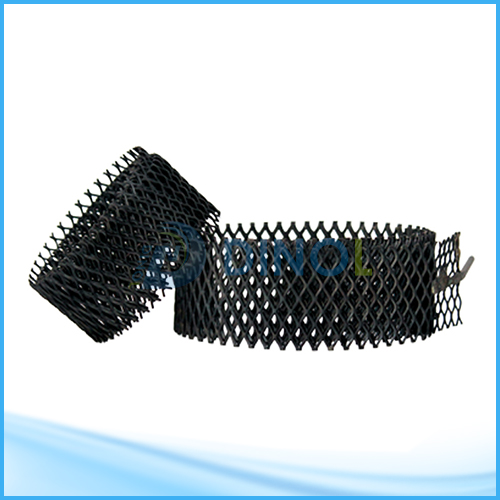
Understanding Tank Cathodic Protection and Anode Fundamentals
How Cathodic Protection Works in Tank Systems
In cathodic protection (CP), the steel frame acts as the cathode of an electrochemical cell. This stops the oxidation processes that cause corrosion. In tank settings, like the bottom of above-ground storage tanks (ASTs) and the outside of underground tanks, CP is used with either sacrificial anodes or forced current systems. The anodes only do one thing: they send a steady current of protection to the steel surface.
The tank CP market is dominated by three types of anodes right now. Zinc anodes are cheap and self-regulating, but they wear out over time and need to be replaced every so often. Graphite anodes have a middling conductivity, but they are fragile and easily broken when they are put in deep-well groundbeds. When used in impressed current cathodic protection (ICCP) systems, MMO (Mixed Metal Oxide) coated titanium anodes work on a completely different principle; they are electrochemically inert and don't break down while they're working.
ICCP systems that use MMO titanium substrates send a controlled DC current from a separate rectifier to the protected structure through the anode. The MMO layer, which is usually made of Ru-Ir or Ir-Ta on Grade 1 or Grade 2 titanium, has a very low usage rate—often less than 1 mg/Amp-year—so it can be used for a very long time.
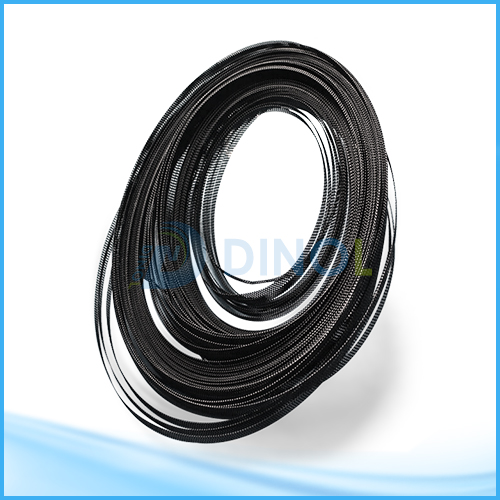
Comparing ICCP MMO Canister Anodes with Other Anode Types
Performance, Lifespan, and Environmental Compatibility
MMO canister systems were used to replace failed graphite groundbeds on a well-known project for a cross-country gas route in the Middle East. Within weeks of starting up, the ICCP retrofit achieved stable pipe-to-soil potentials that met NACE SP0169 standards. This was in contrast to the original graphite beds, which needed repair every three to four years. All of these benefits lead to a higher return on investment over the course of the project's life, which is why many operators now specify an ICCP MMO canister anode for cathodic protection when planning similar retrofits.
- Zinc sacrificial anodes work well in low-resistivity seawater environments but are completely impractical for high-resistivity desert soils or deep-well groundbeds. Their consumption rate is high, and re-installation in a deep well carries a re-drilling cost that can reach tens of thousands of dollars per well.
- Graphite anodes deliver reasonable performance in soil but are fragile, have higher consumption rates than MMO, and lack the dimensional stability required for precision canister assembly. Field reports consistently show higher failure rates compared to titanium-based systems.
- ICCP MMO canister anodes pre-package an MMO-coated titanium rod or tube inside a galvanized steel canister filled with calcined petroleum coke breeze (fixed carbon >98%, resistivity <0.1 ohm-cm). This factory-controlled assembly eliminates field backfill compaction errors, ensures immediate low-resistance current paths upon installation, and delivers uniform current distribution even in high-resistivity strata.
A documented project on a cross-country gas pipeline in the Middle East replaced failing graphite groundbeds with MMO canister systems. The ICCP retrofit achieved stable pipe-to-soil potentials meeting NACE SP0169 criteria within weeks of commissioning, while the original graphite beds had required maintenance interventions every three to four years. These advantages translate directly to a better return on investment across the project lifecycle.
Benefits and Maintenance of ICCP MMO Canister Anodes for Corrosion Control
Key Technical Advantages Worth Knowing
The operational benefits of MMO canister anodes go far beyond their low rate of consumption. Here are the main benefits that engineers building pipelines and people who run tank farms care about the most:
- Extended design life of 20 to 50 years: Built to ASTM B338 Grade 1 titanium substrate standards with Ir-Ta or Ru-Ir catalytic coatings, these anodes maintain dimensional and electrochemical stability over the full project lifecycle without excavation or replacement.
- Stable current output in aggressive environments: The Ir-Ta coating is specifically stable in both oxygen-evolving soil environments and chlorine-evolving brackish or saline conditions, making it suitable for coastal pipeline corridors and offshore tank installations alike.
- Engineered cable integrity: Most canister systems use HMWPE or dual-insulated Kynar/HMWPE lead cables. The anode-to-cable connection is sealed under high-pressure testing — often helium leak testing — to prevent moisture ingress, which is the most common field failure point in deep-well groundbed systems.
Most canister systems use HMWPE or dual-insulated Kynar/HMWPE lead cables, which ensure the integrity of the cable. High-pressure testing, which is often helium leak testing, seals the anode-to-cable link to keep moisture out. Moisture getting in is the most common place for deep-well groundbed systems to fail in the field. These cable and sealing details are especially critical for any ICCP MMO canister anode for cathodic protection installed in deep-well groundbeds, where retrieval and replacement are costly.
Because of these benefits, the most expensive part of deep-well groundbed maintenance is no longer needed: drilling again when an anode fails too soon. That risk goes down a lot when MMO canister anodes are properly specified.
Purchasing ICCP MMO Canister Anodes: Supplier and Procurement Guide
What to Verify Before Placing a Bulk Order?
When materials managers have to find 50 to 300 container anodes for a project, qualifying suppliers is just as important as specifying the product. Before sending out a buy order, B2B sourcing teams should make sure of the following:
- MMO coating verification: Request XRF (X-Ray Fluorescence) analysis reports confirming coating loading and composition. Accelerated Life Testing per NACE TM0108 validates electrochemical longevity claims.
- Cable seal integrity data: Ask for micro-ohm resistance test reports on anode-to-cable joints and high-pressure sealing test certificates. This is the most failure-prone component in service.
- Third-party inspection readiness: Suppliers who can accommodate SGS or Bureau Veritas witness testing and provide full export documentation — including certificates of origin, packing lists, and material test reports — are substantially easier to get through owner AVL (Approved Vendor List) processes.
- Customization capability: Canister dimensions — length 1.0/1.5/2.0 m, outer diameter 80/100/150 mm — must match groundbed design exactly. Confirm the manufacturer's tolerance control and batch production consistency.
- Packaging and logistics: For projects in desert or mountain terrain, export packaging must withstand transit stress. Confirm crating standards and last-mile logistics capability before contract award.
When you need "cable seal integrity data," please ask for high-pressure sealing test certificates and micro-ohm resistance test results on anode-to-cable joints. This part is the most likely to break while it's in service, so any ICCP MMO canister anode for cathodic protection should be supplied with these documents before it is accepted for a deep-well groundbed installation.
Installation and Best Practices for ICCP MMO Canister Anodes in Tank Systems
Pre-Installation Checks and Post-Installation Verification
Before lowering canister anodes into a drill hole that is already full, the installation team should make sure that the canister is intact, that the cables are connected, and that the lead wire insulation is not damaged in any way. Centralizers should be put in place to keep the anode in place in the bore and keep it from touching the wall of the casing.
The container itself is a sacrifice for transport. The compacted coke breeze column and MMO anode will be the permanent groundbed after the galvanized steel is buried and starts to rust. This is the reason why the backfill compaction density must be measured before it leaves the factory and meet the requirements. There are empty spaces in the backfill that cause current to concentrate in certain areas, which speeds up the early wear of the anode.
After the installation is done, set the rectifier to its design current output and check that the protection standards are met by measuring the instant-off pipe-to-soil potentials at test points. Keep track of standard numbers to see trends. Any change in the rectifier's output current that doesn't happen at the same set voltage is an early sign of a change in the groundbed resistance that needs to be looked into.
Conclusion
Corrosion is not a slow problem; it is a structural threat that has direct financial effects. Deep-well pipeline groundbeds, AST bottom protection, and urban utility lines are all places where MMO-based impressed current systems are more reliable than sacrificial anodes and graphite systems on a large scale. The inert titanium base, catalytic MMO coating, factory-controlled coke breeze backfill, and designed cable sealing give these systems a service life of 20 to 50 years, which can be backed up by test data that can be checked. One of the most important things for EPC contractors who are in charge of multiple pipeline projects at the same time is making sure they get the right ICCP MMO canister anode for cathodic protection from a reputable manufacturer.
FAQ
How long do ICCP MMO canister anodes typically last?
The design life can be anywhere from 20 to 50 years, based on the thickness of the coating, the working current density, and the chemistry of the soil. This is a lot longer than zinc or graphite substitute anodes, which usually need to be replaced every 5 to 15 years in the same circumstances.
Can MMO canister anodes work in both freshwater and high-chloride environments?
Yes, Ir-Ta MMO coatings keep their electrochemical stability in both soils that release oxygen and salty or brackish environments that release chlorine. Because of this, they can be used for shoreline pipes, desert groundbeds, and marine tank systems without having to be reformulated.
Is it possible to retrofit MMO anodes into an existing CP system?
Most of the time, existing ICCP rectifiers can drive MMO container groundbeds without needing to be changed much, as long as the output voltage and current capacity of the rectifier fit the resistance of the new groundbed. Before the upgrade, a corrosion expert should look over the design of the current system.
What quality certifications should I request from a supplier?
Request an XRF study of the coating, a report on the NACE TM0108 rapid life test, data on the resistance of micro-ohm cable joints, and high-pressure seal test certificates. AVL clearance requests are stronger when they are inspected by a third party, like SGS or Bureau Veritas.
Partner with Tianyi — Your Trusted ICCP MMO Canister Anode Supplier
Tianyi's engineering team is ready to help you with your next pipeline or tank CP project by making MMO canister anodes that are exactly what you need for the groundbed. If you're looking for a trusted ICCP MMO canister anode for cathodic protection company, Tianyi can help you with all of your export paperwork, third-party inspections, and shipping to India, the Middle East, Central Asia, and Africa. You can email our team at info@di-nol.comto get a detailed datasheet or a reasonable quote right away.
References
1.NACE International. NACE SP0169: Control of External Corrosion on Underground or Submerged Metallic Piping Systems. NACE International, 2013.
2.NACE International. NACE TM0108: Evaluation of Internal Plastic Coatings for Corrosion Control of Tubular Goods in an Aqueous Salt Environment. NACE International, 2008.
3.Peabody, A. W. Control of Pipeline Corrosion. 2nd ed., NACE International, 2001.
4.ASTM International. ASTM B338: Standard Specification for Seamless and Welded Titanium and Titanium Alloy Tubes for Condensers and Heat Exchangers. ASTM International, 2021.
5.Baeckmann, W. von, Schwenk, W., and Prinz, W. Handbook of Cathodic Corrosion Protection. 3rd ed., Gulf Professional Publishing, 1997.
6.Revie, R. W., and Uhlig, H. H. Corrosion and Corrosion Control: An Introduction to Corrosion Science and Engineering. 4th ed., John Wiley & Sons, 2008.