




Titanium Anode vs Graphite for PCB Etching: Which Performs Best?
When engineers and procurement teams search for the right anode material for printed circuit board production, the choice between titanium and graphite comes up constantly. Based on electrochemical performance, service life, and total operating cost, the titanium anode for PCB etching solution consistently outperforms graphite. MMO-coated titanium anodes deliver higher current efficiency, stronger corrosion resistance, and longer operational life—making them the preferred choice for industrial-scale PCB manufacturing where process consistency and yield matter most.
Introduction to PCB Etching Anodes
What Is PCB Etching and Why Do Anodes Matter?
With electricity and chemicals, a method called PCB etching can remove copper from a laminate board. This is done to make electrical lines. Right here is the last part of the route. The anode has a direct effect on the current flow, the chemical stability, and how even the etch is. If you choose the wrong anode, it can cause pollution, uneven etching, and a lot of downtime. When a lot of things are being made, these problems get worse very quickly.
Common Anode Materials Used in PCB Etching
Titanium (coated with MMO or platinum) and graphite are often used as anodes. Graphite used to be the least expensive choice. Titanium with an MMO coating is more well-known these days because it doesn't change size when it comes in contact with chemicals that are chloride-based, such as CuCl₂ and FeCl₀.
How Material Choice Affects Production Outcomes
You can change the voltage drop, the chance of pollution, the evenness of the etch rate, and how often upkeep needs to be done by what the anode is made of. As the graphite wears away, bits of carbon end up in the etchant bath. It might get dirty. Titanium that has been coated with MMO doesn't get smaller over time. This keeps the board in good shape and lowers the number of repairs that need to be made.
Electricity tests have been made public that show MMO-coated titanium anodes can handle more than 90% of the current in copper etching baths that are acidic. Some graphite anodes don't work as well because they waste more energy because they have a higher overpotential. When titanium plates spread the current out evenly, the scratch depth is more even across the surface of the board. This is an advantage in quality that can be seen in how fine-pitch PCBs are made.
Performance Comparison: Titanium Anode vs Graphite Anode
Electrochemical Efficiency and Current Distribution
MMO-coated titanium anodes show current efficiency rates above 90% in acidic copper etching baths, according to published electrochemical studies. Graphite anodes typically operate at lower efficiency, with higher overpotential causing energy waste. Uniform current distribution from titanium substrates produces more consistent etch depth across the board surface—a measurable quality advantage in fine-pitch PCB production.
Corrosion Resistance Under Harsh Chemical Conditions
Graphite oxidizes and degrades in strongly acidic or oxidizing etchant solutions, shortening replacement intervals and adding particulate contamination to the bath. Titanium, by contrast, forms a passive oxide layer that resists chemical attack. When coated with a mixed metal oxide layer (typically ruthenium-iridium or iridium-tantalum), the anode maintains structural integrity even after thousands of operating hours in concentrated CuCl₂ solutions, making a titanium anode for pcb etching solution a far more durable choice.
Service Life and Maintenance Comparison
Field data from PCB manufacturing operations indicate that MMO titanium anodes last 3 to 8 times longer than comparable graphite anodes under continuous industrial conditions. Graphite requires inspection and replacement every few months in high-throughput lines, while titanium anodes can operate for several years with minimal intervention. This difference has a direct impact on labor costs, production scheduling, and total cost of ownership.
Benefits of Titanium Anodes for PCB Etching Solutions
Adding MMO to titanium anodes makes them more useful and scientific in ways that graphite can't do on a big scale. This is why you should use them if you want to make professional PCBs:
In copper etching baths that are acidic, the titanium base and MMO layer don't break down. This means that graphite corrosion can't get on the copper. As long as the electrical activity stays the same, it takes less energy to move one unit of copper. Power costs less in lines with a lot of copper because of this. The MMO titanium anodes used in PCB etching last between 3 and 8 years under normal business conditions, but the graphite only lasts a few months. When the size stays the same, there is less maintenance to do, which means there are fewer checks, repairs, and unplanned downtimes.
When the current is stable, the etch rates are the same all over the board surface. This means that the deposition is good. It is important for fine-line circuit patterns to do this.Titanium anodes are good for the environment because they don't add carbon or heavy metals to the etchant. That said, this will help clean up the trash in the long run.Ti-based bases are lighter than graphite blocks of the same size, so they are easier to place and move in automatic etching lines.
- Strong corrosion resistance: The titanium substrate and MMO coating withstand acidic copper etching baths without degrading, eliminating the contamination risk associated with graphite erosion.
- High current efficiency: Consistent electrochemical activity reduces energy consumption per unit of copper removed, lowering electricity costs in high-volume lines.
- Long service life: MMO titanium anodes in PCB etching applications typically last 3–8 years under normal industrial conditions, versus months for graphite.
- Low maintenance cost: Dimensional stability means fewer inspections, fewer replacements, and less unplanned downtime.
- Good deposition uniformity: Stable current distribution produces predictable etch rates across the board surface, which is critical for fine-line circuit patterns.
- Environmentally friendly: Titanium anodes do not shed carbon particles or heavy metal byproducts into the etchant, supporting cleaner wastewater treatment downstream.
- Light weight: The titanium substrate is significantly lighter than graphite blocks of equivalent size, simplifying installation and handling in automated etching lines.
It's hard to make PCBs because the boards don't always work right and the anode needs to be changed a lot. These benefits fix those issues right away. Both problems are fixed at the same time when you switch from a graphite anode system to an MMO titanium anode for pcb etching solution system.
Composition and Design of High-Performance Titanium Anodes
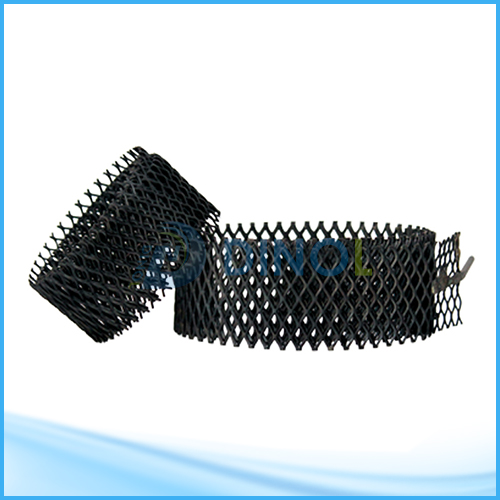
A well-designed titanium anode for PCB etching has a base made of high-purity titanium metal (usually ASTM B265 Grade 1 or Grade 2) and an MMO catalyst layer on top of it. The coating mix is either ruthenium-iridium for chloride-rich baths or iridium-tantalum for jobs that change oxygen. This is based on the chemistry of the etchant. The size, shape, and amount of coating can be changed so that it works with the etching tools you already have.
Titanium Anode vs Other Anode Materials: Decision-Making Factors
Titanium vs Platinum-Coated Anodes
Platinized titanium anodes are very stable when it comes to electricity, but they are also very pricey to make. The Ru-Ir or Ir-Ta MMO finishes work just as well and cost less, so this is the best way to etch most PCBs. Platinum films are usually only used in very pure processes, like custom electroplating or semiconductor processes, where any contamination is not allowed.
Coating Thickness and Composition Impact
Time will tell how long the MMO layer lasts based on the number of important metals the layer has. Things last longer when they have thick coats that can hold more weight, but they cost more at first. It depends on how many baths are being made, how they are made, and how easy it is to get new ones. Would you like to buy a titanium anode? Ask the company that makes them to help you pick the right material weight based on how dense your floor needs to be now and how much work you plan to do each year.
Matching Anode Type to Application Requirements
Every PCB etching line doesn't use the same chemicals or power. In other words, you need to use a different coating recipe when you etch with ammoniacal copper chloride instead of acidic systems. Process experts and people who make OEM equipment should make sure that the anode specification sheet fits the chemistry of the bath, the temperature range, and the current density they need. Anodes that aren't matched fall apart and don't work as well.
Procurement Guide for Titanium Anodes in PCB Etching
Supplier Evaluation Criteria
You should get written specifications from the company that sells titanium anode for pcb etching solution. These should include the substrate grade, coating composition, precious metal loading (g/m2), and the expected service life at a certain current density. See if you can get test reports and names of people who have bought PCBs like this before. If the service can't give you this information, they probably won't be a good long-term partner.
Customization Options and Lead Times
There are different ways to coat anodes, and they come in different sizes and shapes, such as a flat plate, maze, or tube. Custom designs may take up to six weeks to ship, but most orders are sent out in two to four weeks. Find out about wait times right away for procurement teams in charge of big projects that need capital tools. Also, ask if samples can be sent to test before making a full commitment.
Quality Assurance and Certifications
The seller should make sure that the coating works well with electricity, is thick, and can stick to other things before giving it to you. When you place an order, you should ask for a batch test report to make sure the coating is free of flaws that would make it less useful in the field.
Conclusion
Graphite anodes are cheap at first, but they cost more in the long run because they break down quickly, get dirty easily, and only work for a short time when used to make a lot of PCBs. A titanium anode for pcb etching solution changes that equation: the titanium substrate resists chemical attack, and the mixed metal oxide coating keeps its catalytic activity through thousands of operating hours. That means fewer replacement cycles, less bath contamination from graphite particles, and more stable etch rates across high-volume production runs. When you factor in downtime, labor, and rejected boards, the higher upfront price of an MMO titanium anode is usually recovered well before the first replacement interval would have come due for graphite.
FAQ
Why are titanium anodes better suited for PCB etching than graphite?
The big difference in performance between the two materials can't be ignored in any process that needs to use a lot of etching lines that don't stop. Engineers and buying teams usually get their money back in the first year after making this change.
How long does an MMO titanium anode last in a PCB etching line?
It is not chemically possible for etchants based on chloride to combine with titanium anodes that have MMO coats. Also, they don't move around and keep dirt out of the bath. Graphite wears away over time, releasing carbon particles that lessen the effectiveness of the etching and make the board less clean.
What maintenance do titanium anodes require?
It is part of the machine's usual care to check the covering for wear, rinse it after use to keep the etchant residue from building up, and make sure the electrical connections don't touch each other. There's no need for any unique tools or chemicals. Tin is better than graphite in many ways, but one of the most important is that it doesn't need as much upkeep.
Can titanium anodes be customized for existing etching equipment?
Yes. You can get most things made just the way you want them in terms of size, shape, and finish. Tell them the size of the anode bay, the chemistry of the bath, and the total current density you want for your equipment. This will help them make a product that works for you.
Partner With Tianyi for Your Next Titanium Anode Order
A company called Shaanxi Tianyi New Material Titanium Anode Technology Co., Ltd. makes titanium anodes that are covered in MMO. For industrial PCB etching, these anodes can be made in any size needed, don't rust, and work well with high currents. They also last a long time. Since Tianyi makes titanium anode for pcb etching solution, you can trust them. OEM equipment makers and PCB production engineers can get technical paperwork, sample programs, and quick pre-sale help from them. You can learn more about the products. You can also email info@di-nol.com with your technical needs and get a free quote in one business day.
References
1.Trasatti, S. Electrochimica Acta— "Electrocatalysis by Oxides: Attempt at a Unifying Approach," 1984.
2.Comninellis, C. & Vercesi, G.P. Journal of Applied Electrochemistry— "Characterization of DSA-Type Oxygen Evolving Electrodes: Choice of a Coating," 1991.
3.Nidola, A. Materials Chemistry and Physics— "Dimensionally Stable Anodes in Chlor-Alkali Electrolysis," 1989.
4.Kirk-Othmer Encyclopedia of Chemical Technology — "Printed Circuit Boards: Manufacturing and Processing," John Wiley & Sons, 2007.
5.Chen, G. Separation and Purification Technology— "Electrochemical Technologies in Wastewater Treatment," 2004.
6.ASTM International — ASTM B265: Standard Specification for Titanium and Titanium Alloy Strip, Sheet, and Plate, 2020.