




Titanium Electrolyzer Import Guide for Electro-Chlorination Projects
If you are sourcing equipment for water treatment, marine ballast water management, or municipal chlorination, understanding how a titanium electrolyzer for electro-chlorination works—and how to import one correctly—can save your team months of rework and significant budget. This guide walks procurement managers, project engineers, and equipment distributors through every stage: from how these devices work, to selection criteria, logistics, and operational best practices.
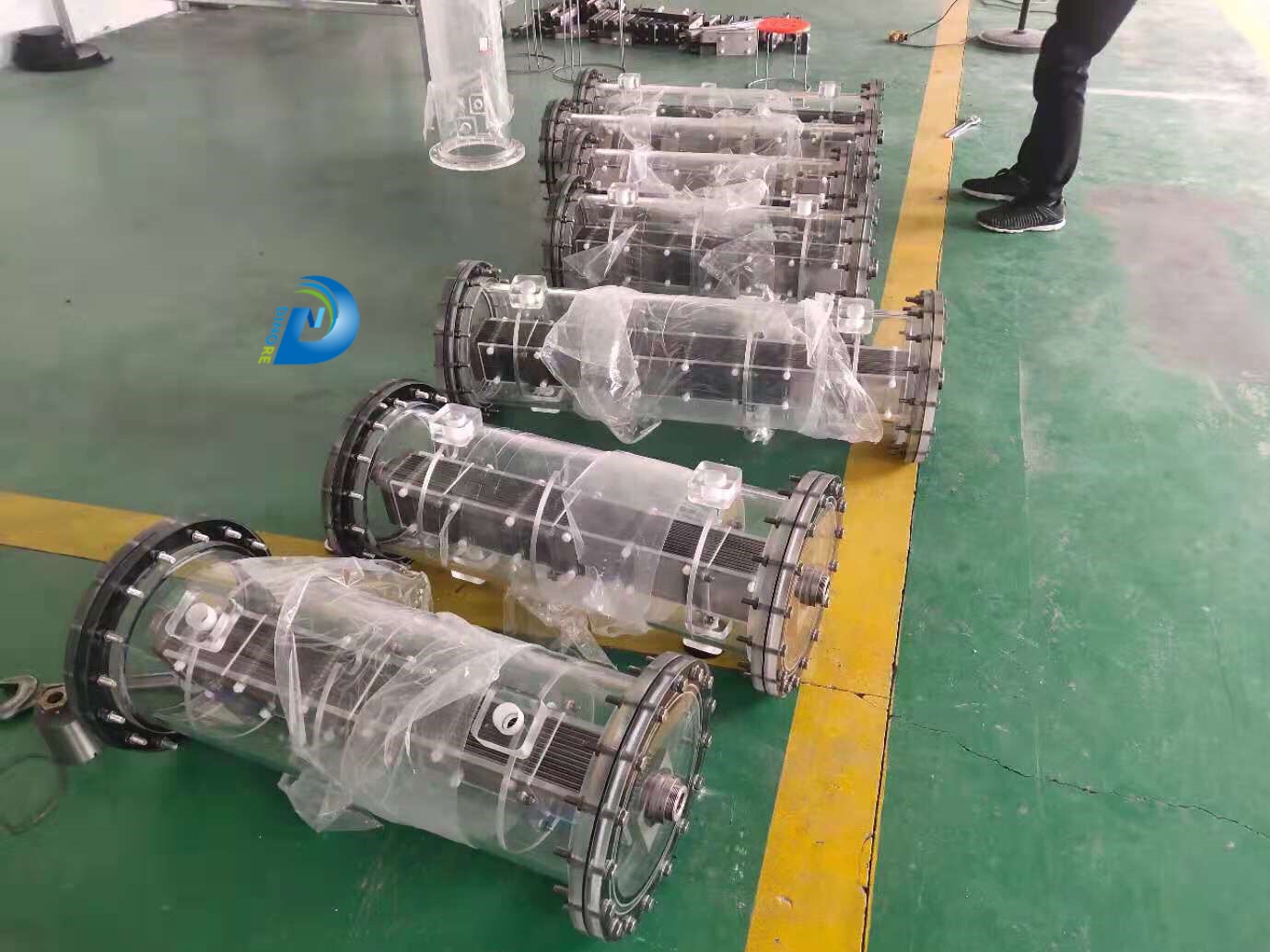
Understanding Titanium Electrolyzers in Electro-Chlorination
How the Electrochemical Reaction Works
Both poles in the electrolytic cell are driven by direct current. The chloride ions are changed into chlorine gas at the anode: 2Cl⁻ − 2e⁻ → Cl₂↑. Hydrogen is given off at the cathode: 2H⁺ + 2e⁻ → H₂↑. It ends with NaCl + H₂O → NaClO + H₂↑. The 2%–5% salt feed stream makes sodium hypochlorite, which can oxidize as well as other chlorine products without the need for on-site storage of liquid chlorine.
Why Titanium Outperforms Alternative Electrode Materials
When there is a lot of electricity, the graphite electrodes wear away quickly, contaminating the cleaned water. In chlorinated brine environments, stainless steel rusts in just a few months. Titanium substrates that have been coated with a mixed metal oxide (MMO) of ruthenium and iridium are resistant to both chemical and electrical wear. Published electrochemical data consistently shows that MMO-coated titanium anodes keep the cell voltage stable over long operating cycles, which cuts down on energy use and downtime.
The Role of MMO Coating in Long-Term Performance
Not only does the Ru-Ir MMO coating lower the chlorine evolution overpotential, but it also makes a protection layer around the titanium base to keep it from oxidizing. Because of this mix, the electrode plate can even be exposed to air for a short time without getting damaged permanently. This is helpful in real life during repair windows when draining is necessary.
How to Choose the Right Titanium Electrolyzer for Your Project
Match Chlorine Output to Your Application
Tianyi's TY-WL series of titanium electrolyzer for electro-chlorination covers nine models from WL50B (50 g/h effective chlorine) to WL2000B (2,000 g/h). A municipal water plant serving 50,000 residents typically needs 500–1,000 g/h. A marine vessel ballast system may need only 100–300 g/h depending on tank volume and exchange rate. Matching model to demand prevents oversizing—which wastes energy—and undersizing—which creates compliance gaps.
Here are the core specification ranges across the TY-WL series that procurement engineers should benchmark against project requirements:
- WL50B–WL300B: Shell diameters from 100–150 mm, total cell lengths 310–550 mm, operating currents 60–84 A, voltage ≤20 V, flow rates 6–50 L/h. Suited for small vessels, food-industry CIP loops, and pool systems.
- WL500B–WL1000B: Shell diameters 200 mm, cell lengths 820–1,020 mm, currents 120–156 A, voltage ≤40 V, flow rates 65–170 L/h. Designed for mid-scale marine installations and rural water stations.
- WL1500B–WL2000B: Shell diameters 270 mm, cell lengths 980–1,200 mm, currents up to 460 A, voltage ≤40 V, flow rates up to 400 L/h. Appropriate for large municipal plants and offshore drilling platforms.
All models operate at ≤0.2 MPa cell pressure, use PMMA/PVC tank materials, and accept a 2%–5% saline solution at an inlet temperature of 5–15°C. Acid cleaning uses 15–18% hydrochloric acid for scale release. These specifications can effectively resolve capacity mismatches that frequently trigger costly retrofit work after installation.
Evaluate Certification and Supplier Track Record
For marine applications, CCS (China Classification Society) or equivalent flag-state certification is non-negotiable. For municipal procurement in the United States, NSF/ANSI 61 compliance for materials in contact with potable water is the relevant standard. Always request factory acceptance test (FAT) documentation and reference projects in the same application category.
Assess Control System Compatibility
Non-standard control cabinets are a recurring source of post-installation headaches for titanium electrolyzer for electro-chlorination. Confirm that the supplier provides matched power supply units, PLC logic compatible with your SCADA infrastructure, and remote monitoring capability. Tianyi integrates matched control cabinets with each TY-WL unit, reducing integration risk for procurement teams working against tight commissioning schedules.
Importing Titanium Electrolyzers — Procurement and Logistics Insights
Verifying Supplier Credentials Before Ordering
Ask for ISO 9001 certification, material test results for the titanium substrate, and confirmation of the coating's makeup (Ru-Ir ratio). A trustworthy titanium electrolyzer provider should give you proof that you can track your order from the groups of raw materials to the serial numbers of the finished cells. Shaanxi Tianyi is based in the Baoji High-Tech Development Zone, which is known in China for its skill in processing titanium. At every stage of production, quality control is recorded.
Lead Times, Shipping, and Customs Classification
The standard lead time for TY-WL units is between 4 and 8 weeks, but this can change based on the model and the number of orders. The HS code for electrolytic cells is 8543.70, and it controls how much the U.S. taxes on imports. To avoid delays in reassignment, work with a licensed customs broker who knows how to use electrochemical tools. The smaller WL50B and the bigger WL2000B have very different crate sizes, so make sure you check the box specs early on when you book ocean freight.
Post-Import Support and Warranty Coverage
A good guarantee program is more important than just the price per unit. Check the electrode coating warranty period (the TY-WL series has a 5-year coating life commitment under rated operating conditions), how long it takes to send out spare parts, and whether it's possible to do diagnostics from afar. Early failures are less likely to happen when there is on-site commissioning support, which includes SAT (site acceptance testing) and a 30-day trial run protocol.
Optimizing Electro-Chlorination Efficiency with Titanium Electrolyzers
Operational Parameters That Affect Electrode Life
The single most controllable factor in coating longevity is keeping the feed saline concentration between 2% and 5%. When the inlet temperature is above 15°C or below the rated flow range, scale deposition happens faster. This raises the cell voltage and puts stress on the MMO layer. Cleaning with 15–18% hydrochloric acid on a regular basis, as directed by the maker, gets rid of calcium carbonate layers without hurting the electrode surface.
Maintenance Practices That Prevent Unplanned Downtime
TY-WL cells use a new design that reduces stray current. This design lowers the amount of current that leaks between cells in multi-unit arrays. Because of this design, the array will still work properly even if one electrode plate is quickly exposed to air for maintenance. Drift can be caught before it becomes a failure by checking the flow rate, voltage trend, and chlorine percentage in the runoff every 1,000 hours.
Compliance and Environmental Considerations
Making sodium hypochlorite on-site using titanium electrolyzer for electro-chlorination gets rid of the need to store liquid chlorine cylinders, which directly lowers the U.S. EPA's risk management program (RMP) thresholds for handling dangerous materials. NFPA 820 says that the hydrogen gas released at the cathode needs to be let out. These two compliance benefits—lower operational carbon footprint and lower risk of chemical storage—are being used more and more in municipal procurement evaluations.
Comparing Top Titanium Electrolyzer Brands and Market Trends
Established Manufacturers and Their Positioning
At the high end of the global electro-chlorination equipment market are companies like De Nora (Italy), Siemens Water Technologies (now part of Evoqua, U.S.), and Grundfos Alldos (Denmark). At the other end are Chinese companies like Shaanxi Tianyi that compete on customization depth and coating technology. Tianyi's focus on OEM/ODM capabilities and direct electrode repair services, such as recoating on-site, gives procurement teams choices that models that only rent out equipment can't match.
Market Trends Shaping Procurement Decisions
The IMO BWM Convention's rules on managing ballast water (which have been in effect since 2017) have greatly increased the need for small maritime electrolyzers. At the same time, large-scale production of sodium hypochlorite on-site is being looked at by U.S. cities that need to replace old liquid chlorine facilities to meet new EPA safety standards. Global Water Intelligence predicts that the need for high-output, long-lasting titanium electrolytic cells will continue through at least 2030, based on both of these trends.
Why Titanyi's TY-WL Series Holds Competitive Ground
Tianyi makes the titanium base, puts on the Ru-Ir MMO coating itself, and then puts the whole cell together at its Baoji plant. Because of this vertical unity, the company is not dependent on outside sources for parts and can control quality at every step. This has a direct effect on the total cost of ownership for procurement managers who have had coating delamination problems with competitors that are put together from parts.
Conclusion
There's more to buying an electrolytic chlorine production device than just looking at price lists. Titanium electrolyzer for electro-chlorination relies on electrode coating durability, output range, certification status, and support after the sale to determine whether the equipment works well for five years or needs to be fixed often.
The TY-WL series takes all of these things into account by having clear specifications and a promise of a long coating life. Choosing the right model for your needs from the start is the most cost-effective thing you can do, whether you're running a municipal water plant, a marine vessel, or a food processing plant.
FAQ
How long does the electrode coating typically last?
Under rated operating conditions—correct saline concentration, flow rate, and current density—the Ru-Ir MMO coating on TY-WL series cells is designed for a minimum of 5 years of service life. Exceeding operating parameters, particularly feed concentration or temperature limits, will shorten coating life.
Can the electrolyzer operate in actual seawater rather than prepared brine?
Yes. The TY-WL series electrode material and coating are selected to function in low-salinity seawater environments and can operate normally at low temperatures, making them appropriate for marine ballast water and offshore platform applications.
What certifications are required for U.S. import?
For potable water contact applications, NSF/ANSI 61 material compliance is standard. Marine installations require CCS or flag-state classification society approval. Always confirm the applicable certification with your project engineer before placing an order.
Is unattended operation safe?
Yes, when the matched control cabinet with automatic fault detection is installed. Remote monitoring capability allows operators to receive alerts and adjust parameters without continuous on-site presence.
What happens if the electrode plate needs recoating?
Tianyi provides electrode plate recoating services directly, returning the substrate to original specification without requiring full cell replacement. This service option significantly reduces lifecycle cost compared to full unit replacement.
Contact Tianyi — Your Trusted Titanium Electrolyzer for Electro-Chlorination Supplier
Tianyi offers a complete range of products, from small 50 g/h units to large 2,000 g/h systems. These are backed by their own covering technology and 5-year performance guaranties. Our team helps with the whole buying process, from going over the technical specs to FAT, shipping, and setting up the equipment on-site. You can get a quote for your project by emailing us at info@di-nol.com or going to dsa-anodes.com. We answer all important B2B questions in one business day.
References
1. Global Water Intelligence. Municipal Water Disinfection Market Report. 2023.
2. International Maritime Organization. International Convention for the Control and Management of Ships' Ballast Water and Sediments (BWM Convention). 2004.
3. Trasatti, S. "Electrocatalysis: Understanding the Success of DSA." Electrochimica Acta, 2000.
4. Kirk-Othmer. Encyclopedia of Chemical Technology: Chlorine and Sodium Hydroxide. Wiley, 2020.
5. Comninellis, C., & Chen, G. (Eds.). Electrochemistry for the Environment. Springer, 2010.
6. U.S. Environmental Protection Agency. Risk Management Program (RMP) Guidance for Wastewater Treatment Facilities. EPA 550-B-19-003, 2019.
