




Top Factors to Compare Before Buying Flexible Linear Anodes Today
When evaluating flexible linear anodes for cathodic protection, the decision goes far beyond price. These cable-style auxiliary anodes are purpose-built to deliver impressed current uniformly along buried pipelines, tank bottoms, and complex underground structures where traditional rigid anodes fall short. Selecting the wrong product risks uneven current distribution, premature anode failure, and costly mid-cycle replacements. This guide walks through the factors that experienced corrosion engineers and procurement teams consistently use to separate reliable products from underperforming ones.
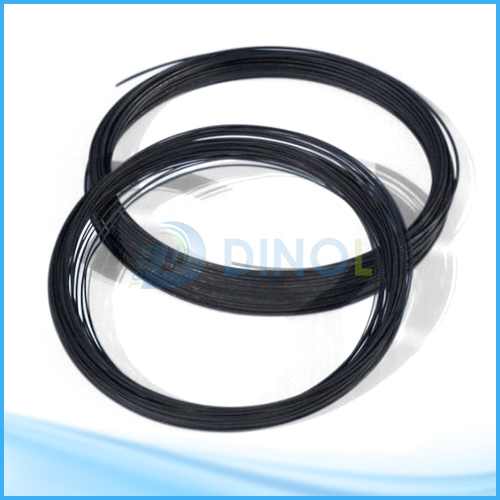
Understanding Flexible Linear Anodes and Their Role in Cathodic Protection
In an impressed current cathodic protection (ICCP) system, the active discharge part is a flexible linear anode. Current flows from a transformer-rectifier through the anode and into the dirt or liquid around it. This polarizes the target structure cathodically and stops electrochemical corrosion. A linear anode is different from other types of anodes because it runs parallel to the protected structure and spreads current continuously along its length instead of just from a few isolated discharge points.
How Do They Differ from Traditional Anode Designs?
Rigid anodes focus current flow at set nodes, making polarization gradients that aren't even. This is a big problem in old tank farms or pipe corridors that are already full. On the other hand, an anode on a flexible wire releases electricity gradually along each meter of its length. The copper core moves current along a lengthwise direction with little resistance loss. The conductive polymer or MMO/Ti wire layer on the outside lets that current flow laterally into the ground. This design makes flexible anodes work especially well in high-resistivity soils, coating zones that are breaking down, and parallel pipes that are close together.
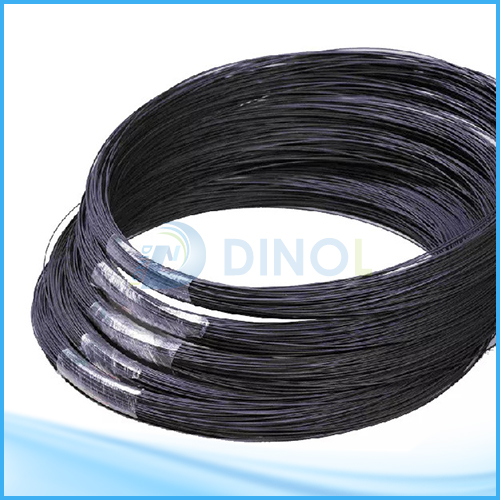
There are two main tools that rule the market right now. With a stranded copper core inside a carbon-black-loaded polymer compound, the conductive polymer bendable anode can produce output currents between 52 mA/m (without coke backfill) and 82 mA/m (with coke backfill). The MMO/Ti linear anode replaces the polymer discharge layer with Mixed Metal Oxide-coated titanium wire, which comes in four different sizes (1.0 mm, 1.5 mm, 2.0 mm, and 3.0 mm). It offers much higher current densities—up to 328 mA/m for the DN-15 variant and 656 mA/m for the DN-30—and is rated to last more than 40 years.
Critical Factors to Evaluate When Comparing Flexible Linear Anodes
It's not all bendable anodes on the market are made the same way. Before giving money to a supplier, corrosion engineers who are in charge of making sure the integrity of tank farms have a structured evaluation framework. Forflexible linear anodes for cathodic protection, this framework should cover substrate grade, MMO coating chemistry, wire-to-cable joint quality, bending radius, batch consistency and certified test data — because these factors determine whether the anode will deliver uniform current for decades or fail prematurely in the field.
Material Composition and Coating Quality
The base and covering have a direct effect on how long the anode works when it is under electrochemical stress. MMO/Ti anodes have a pure titanium substrate (Ti content ≥ 99.6%) and a mixed metal oxide coating (6–10 μm thick) made of Ir, Ru, and Ta oxides. This coating is put on using sandblasting, pickling, and precise coating application. This order makes sure that the materials stick together mechanically and electrically. MMO coatings are used up in milligrams per ampere-year, while graphite is used up in pounds per ampere-year. This means that MMO coatings are more stable in terms of size and performance over time.
Here, verification is important. Ask providers for contact resistance numbers, XRF coating load analysis, and rapid life test data that is based on ASTM standards. Tianyi's MMO/Ti linear anodes set the contact resistance between the MMO wire and the internal cable at 0.0009 Ω. This is a real number that can be tested and tells the difference between engineered goods and alternatives that haven't been formally recorded.
Performance Metrics Worth Measuring
It is the most important operational metric to make sure that the current output is uniform. A well-thought-out anode groundbed provides a safety potential that declines gradually and evenly along the structure. This keeps stray currents from interfering with assets nearby as little as possible. Along with uniform output, you should also look at:
- Output current range: Polymer anodes produce 300–1,000 mA/m depending on backfill; MMO/Ti anodes output 328–656 mA/m depending on wire diameter.
- Outer diameter tolerance: A consistent Φ39.5 ± 0.5 mm profile simplifies trench sizing and coke backfill volume calculations.
- Bending radius: A minimum 500 mm bending radius accommodates routing around obstacles without microfractures in the conductive layer.
- Temperature and pressure ratings: Polymer anodes rated to ≤ 7 MPa constant pressure and operable at installation temperatures down to -18°C suit demanding field conditions.
Certifications and Compliance Standards
Documentation is a must for procurement teams that have to follow set inspection cycles. Make sure the seller is ISO 9001 certified and that the goods are made according to ASTM standards. In regulated sites, tank bottom cathodic protection systems need material traceability certificates, design life promises (usually ≥ 40 years), and proof that they can work with the rectifier systems that are already there. Forflexible linear anodes for cathodic protection, this documentation package is what allows procurement teams to verify compliance, plan inspections and ensure the anode system integrates reliably with existing ICCP infrastructure.
Cost-Effectiveness and Procurement Factors
Unit prices given up front don't always tell the whole story. The total cost of ownership for a cheaper anode that only works for 15 years and doesn't come with technical support will be higher than for a more expensive product that lasts 40 years and comes with commissioning help and potential distribution testing after installation. Forflexible linear anodes for cathodic protection, this lifecycle comparison is what separates a short-term saving from a long-term asset — because replacement labor, system downtime and re-commissioning costs often dwarf the original purchase price.
When making RFQs, make sure to include line-item breakdowns of the cost of materials per meter, the amount of coke backfill that is needed, the type of cable (XLPE/PVC, PVDF/HMWPE, or EPR/CSPE), and any materials that are used to seal joints. Bulk orders, which come on 500-meter and 1,000-meter reels, usually get better prices, and suppliers with steady stock can schedule deliveries to fit tight inspection windows. With a well-stocked manufacturer, lead times of 15 to 30 days are possible for normal numbers. Orders above 10,000 meters should be negotiated directly on schedule. Acceptable ways to pay (L/C, T/T) and standard export packing finish off the business review.
Use Case Scenarios and Application Suitability
When it comes to security, flexible linear anodes work better than traditional ways in many situations. The most common reasons for buying infrastructure for refining, storage, and pipelines are shown below:
- External tank bottoms: Shallow horizontal groundbeds beneath storage tank floors require uniform current coverage across the entire base plate. Flexible anodes laid in a grid pattern within coke breeze beds achieve this without excavating live infrastructure.
- Aging pipelines with deteriorated coatings: Where coating holidays have multiplied, a close-proximity linear anode running parallel to the pipe delivers targeted current directly to exposed metal without overshooting or creating interference on neighboring lines.
- High-resistivity soil environments: Conductive polymer and MMO/Ti anodes both operate effectively in resistive soils when surrounded by coke breeze backfill, which lowers groundbed resistance and stabilizes the discharge environment.
- Complex piping networks and congested facility layouts: Linear anodes reduce the stray current interference that plagues discrete-point anode installations in process plants where copper grounding beds and multiple buried structures compete electrically.
Flexible anodes are better than fixed impressed current anodes or sacrificial zinc/magnesium systems because they need less driving voltage, can be cut to length in the field, and can handle smaller rectifier capacities. This is especially helpful during short repair windows when missing a deadline is expensive. Forflexible linear anodes for cathodic protection, these advantages translate into faster installation, lower power requirements and greater adaptability on site — making them a practical choice for tank farms and pipelines where downtime is costly.
Best Practices for Installation, Maintenance, and Maximizing Anode Life
The most controllable factor in the life of an anode device is how well it is installed. To install a trench system, you have to dig a hole parallel to the protected building, spread out half of the estimated coke breeze volume as a bed layer, lay the anode, cover it with the rest of the coke breeze, pack down the native soil over the fill, and finish the backfill. This order keeps the outer diameter profile and grounding resistance constant throughout the anode run by reducing point contact between the anode sheath and loose material.
Once the system is up and running, it should have annual pipe-to-soil potential surveys and tank bottom potential distribution tests to make sure it is working within the safe range (usually -850 mV CSE or more negative, according to NACE SP0169). Any area with too little polarization needs to have its output changed at the rectifier before the coating starts to break down faster.
Special care should be taken with joint sealing. The most likely places for a buried system to fail are the node links between the anode parts and the power line. Specific joint sealing compounds must be resistant to rust and not easily worn down. For example, Tianyi's MMO/Ti linear anode joints use materials that are rated for chemical safety over a long period of time underground.
Conclusion
Comparingflexible linear anodes for cathodic protectionbefore purchase requires attention to material quality, performance specifications, compliance documentation, total lifecycle cost, and supplier service capability. Products that meet ASTM standards, carry ISO 9001 certification, and offer documented service lives of 40-plus years reduce long-term risk substantially. The installation environment — soil resistivity, tank configuration, pipeline density — should drive the selection between polymer and MMO/Ti variants. Making this decision systematically protects both the asset and the procurement budget.
FAQ
What is the typical service life of a flexible linear anode?
Reliable makers make MMO/Ti linear anodes that are made to last more than 40 years under normal working conditions. Conductive polymer types also have long service lives as long as they are placed with the right amount of coke breeze backfill and used within the limits of their rated current density.
Can flexible linear anodes be customized for specific project requirements?
Yes, you can change the overall length, the output current, the wire diameter, and the cable type (XLPE/PVC, PVDF/HMWPE, EPR/CSPE). Standard reels come in 500 m and 1,000 m lengths, but they can also be cut to length for custom setups on-site.
What certifications should I verify before purchasing?
Check the documentation for material traceability, ASTM-referenced test data, and ISO 9001 certification.
Is coke breeze backfill always required?
Coke breeze backfill is strongly suggested for use in soil uses. It lowers groundbed resistance, keeps the electrochemical environment around the anode stable, and increases operational life. This is especially true in inland refining sites where the soil has a lot of resistance.
Are free samples available before committing to a bulk order?
Tianyi gives away free samples so that purchasing teams can check the materials and make sure they work with each other before deciding on the terms of the purchase.
Partner with Tianyi — Your Trusted Flexible Linear Anodes for Cathodic Protection Supplier
Tianyi is based in Baoji's High-Tech Development Zone and makes MMO/Ti and polymer flexible anodes that meet ASTM standards. They are certified by ISO 9001 and have a titanium substrate purity of at least 99.6%. You can get free samples of our flexible linear anodes for cathodic protection and get expert technical help from the design stage all the way through to commissioning. Email our team at info@di-nol.com to get a price and talk about the needs of your project.
References
1.NACE International. Cathodic Protection of Underground Storage Tank Systems and Metallic Piping. NACE SP0285. NACE International, 2011.
2.ASTM International. Standard Guide for Impressed Current Cathodic Protection of Internal Submerged Surfaces of Steel Water Storage Tanks. ASTM G180. ASTM International, 2013.
3.Peabody, A. W. Control of Pipeline Corrosion. 2nd ed. NACE International, 2001.
4.Baeckmann, W. von, Schwenk, W., and Prinz, W. Handbook of Cathodic Corrosion Protection. 3rd ed. Gulf Professional Publishing, 1997.
5.NACE International. External Corrosion Direct Assessment Methodology for Buried Steel Pipelines. NACE SP0502. NACE International, 2010.
6.British Standards Institution. Cathodic Protection — Part 3: Code of Practice for the Cathodic Protection of Buried or Immersed Metallic Structures. BS EN 13636. BSI, 2004.