




Top Ir-Ta Titanium Anode for Electrolytic Copper Foil Production
If you work in electronics manufacturing or PCB production, you already know that the quality of your copper foil depends heavily on what happens at the anode. The Ir-Ta titanium anode for electrolytic copper foil has become the preferred electrode choice for producers targeting ultra-thin, low-roughness foil below 12 microns. Built on an ASTM B265 Gr1/Gr2 pure titanium substrate with a mixed metal oxide (MMO) coating of iridium and tantalum, these anodes deliver stable current distribution, long service life exceeding eight months, and zero electrolyte contamination — precisely what modern PCB and lithium battery foil lines demand.
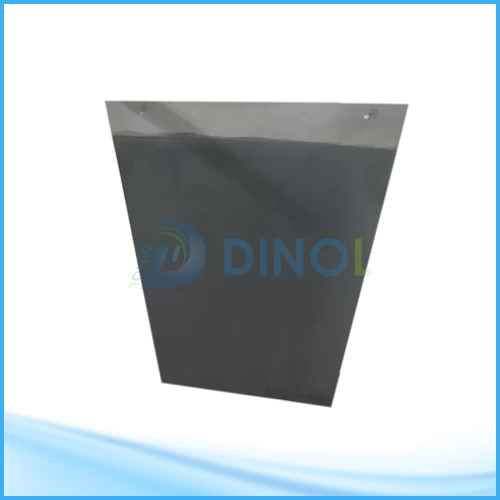
Understanding Ir-Ta Titanium Anodes and Their Working Principles
Material Composition
Pure titanium from ASTM B265 Grade 1 or Grade 2 is used as the anode material because it is strong and doesn't react with sulfuric acid solutions. The active layer is a covering of powdered iridium-tantalum oxide that is put on by carefully controlling the breakdown of the metal over heat. Iridium oxide is long-lasting electrochemically and has a low oxygen generation overpotential. Tantalum oxide stabilizes the layer structure and protects it from acid attack at temperatures ranging from 50°C to 80°C.
How the Coating Drives Performance
During electrolysis, the Ir-Ta layer makes it easier for the oxygen evolution reaction (OER) to happen. In other words, the anode effectively gives off oxygen without using too much power. The anode-cathode distance (ACD) stays the same when the working current density is between 5,000 and 8,000 A/m² because the coating doesn't change its shape. For 5G PCBs and battery-grade copper foil, it is necessary to have a stable ACD because it directly affects the uniformity of foil thickness.
Electrochemical Reactions in the Cell
Most of the time, the electrolyte has 50–150 g/L of Cu₂, 60–150 g/L of H₂SO₄, 30–60 ppm of Cl⁻, and 2–5 ppm of organic ingredients. At the cathode, Cuⲵ + 2e⁻ → Cu deposits on the titanium drum that is turning. At the anode, 4OH⁻ → 4e⁻ → 2H₂O + O₂↑ and 2SO₄²⁻ + 2H₂O → 4e⁻ → 2H₂SO₄ + O₂↑ happen at the same time. The Ir-Ta surface speeds up these reactions without dissolving into the bath, making it an effective Ir-Ta titanium anode for electrolytic copper foil. This keeps the electrolyte free of metals that could be harmful.
Comparing Ir-Ta Titanium Anode with Other Anode Technologies
Picking the wrong type of anode increases costs and lowers the quality of the foil. How do popular options stack up against iridium-tantalum MMO anodes in real-world workplaces?
Lead-Alloy Anodes
Lead-alloy anodes were the standard for many years, but when there is a lot of current flowing through them, they bend and lead ions leak into the solution. Lead contamination lowers the conductivity of foil and makes surface flaws. RoHS and REACH regulations have sped up the phase-out of these chemicals in electronics-grade foil lines around the world.
Ru-Ta Coated Anodes
Ruthenium-tantalum anodes work well in chlorine evolution applications, but they corrode more quickly in hot, concentrated sulfuric acid. In copper foil electrolysis, where H₂SO₄ levels reach 150 g/L and temperatures reach 80°C, Ru-Ta coatings break down faster than Ir-Ta coatings. This means that they need to be replaced more often and cost more overall over a 12-month production run.
Platinum-Coated Titanium Anodes
Although platinum anodes are very resistant to corrosion, they are also much more expensive to make. More importantly, platinum-coated electrodes don't work very well as catalysts for the oxygen evolution reaction when the current densities needed for fast copper foil deposition are present. When operations are running at 5,000 to 10,000 A/m², the Ir-Ta MMO design delivers more current for less money per hour.
Procurement Considerations for Ir-Ta Titanium Anodes
It is just as important to find the right source as it is to choose the right electrode chemistry. A few things consistently separate vendors who are reliable from those who aren't.
Here are the most important things that business-to-business buyers should look at before placing an order:
- Substrate certification: Confirm the supplier provides mill test reports verifying ASTM B265 Gr1/Gr2 compliance. This documentation protects you during vendor qualification audits.
- Coating traceability: Request batch records showing iridium and tantalum loading per unit area. Coating weight directly correlates with service life and current efficiency.
- Custom geometry support: Copper foil machines use curved or flat plate anodes matched to specific drum diameters. A capable manufacturer should accommodate custom dimensions without minimum order restrictions on geometry changes.
- Lead time and supply continuity: Projects with multi-year production schedules require suppliers who can commit to scheduled releases. Confirm production capacity and raw material inventory management before signing a long-term contract.
- Packaging for transit: Titanium anodes with MMO coatings are sensitive to mechanical impact during shipping. Verify that the supplier uses foam-lined crating and moisture-barrier packaging for international freight.
These factors help procurement managers lower the risk of sourcing and keep output from stopping without warning because electrodes aren't working well enough.
Practical Insights: Improving Electrolytic Copper Foil Quality Using Ir-Ta Titanium Anodes
Production engineers frequently encounter three recurring problems in copper foil lines: uneven foil thickness, premature anode degradation, and excess energy consumption. The Ir-Ta titanium anode for electrolytic copper foil addresses all three through its electrochemical design.
Uniform Foil Thickness
Dimensional stability of the anode surface prevents fluctuations in the ACD during continuous operation. When the electrode gap remains constant, current density across the cathode drum stays uniform, producing foil with consistent thickness profiles. This is particularly important for sub-12-micron foil used in lithium-ion battery current collectors, where thickness variation above ±0.5 microns can cause micro-shorts in assembled cells.
Extended Anode Service Life
Under standard operating conditions — H₂SO₄ at 60–150 g/L, temperature at 50–80°C, current density at 5,000–8,000 A/m² — iridium-tantalum coated titanium anodes demonstrate service lives exceeding eight months per campaign. Compared to lead-alloy anodes requiring replacement every three to four months, this represents a significant reduction in maintenance downtime and labor costs over a full production year.
Energy Efficiency Gains
The low oxygen evolution overpotential of iridium oxide reduces cell voltage by approximately 0.2–0.4 V compared to uncoated titanium or lead anodes under equivalent current loads. In a facility operating 50 electroplating cells continuously, this voltage reduction translates to measurable savings on monthly electricity bills — a direct ROI benefit that procurement teams can present to finance stakeholders.
Making the Right Choice: Why Ir-Ta Titanium Anodes Are Preferred for Electrolytic Copper Foil Production?
Market Adoption Trends
The demand for electrolytic copper foil reached about 800,000 metric tons around the world in 2023. This was due to the production of batteries for electric vehicles and the growth of 5G infrastructure. Leading foil makers in China, Japan, and South Korea have decided to use Ir-Ta titanium anode for electrolytic copper foil on all of their new production lines. They say that the electrolyte purity and security of the anodes' shape are the main reasons for this.
Sustainability and Compliance
Iridium-tantalum MMO anodes don't have any dangerous heavy metals in the liquid waste stream like lead-based electrodes do. This makes treating wastewater easier and helps make sure that environmental release standards are met. As more people look closely at how sustainable electronics manufacturers' supply chains are, asking for a lead-free anode system has turned into a requirement rather than a choice.
Selection Criteria Summary
As you look for an anode for a new or improved copper foil line, make sure the supplier can meet these requirements: substrate grade according to ASTM B265, coating composition confirmation, an operating current density rating of 5,000–10,000 A/m², a confirmed service life of more than eight months, and technical support for cell design optimization.

Conclusion
The switch from lead-alloy electrodes to iridium-tantalum MMO anodes is part of a bigger change in how the electronics industry handles quality control and environmental issues. In the harsh sulfuric acid environments needed for copper foil electrolysis, these anodes provide stable ACD, even current distribution, and longer service life. For purchasing managers looking for electrodes for PCB-grade or battery-grade foil lines, Ir-Ta titanium anode for electrolytic copper foil makes a strong technical and economic case, which is backed up by production figures from sites around the world.
FAQ
How long does an Ir-Ta MMO anode typically last in copper foil production?
Service life is more than eight months per production campaign when H₂SO₄ is between 60 and 150 g/L, the temperature is between 50 and 80°C, and the current density is between 5,000 and 8,000 A/m². Its actual life span relies on how pure the electrolyte is, how often the current is interrupted, and how it is handled mechanically during maintenance processes.
How does the cost compare to traditional lead-alloy anodes?
An Ir-Ta-coated titanium anode costs more per unit up front than lead-alloy alternatives. However, when you add up the costs of replacements, cleaning up contaminated electrolytes, and following the rules for getting rid of lead, the total cost over a 24-month production period is lower for the MMO titanium option.
Can anode dimensions be customized for different drum sizes?
It is possible to make plate-shaped anodes that fit certain cathode drum sizes and cell shapes. Suppliers who can make the plates themselves can give buyers curved or flat plates with custom hole patterns and connecting specs if they give them technical models.
What maintenance practices extend coating life?
Stay away from reverse polarity events because they speed up the delamination of coatings. During planned shutdowns, rinse anodes with deionized water and check surfaces every two months for spots where coatings have been lost. To keep the titanium base from oxidizing at the edges that aren't coated, store extra anodes in dry, low-humidity places.
Partner with Tianyi for Verified Ir-Ta Titanium Anodes
Titanium anodes covered with iridium-tantalum MMO are made by Tianyi on ASTM B265 Gr1/Gr2 substrates. These anodes can handle current densities of up to 10,000 A/m² in copper foil electrolysis settings. As a professional Ir-Ta titanium anode for electrolytic copper foil supplier, we give you full coating traceability, help with custom geometry, and test reports for each batch with every order. You can email our technical team at info@di-nol.comto get more information, samples, or a price quote for buying in bulk.
References
1.Trasatti, S. Electrochimica Acta— "Electrocatalysis by Oxides: Attempt at a Unifying Approach," 1984.
2.Beer, H. B. Journal of the Electrochemical Society— "The Invention and Industrial Development of Metal Anodes," 1980.
3.Xu, L. et al. Journal of Applied Electrochemistry— "Performance of Ir-Ta Oxide Coated Titanium Anodes in Sulfuric Acid Electrolytes," 2017.
4.Chen, G. Separation and Purification Technology— "Electrochemical Technologies in Wastewater Treatment," 2004.
5.Comninellis, C. & Chen, G. (Eds.) Electrochemistry for the Environment, Springer, 2010.
6.International Copper Study Group (ICSG) — World Copper Foil Market Report, 2023.