




Why Choose MMO/Ti Linear Anodes for Long-Term Cathodic Protection?
When protecting buried pipelines, storage tanks, and critical infrastructure from corrosion, the choice of anode technology determines whether your system delivers decades of reliable service or requires costly replacements within a few years. MMO/Ti Linear Anode for cathodic protection have emerged as the preferred solution for system integrators and CP equipment suppliers worldwide, offering a combination of flexibility, longevity, and uniform current distribution that traditional anode materials simply cannot match.
Constructed from high-purity titanium wire (≥99.6% Ti content) coated with catalytic Mixed Metal Oxides and pre-packaged with conductive carbonaceous backfill, these linear auxiliary anodes solve the shielding and coverage gaps common in point anode systems while adapting to challenging installation environments where space, soil resistivity, and interference pose real obstacles.
Understanding MMO/Ti Linear Anodes and Their Role in Cathodic Protection
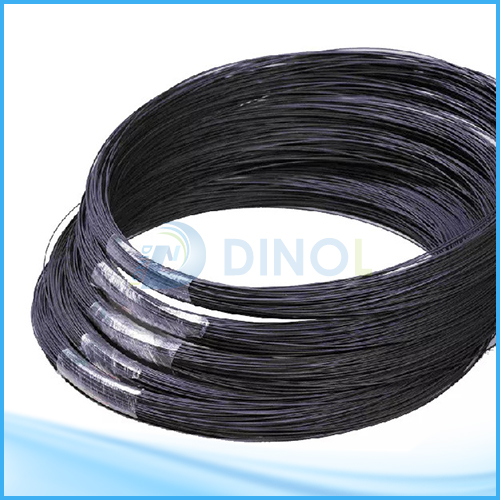
The anode groundbed is the part of impressed current cathodic protection (ICCP) systems that sends protective current from the rectifier into the soil and then to the metal structure that needs to be protected. An MMO/Ti linear anode works as a continuous, flexible secondary anode that spreads current evenly along its length instead of focusing discharge at specific places. This big change in design solves one of the biggest problems in cathodic protection, which is getting consistent polarization in pipeline corridors with complicated shapes and a lot of people using them.
The titanium substrate is strong and won't rust, and the Mixed Metal Oxide coating, which is usually made of iridium, tantalum, and ruthenium, allows oxygen or chlorine to be released efficiently at the anode surface. The coating is between 6 and 10 micrometers thick, and its consumption rates are very low, usually between 1 and 6 milligrams per ampere-year. This means that the device will last for more than 40 years under normal operating conditions.
How Linear Anodes Deliver Uniform Protection
Linear anodes send protective current along the whole length of the protected structure, while standard deep anode wells send current out from a single place. The copper core conductor inside the anode makes sure that the voltage drops as little as possible along its length, and the MMO/Ti wire sends current into the soil through the conductive backfill. In this setup, the electric field is spread out evenly, which gets rid of "hot spots" and areas that aren't protected enough, which are common failure modes in other anode bed designs.
Key Applications Across Industrial Sectors
In situations where regular methods don't work, MMO/Ti linear anodes are a must. The close-proximity current distribution helps old pipes with coatings that are wearing off because it makes up for coating breaks without needing too much rectifier capacity. In chemical plants and factories with complicated pipe networks, full coverage is achieved without the interference problems that come with using multiple point anodes.
With limited vertical space, storage tank bottoms are especially hard to protect. However, spiral or grid anode layouts installed directly below the tank floor provide reliable protection. In high-resistance soil environments like sandy or rocky terrain, the pre-packaged coke breeze backfill maintains a stable, low-resistance pathway to earth, ensuring effective current transfer even where normal groundbeds would need too high of voltages.
Advantages of MMO/Ti Linear Anodes Over Traditional Alternatives
When choosing anode materials for long-term protection projects, system integrators always look at performance, cost, and dependability. Traditional graphite anodes are cheap at first, but they break easily and consume a lot of energy, so they only last 8 to 12 years in many situations. Even though high-silicon cast iron anodes last longer, they still corrode at regular rates and need to be installed vertically and deeply, which raises the cost of digging and causes more site disturbance.
Superior Corrosion Resistance and Extended Service Life
Because MMO coatings are electrochemically stable, they change the lifecycle costs of cathodic protection systems in a big way. Graphite anodes can use up to 0.5 kilograms of material per ampere-year, butMMO/Ti Linear Anode for cathodic protectionuses 100 to 200 times less. This means that they can last more than 40 years, while regular materials only last 10 to 15 years.
This long life cuts the total cost of ownership by a huge amount when you consider replacement labor, system downtime, and rectifier efficiency over the course of many decades. A lifecycle cost analysis of a 50-kilometer pipeline corridor showed that MMO/Ti anodes had a 35% lower total cost over 30 years, even though they cost more at first.
Flexible Installation and Reduced Rectifier Requirements
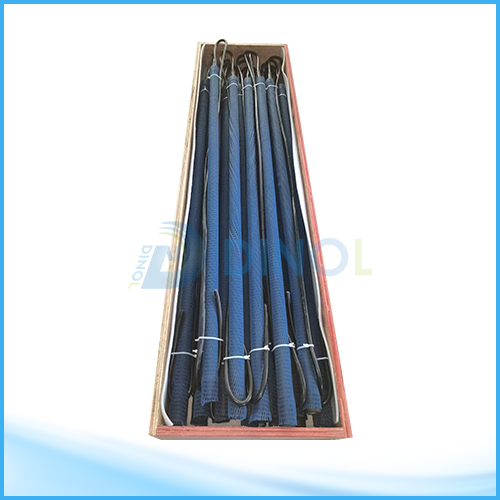
Linear anodes are put in place like electrical cables: they are rolled out in trenches next to pipelines or laid out in a grid pattern below the bottoms of tanks. This means that no heavy drilling or excavation equipment is needed. Because close-proximity anode placement results in low working voltage, smaller rectifier units can be used. This lowers both the cost of initial investment and the cost of energy use over time. Facilities that work in busy urban areas or areas that are sensitive to the environment really appreciate this installation flexibility, because shallow trenching doesn't damage existing utilities or plants as much.
Operational Efficiency and Minimal Maintenance
Once they are set up, MMO/Ti linear anode systems don't need much maintenance beyond regular potential scans and rectifier tracking. The design is flexible enough to allow for ground movement and settlement without breaking, which is very helpful in places where there are earthquakes or frost heave. Electrical continuity stays the same for decades because the contact resistance between the MMO/Ti wire and the internal cable is less than 0.0009 ohms. This makes sure that current flows smoothly without any voltage drops that could weaken protection or waste energy.
Procurement Considerations for MMO/Ti Linear Anodes

When choosing where to get important rust protection parts, you need to carefully look at the supplier's skills, the product's certifications, and the supply chain's dependability. Small and medium-sized system integrators, like those that work with regional pipeline operators or municipal water authorities, need suppliers that can handle both standard configuration orders from stock and custom-engineered solutions for specific projects.
Quality Assurance and Manufacturing Standards
Manufacturers with a good reputation keep their ISO 9001 approval and follow the ASTM standards for titanium material specifications and MMO coating application methods. Sandblasting is usually used to prepare the surface of the titanium base, thermal decomposition is used to apply a precise coating, and there are many steps of strict quality control testing. X-Ray Fluorescence (XRF) analysis checks for precious metals in the coating; accelerated life testing follows NACE TM0108 standards and simulates decades of field operation in short amounts of time; and coating adhesion tests make sure the MMO layer can handle handling and installation stresses without delaminating.
Tianyi's factory in Baoji, China, uses cutting-edge ultrasonic technology to find flaws in the materials and follows strict batch consistency protocols to make sure that every meter of linear anode meets the requirements. We test free samples so engineers can be sure of the electrical performance in their own soil or water before they commit to full project amounts.
Flexible MOQ and OEM White Label Options
Large industrial electrode makers might have minimum order quantities that regional integrators can't meet. Specialized suppliers, on the other hand, know how CP system assemblers buy things: they keep a moderate amount of stock on standard specifications (like DN-15 with 1.5mm MMO/Ti wire or DN-30 with 3.0mm wire) and also place project-driven custom orders for specific lengths, cable types, or current output needs, often includingMMO/Ti Linear Anode for cathodic protectionas a core offering to match varied installation requirements.
Tianyi can handle orders from 500 meters and up, and their price is based on yearly framework deals that recognize commitments to volume. Our OEM services include neutral packaging or labeling with the customer's brand. This lets integrators keep their brand identity in the market while using our manufacturing skills and quality control systems.
Logistics and Delivery Reliability
For project planning to work, it's important to know when materials will be available. Linear anodes are usually shipped in reels of 500 meters or 1000 meters, which makes containerized shipping by normal ocean freight easy. Lead times from order approval to shipment are usually between 15 and 20 days for stock configurations. Custom configurations can take up to 30 days, based on how complicated they are.
Every package comes with full export paperwork, like certificates of origin, material test results, and ISO compliance certificates. This makes it easier to get through customs in places like South America and the Middle East. Our logistics partners offer options for both full-container loads (FCL) and less-than-container loads (LCL). This gives smaller integrators who are working on multiple projects at the same time more options.
Installation and Operational Best Practices
Whether a cathodic protection system works as long as it's supposed to depends on how well it was installed. Because linear anodes are flexible, they make working easier than rigid anode materials. However, it is still important to pay attention to key installation factors for the best performance.
Site Preparation and Trench Layout
The first step in the installation process is to dig a trench that runs parallel to the protected pipeline or in a grid pattern below the tank bottoms. The depth of the trench should be between 0.8 and 1.5 meters, depending on the frost lines in the area and the condition of the soil. Half of the carbonaceous backfill material spreads out along the bottom of the ditch. This makes a bed of electricity that the anode can sit on.
The anode is easy to unroll because it is made to look like a wire. However, it is important to avoid sharp turns that go beyond the minimum radius (usually 500mm), as these could put stress on the MMO coating or internal connections. Placement of the anode is followed by compacting the remaining backfill and replacing the soil completely.
Electrical Connections and System Integration
If you place junctions correctly, they will stay electrically sound for a long time. Resin-filled splice kits are used at connection points between anode sections or to header wires to keep the environment sealed against moisture intrusion while keeping low contact resistance.
Rectifier size is based on the total length of the anode, the expected current demand, and measurements of the soil's resistivity taken during site surveys. Because linear anodes are close together, they usually need working voltages between 5 and 20 volts, which is much lower than deep anode systems, and this advantage is further enhanced when usingMMO/Ti Linear Anode for cathodic protectiondue to its stable electrochemical efficiency. This means that the rectifier doesn't have to hold as much power, and the system uses less energy over its lifetime.
Maintenance Protocols and Monitoring
Routine monitoring, not invasive repair, is what makes a device reliable over time. Every year, potential surveys make sure that protected structures keep the right polarization levels according to NACE SP0169 standards. Usually, the goal is to achieve a -850mV polarization shift from the native potential or a 100mV polarization shift compared to a copper-sulfate reference electrode.
Readings from the rectifier's output keep track of any slow changes in system resistance that could mean that the backfill is wearing down or there are connection problems. The basic maintenance routine ends with a visual check of all the above-ground connection boxes and test stations. Anode replacement usually doesn't come up in maintenance plans for decades after MMO coatings are installed, because they don't wear out as quickly. This is in contrast to consumable anode materials that need to be replaced every 8 to 12 years.
Evaluating MMO/Ti Linear Anodes: Performance and Future Outlook
The best way to prove that a corrosion protection technology works is to use it in real life in a variety of settings. Many years of field testing have shown that MMO/Ti linear anodes work reliably in a wide range of situations, from cold permafrost to tropical high humidity. The testing has been done in North America, South America, Europe, the Middle East, and Asia.
Field Performance and Client Feedback
Pipeline owners who switched from regular anode beds to linear MMO/Ti systems say that a number of key measures have gotten better. The distribution of the protection potential along protected structures is now much more uniform, and there are no longer any areas that aren't protected enough, which speeds up localized corrosion.
Because working voltages are lower and current utilization is better, 20 to 30 percent less energy is used per kilometer of protected cable. The most important thing is that planned anode replacement intervals are no longer needed. This gets rid of major sources of doubt about lifetime costs and operational disruptions.
System integrators really like it when responsible manufacturers offer technical support and the ability to look into problems. When failures do happen, they are usually caused by mechanical damage during installation rather than coating degradation. A thorough root cause analysis helps improve installation methods and informs the processing of warranty claims. This way of working together builds long-lasting relationships with suppliers that regional integrators need to stay competitive and keep their good name with end-user clients.
Technological Advancements and Sustainability
Ongoing study into the formulations of MMO coatings keeps pushing the limits of performance. Recent improvements in the methods used to apply coatings have made them stick better and lessened the thermal cycling stresses that used to be the main way MMO electrodes failed.
People are interested in coating formulas that don't need as much precious metal without lowering their electrochemical activity or durability for environmental reasons. Infrastructure operators are under more and more pressure to show that they are environmentally friendly. The energy efficiency and longer replacement intervals of MMO/Ti systems are real environmental benefits compared to traditional methods that need to be dug up and thrown away often.
Conclusion
Picking the right anode technology is one of the most important decisions in designing a cathodic protection system, as it can affect how the infrastructure works for decades.MMO/Ti Linear Anode for cathodic protectionoffers a strong mix of long-lasting performance, working freedom, and low lifecycle costs that other materials can't match. Linear anode design removes safety gaps by distributing current evenly, which also lowers the need for rectifiers and energy use.
System integrators that work with pipeline operators, tank farms, and municipal infrastructure need suppliers who know how to deal with the unique challenges of buying CP equipment. These challenges include small order sizes, flexible specifications, reliable delivery schedules, and OEM white-label options that help local market positioning. Different types of infrastructure assets get older and different corrosion protection needs come up. Because of their technical and business benefits, MMO/Ti linear anode systems are the best choice for engineers and procurement managers who want to protect assets in the long term.
FAQ
How long do MMO/Ti linear anodes typically last in buried applications?
If you install MMO/Ti linear anodes correctly, they should last between 40 and 50 years in normal soil. This is a lot longer than the 10 to 15 years that regular graphite or high-silicon cast iron anodes last. MMO coatings have a very low consumption rate—usually only 1-6 mg/A-yr compared to hundreds of grams for reusable materials—which means they last longer. The actual lifespan relies on a number of things, such as the current density, the chemistry of the soil, and the design of the system. However, rapid life testing according to NACE TM0108 standards reliably shows that MMO technology is more durable.
Can MMO/Ti linear anodes be used in high-resistivity soil conditions?
In tough, high-resistance places where regular deep anode systems would need too much voltage, these anodes work great. The pre-packaged carbonaceous backfill, which has more than 99.5% carbon, makes a stable, low-resistance connection between the anode and the earth around it. This design keeps the current flowing even in sandy or rocky areas with resistivity above 5000 ohm-cm, where anodes alone would need rectifier capacities that are too big to be practical. In these situations, installing and compacting the backfill correctly is still very important for getting the plan performance.
What maintenance do MMO/Ti linear anode systems require?
Monitoring the system rather than cleaning the anodes is what routine upkeep is all about. Every year, potential studies make sure that the levels of protection meet the requirements set by NACE SP0169, and watching the output of the rectifier keeps an eye on any slow changes in resistance. Basic maintenance is done by looking at the connection boxes and test stations. The MMO coating doesn't need to be maintained or replaced during the normal life of an infrastructure, which is a big advantage over anode materials that need to be replaced or repaired. Proactive monitoring lets you find rare problems early on, before they make protection less effective.
Partner With Tianyi for Reliable MMO/Ti Linear Anode Solutions
We know how hard it is for installers of cathodic protection systems to find good materials for auxiliary anodes, keep project costs low, and build long-term relationships with suppliers that help the business grow. Tianyi is a specialized maker of MMO/Ti Linear Anode for cathodic protection. They have ISO9001 certification and production methods that are in line with ASTM standards. CP equipment providers count on them for consistent products, flexible buying terms, and technical support.
Our production can handle both standard stock orders (DN-15 and DN-30 configurations with wire diameters ranging from 1.5mm to 3.0mm) and fully custom designs made from your project drawings. With white-label OEM packing, your brand's name stays protected, and our manufacturing know-how makes sure that every meter meets strict electrochemical performance standards.
You can talk to our technical sales team at info@di-nol.com about your specific needs and request free samples for testing. You can also look into annual framework agreements that get you better prices and guarantyd allocation. You can find detailed technical specifications, installation instructions, and case studies at dsa-anodes.com. These show how well the technology has worked in global infrastructure projects.
References
1. NACE International. (2017). Cathodic Protection—Impressed Current. NACE SP0572-2017. Houston: NACE International.
2. DNV GL. (2019). Cathodic Protection Design. Recommended Practice DNVGL-RP-B401.
3. SSPC: The Society for Protective Coatings. (2020). Life-Cycle Cost Analysis for Corrosion Protection Systems. Journal of Protective Coatings & Linings, 37(4), 28-35.
4. ASTM International. (2018). Standard Specification for Titanium and Titanium Alloy Strip, Sheet, and Plate. ASTM B265-18. West Conshohocken, PA: ASTM International.
5. AMPP (Association for Materials Protection and Performance). (2021). Field Performance of MMO Anodes in Buried Service. Materials Performance, 60(2), 42-48.
6. Baeckmann, W., Schwenk, W., & Prinz, W. (2018). Handbook of Cathodic Corrosion Protection (4th ed.). Houston: Gulf Professional Publishing.