




Why Flexible Linear Anodes Improve Pipeline Cathodic Protection
Flexible linear anodes for cathodic protection address one of the most persistent challenges in pipeline integrity management: delivering consistent protective current across complex, irregular, or aging buried structures. Unlike traditional point-source anodes, these cable-style systems run parallel to the pipeline, releasing current uniformly along the entire protected length.
The result is a stable electrochemical environment that keeps steel surfaces in a cathodic state, halting corrosion before it starts. For storage tank operators and pipeline engineers managing large asset portfolios, this approach offers measurable protection reliability that rigid anode systems simply cannot match.
Understanding Flexible Linear Anodes for Cathodic Protection
What They Are and How They Work
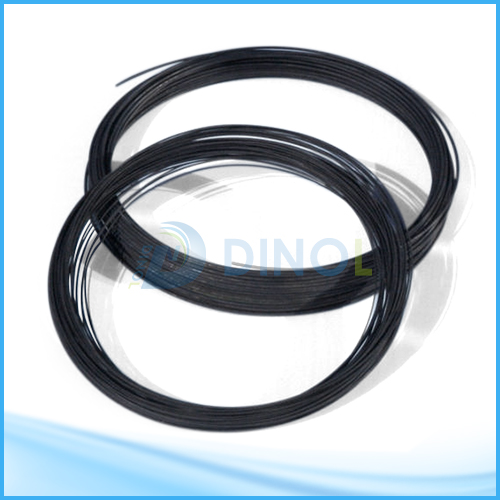
A flexible linear anode is an impressed current anode that is made up of cables and is put in parallel to an underground pipe or under the base of a storage tank. Cathodic polarization happens when current runs from a transformer-rectifier through the anode and into the dirt around it. It then flows onto the steel structure. The change in electricity stops the metal from dissolving on the surface of the pipe or tank. Instead, controlled oxidation happens on the anode itself, which is a trade-off that was made on purpose to protect the asset.
Materials and Construction
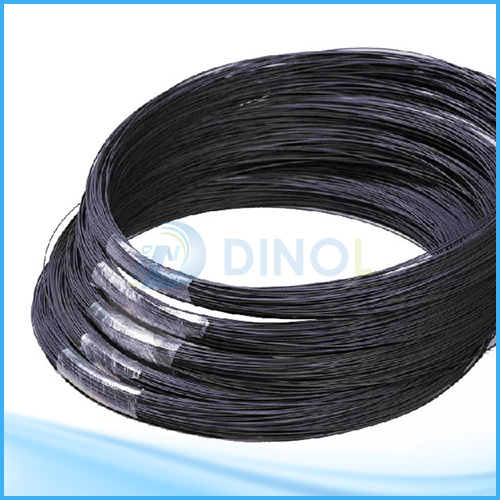
Tianyi makes two main types. The MMO/Ti linear anode has a base made of pure titanium (≥99.6% Ti) that is covered in a layer of mixed metal oxides (Ir, Ru, Ta) that is 6–10 μm thick. Stranded copper wire covered with conductive polymer is used in the polymer flexible anode. This lets the current flow slowly and evenly. The outside diameter of both types is 38–40 mm, and the MMO/Ti wire diameters are 1.0 mm, 1.5 mm, 2.0 mm, and 3.0 mm.
Design Standards and Compliance
The flexible anodes made by Tianyi are all certified by ISO 9001 and meet ASTM standards. To make sure the surface is smooth and free of flaws, the manufacturing process includes steps like sandblasting, pickling, and coating application. Each product has a documented design life of at least 40 years, which means it meets the requirements of GB 50393 and other international corrosion protection rules. This is a key part of design institute specs and project approval processes.
Comparing Flexible Linear Anodes to Traditional Anodes
Rigid Anodes vs. Linear Systems
With traditional deep-well or distributed rigid anodes, the current output is focused at a few key points. This leads to an uneven potential distribution in pipe networks that are crowded or have a lot of complicated shapes. Some areas get too much protection, while others stay under-protected. When flexible linear anodes for cathodic protection are put close to the target structure, they spread current continuously along the length of the anode. This gets rid of the "shadow zones" that happen with point-source systems.
Current Distribution and Power Efficiency
The DN-15 model of the MMO/Ti linear anode sends out 328 mA/m when the titanium wire is 1.5 mm in diameter. The DN-30 model sends out 656 mA/m when the wire is 3.0 mm in diameter. The transformer-rectifier capacity needed for these systems is less than for similar rigid anode setups because they work at a low output voltage. This lowers the cost of initial investment and continued power use, which is useful in big tank farms that run dozens of ICCP circuits at the same time.
Longevity and Maintenance Burden
There is a very low contact resistance of 0.0009 Ω between the MMO/Ti wire and the internal line. This keeps energy loss and hotspot formation to a minimum. MMO/Ti and polymer versions both have a service life of at least 40 years. Graphite anodes, on the other hand, are used up in pounds per ampere-year. Even though zinc ribbon anodes are inactive, they need to be replaced every so often and don't work well in areas with a lot of resistance. All three problems are fixed in one system by the linear anode configuration.
Applications and Practical Installation Process
Where Linear Anodes Perform Best
Flexible linear anodes work well for old pipelines with worn-out coatings, high-resistance dirt settings, external tank bottom protection, and pipeline paths that are close together and parallel. In refinery tank farms, where many steel storage tanks are placed on compacted sand or gravel pads that have high electrical resistivity, installing a linear anode network close together creates a uniform protective field that can't be made with other methods.
Step-by-Step Installation
The installation process is as simple as putting cables, and it can be done during short repair windows:
- Dig a trench parallel to the pipeline or along the tank perimeter.
- Spread half the coke breeze volume in the trench bottom to reduce groundbed resistance.
- Place the flexible anode on the coke breeze bed, then cover with the remaining backfill.
- Compact native soil over the coke layer, then complete final backfill.
- Connect to the rectifier, verify circuit continuity, and perform potential distribution testing.
These steps for flexible linear anodes for cathodic protection can be easily finished by a regular maintenance crew within the 30–60 day cleaning window that is common for overhauling big storage tanks. This makes it easy to stick to the schedule.
Post-Installation Verification
After the system is set up, tank-bottom potential surveys and close-interval potential surveys (CIPS) make sure that all monitored points meet the safety requirements, which are usually –850 mV CSE or more negative. Tianyi helps with testing on-site to make sure that the anode system, rectifier, and reference electrodes work together as a matched set. This solves the compatibility issues that often happen when procurement teams move providers.
Procurement Guide: Sourcing Flexible Linear Anodes for B2B Clients
Certifications and Technical Documentation
When it comes to underground cathodic protection, the paperwork is just as important as the product itself. Buyers should ask for ISO 9001 certificates, records of ASTM compliance, material test reports that prove the purity of the titanium, and written promises about the design life. Tianyi includes full material certification packages with every order, which helps major oil and gas companies with the project approval and tender evaluation process.
OEM, Customization, and Lead Times
You can get standard goods on 500 m and 1000 m rolls. Tianyi takes OEM and custom design orders for projects that need non-standard current output or cable jacket specifications (XLPE/PVC, PVDF/HMWPE, EPR/CSPE). Lead time is 30 days for quantities up to 10,000 m; larger orders are talked over individually. Standard export packaging is included, and you can choose between courier, sea freight, and air freight for shipping.
Payment Terms and After-Sales Support
You can pay Tianyi with L/C, T/T, PayPal, MoneyGram, or Western Union for flexible linear anodes for cathodic protection. Free samples are available for projects that qualify. After the sale, there is support for installation, possible distribution testing help, and system commissioning planning. This is important for procurement teams that need more than just a material supply deal to meet project acceptance standards.
Why Flexible Linear Anodes Are the Preferred Choice for Pipeline Cathodic Protection
More and more pipeline and storage tank security is moving toward linear anode systems, which is not based on theory but on real-world data. Studies that have been published in the field regularly show that close-proximity impressed current systems have narrower potential distribution bands and lower running costs for rectifiers than regular groundbeds. When demand is high and uneven, and the infrastructure is old and the coatings are worn down, the linear format is the only way to get full coverage without overprotecting at test points that can be reached.
Right now, Tianyi's goods are used all over China and are also sent to North America, the Middle East, Southeast Asia, Europe, Australia, and South Africa. This history of distribution, along with a design life promise of 40 years and test data that can be checked by a third party, gives procurement engineers the confidence they need to include these systems in formal bid documents.
Conclusion
Flexible linear anodes for cathodic protection solve the current distribution problem that has made cathodic protection less effective in pipelines with a lot of moving parts for decades. By running parallel to the protected structure and letting current flow evenly along their length, they get rid of areas that aren't protected enough and lower the demand for rectifier energy at the same time.
It has a design life of at least 40 years, is ISO 9001 certified, is built to ASTM standards, and can be fully customized by the original equipment manufacturer (OEM). Tianyi's MMO/Ti and polymer linear anode systems offer pipeline and tank users a technically sound, ready-to-buy option with proven field performance.
FAQ
What is the typical service life of a flexible linear anode in buried service?
Tianyi's MMO/Ti linear anodes are engineered for a service life of ≥40 years under standard operating conditions. This figure is supported by material test data, coating loading analysis, and accelerated life testing per NACE TM0108. Polymer flexible anodes carry the same design-life rating when installed with coke breeze backfill.
Are these anodes compatible with existing rectifiers and reference electrodes?
Yes. Tianyi linear anodes are compatible with standard constant-potential rectifiers and common reference electrode types (CSE, Ag/AgCl). For projects replacing an existing anode system, Tianyi's technical team can review the current circuit design and confirm compatibility before supply.
What is the minimum order quantity, and how long does delivery take?
Standard orders ship on 500 m or 1000 m reels. Lead time for up to 10,000 m is 30 days; larger volumes are negotiated. Samples are available free of charge for qualified project evaluations.
Can the anode specifications be customized?
Yes. Current output, wire diameter (1.0 mm to 3.0 mm), cable type, and overall length are all adjustable to match project-specific design requirements and design institute drawings.
Is coke breeze backfill required?
In soil applications, calcined petroleum coke breeze is strongly recommended. It lowers groundbed resistance, produces a consistent electrochemical environment around the anode, and extends operational life — particularly in high-resistivity soils common in coastal refinery zones.
Talk to Tianyi — Your Flexible Linear Anode Supplier for Cathodic Protection Projects
Tianyi has many different kinds of flexible linear anodes for cathodic protection. These come with ISO 9001 certification, documentation for a design life of at least 40 years, and free samples that can be used to test them out for your project. Our expert team is ready to help you find the right product for your project, whether you need standard reels or an OEM design that is made just for you. You can get a quote or technical advice from us by emailing info@di-nol.com or visiting dsa-anodes.com.
References
1. Peabody, A. W. Peabody's Control of Pipeline Corrosion. NACE International, 2001.
2. Baeckmann, W. von, Schwenk, W., & Prinz, W. Handbook of Cathodic Corrosion Protection. Gulf Professional Publishing, 1997.
3. NACE International. TM0108: Corrosion Control of Underground Storage Tank Systems by Cathodic Protection. NACE International, 2008.
4. Gummow, R. A. "Cathodic Protection Criteria — A Critical Review of NACE Standard SP0169." Materials Performance, 2006.
5. Broomfield, J. P. Corrosion of Steel in Concrete: Understanding, Investigation and Repair. Taylor & Francis, 2007.
6. American Petroleum Institute. API RP 651: Cathodic Protection of Aboveground Petroleum Storage Tanks. API Publishing Services, 2014.